The history of chocolate bars, Anglo-Saxon village names, and tribalism!
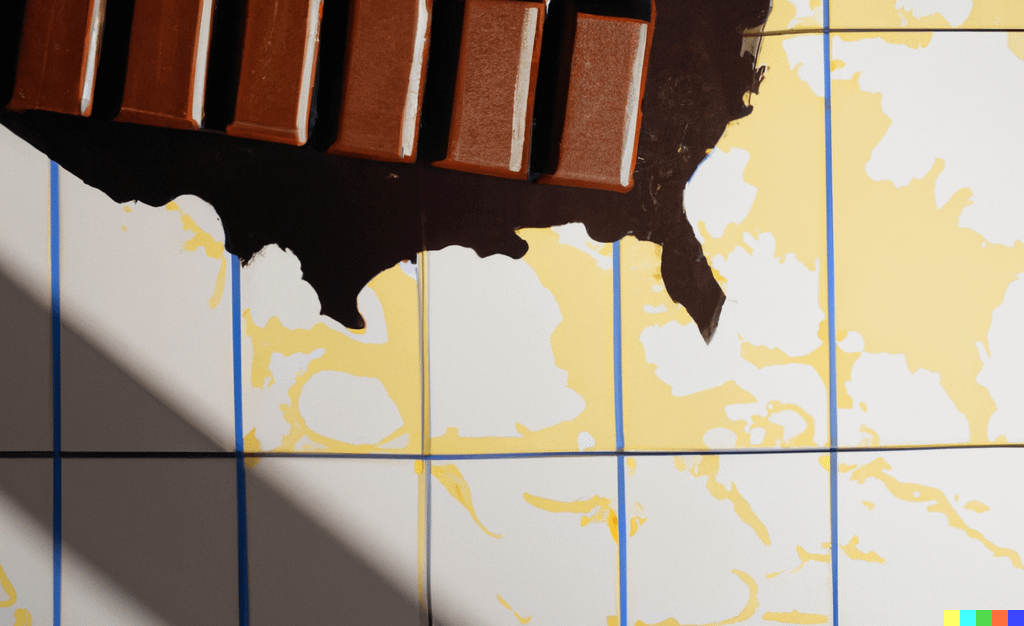
An explanation of why craft chocolate makers primarily “craft” bars … and why this is related to the predominance of Anglo-Saxon place names in England, and the different rival regional cultures of the USA.
Print / PDFMakers are GREAT at answering the “why Craft Chocolate” – expressing in all sorts of ways the potential to create amazing flavour, saving the planet, compensating farmers properly, eating healthily and all the other benefits of Craft Chocolate.
Answering “.. and why craft BARS” (almost always) results in a more puzzled response. The most common answers are “that’s the standard format”, “that’s what we’ve always done”, “that’s what sells”, etc.
But if you think about it, it’s a bit odd. Bars are a great format for storing, retailing and personal treats at one’s desk. I also think that they are great for sharing with e.g., chocolate boards (see here). Bars emerged as a format more by accident than design. And for some purposes – e.g., gifting, and sharing, at a dinner party there are other formats (e.g., boxes of discs or squares) which are more “fit for purpose” (hence the invention of the chocolate gift box).
In this sense the predominance of bars in the world of Craft Chocolate is a bit like the preponderance of Anglo Saxon place names in much of Southern England and the continued differences in regional cultures in the USA. It’s the result of accidents combined with the “long shadow of history”. Back in the 1970s Wilbur Zelinsky sought to explain the dramatically different cultures of different US regions with a concept he called “The Doctrine of First Effective Settlement”. For more on this – and why e.g., New York is so different from e.g., Charleston (and its link to Anglo Saxon place names), please see the blog. But basically, once cultural roots, placenames and chocolate formats are established they tend to stick around.
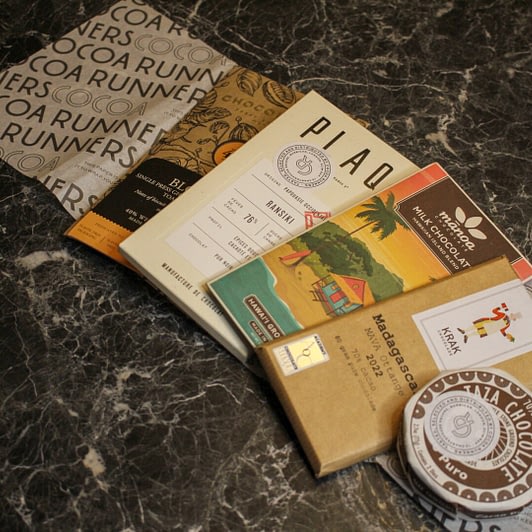
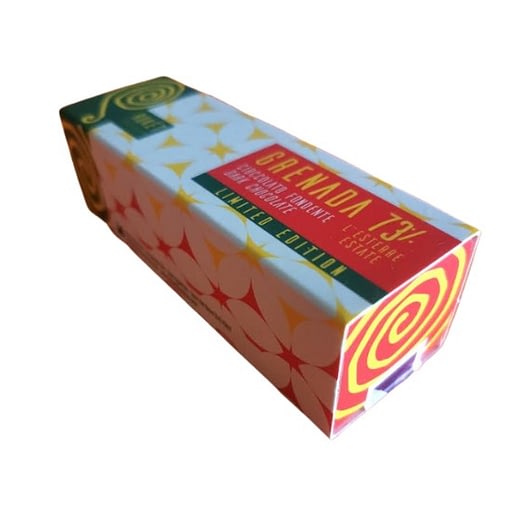
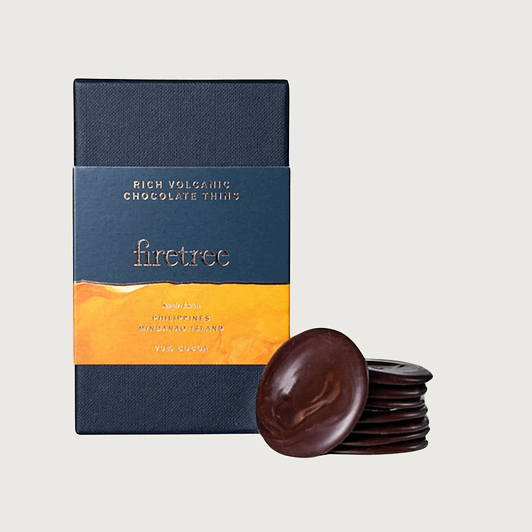
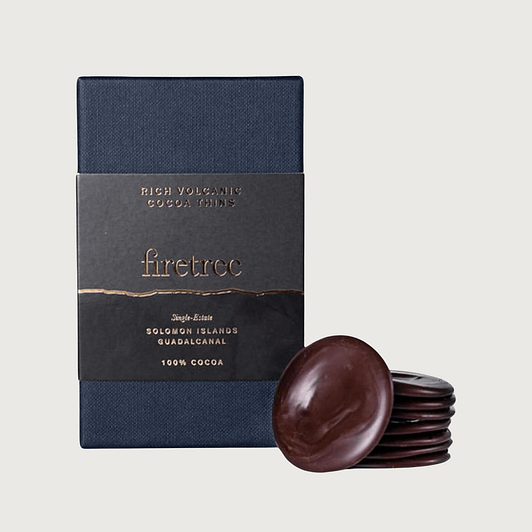
Having said this, more and more makers are experimenting with new formats. And Firetree have just joined Ruket and Marou in producing fantastic gift boxes of craft chocolate “thins” that make amazing after dinner treats, gifts and means to delight your “second stomach”.
A (revisionist) history of chocolate bars
Chocolate hagiography credits Joseph Fry with “inventing” the first chocolate bar in 1847. The actual history is a little more murky and complicated. As Martin Christy – founder of the ICA and highly recommended professional chocolate tasting courses, the IICT – points out, Chocolaterie Lombart (the first known chocolate company in France, set up in 1760) was selling chocolate pastilles “containing nougat cream” in the 1810s according to labels on boxes that have survived. And even before then the Marquis de Sade, whilst in prison in 1779, wrote home to his wife begging for biscuits (or “cookies” if you are in the US) that “must smell of chocolate, as if one were biting into a chocolate bar”, suggesting that the habit of eating chocolate was understood almost 60 years earlier in France.
Thirty years before Fry’s “invention”, Swiss grocer and chocolatier François-Louis Cailler founded Cailler and opened a hydro-powered chocolate factory in 1819 to produce solid chocolate that was moulded into tablets. And a few years later in 1826, struck by the high cost of these chocolate tablets (they worked out at the equivalent to three days labour for the average swiss worker) Philippe Suchard opened his own chocolate factory that used a specially developed a millstone machine, called a melanger, to grind cocoa and sugar at far lower prices.
However, Joseph Fry came across a radically more efficient means to “process” chocolate. Instead of simply grinding beans, Fry “recombined” the components processed by Van Houten’s Cocoa Press – cocoa powder and cocoa butter – with some sugar to create a paste that was far, far easier (and therefore cheaper), to mould into bars. Fry formally launched his first chocolate bar as “Chocolat Delicieux a Manger” in Birmingham in 1849. And Fry continued to innovate, launching multiple other “bars”, including the the launch of Fry’s Cream sticks in 1853 which were re-launched in 1866 as “Fry’s Chocolate Cream”, and now claim to the longest running longest running chocolate bar in the world.
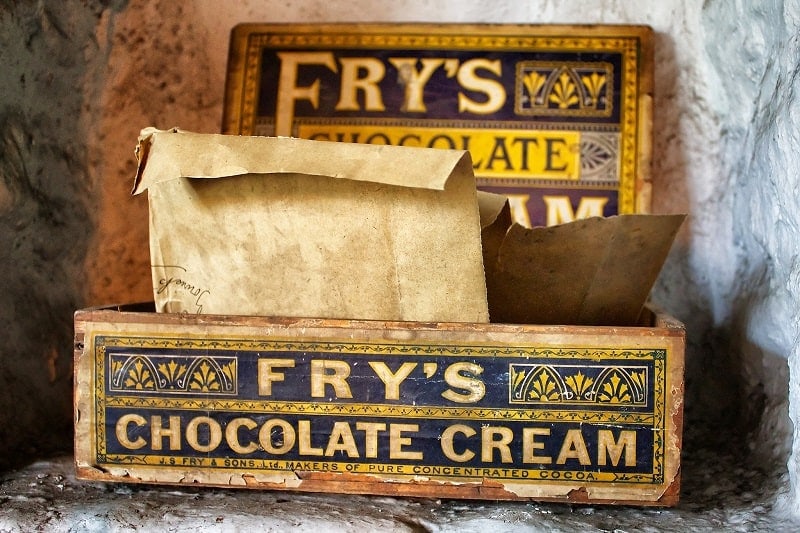
Frys Chocolate Cream
Despite all these innovations, “bars” didn’t immediately take off. Fry’s main business for many years continued to be supply the Royal Navy with cocoa rations to wean sailors off their daily ration of rum.
It took a number of other innovations to move us from “drinking” to “eating” chocolate. In particular the Swiss played a key role with two inventions launched in the 1870s. The first of these innovations was the result of literally decades of work by Daniel Peter who, in 1875, launched his Gala Peter milk bar thanks to his use of Henri Nestle’s powdered (and condensed) milk. The second was the accidental discovery by Rodolphe Lindt of “concheing” which enabled smooth bars that literally melt in your mouth (thanks to tempering), launched a few years later.
Other countries then copied these smooth, milk creations. The first “American” (milk) chocolate bar was launched by Hershey in 1900 (and if you want to know why it has that “peculiar” smell, see HERE). And then in 1905 Cadbury’s launched their Dairy Milk bar (note: the name Dairy Milk was apparently a compromise between two other suggested names – “Highland Milk and Dairy Maid” both of which were designed to reinforce the high amount of milk added to the bar)
Why bars .. and why still bars?
These innovations still don’t explain why bars – as opposed to any other format – emerged. This is especially puzzling as in parallel to the selling of bars, smart chocolate makers realised that the chocolate paste that was being moulded into bars could be used to enrobe fruits, nuts and other fillings – hence the launch of “chocolate boxes” by Cadbury’s, Neuhas’ promotion of chocolate shells that other confectioners could “fill” and sell as pralines, chocolate spreads, the development of chocolate biscuits (see here for more) )
One potential reason as to why chocolate was made into bars is that this format is that “drinking chocolate” was sold in big blocks and cakes. And these were often cut into smaller blocks .. and sold as bars. And so that this was easy to explain to customers and retailers.
One intriguing reason why bars continued to be the preferred format for sales lies in a peculiarity of 19th and early 20th century retail. Today we are used to having “corner stores” selling chocolate, confectionery, milk and other “essentials” in almost every town centre, village high street, petrol station, etc. This trend started in the Victorian era, but took some to roll out.
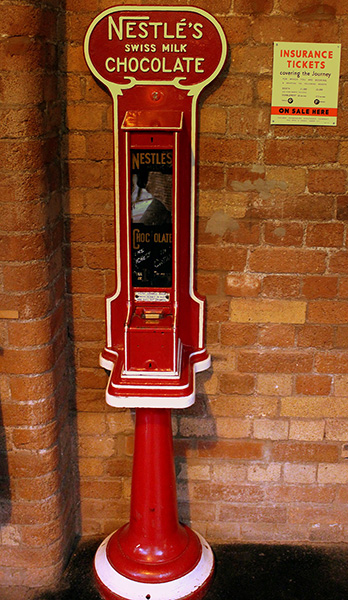
Another retail invention that spread even faster, and initially at least for chocolate of far more importance, was the spread of Vending Machines. And chocolate bars work really, really well in vending machines.
Vending machines date back to Greece – with the wonderfully named Heron of Alexandria, a Greek engineer and mathematician, creating a machine that accepted a coin which then dispensed holy water back in the first century AD (he also is credited with inventing the first syringe). Wind forward a few centuries, and in 1822, the English bookseller named Richard Carlile launched a newspaper dispensing machine followed by Simeon Denham securing a patent in 1867, for the first fully-automatic, vending machine, dispensing stamps. Within a few years another startup, the Sweetmeat Automatic Delivery Company, was selling confectionery via vending machines. And chocolate makers also rapidly realised the potential of these “vending machines”, especially in railway stations, distribute their chocolate bars. So popular were these machines that Nestle in the interwar years developed a specific recipe to deal with platform temperature variations during the summer and winter.
What’s the link with Anglo-Saxon village names and America Tribalism – and chocolate bars and vending machines?
Just as Craft Chocolate makers can explain why they focus on crafting bars, most of us can easily answer “why do you live in X” (e.g., it’s where I work, where my folks are from, it has great facilities, etc.). Similarly, most Americans agree that there are MASSIVE cultural differences across America. But explaining why America has these massive regional differences, the reason why so many names of village/town/city in Southern England are AngloSaxon and why “bars” are the preferred format of Craft Chocolate Makers is harder.
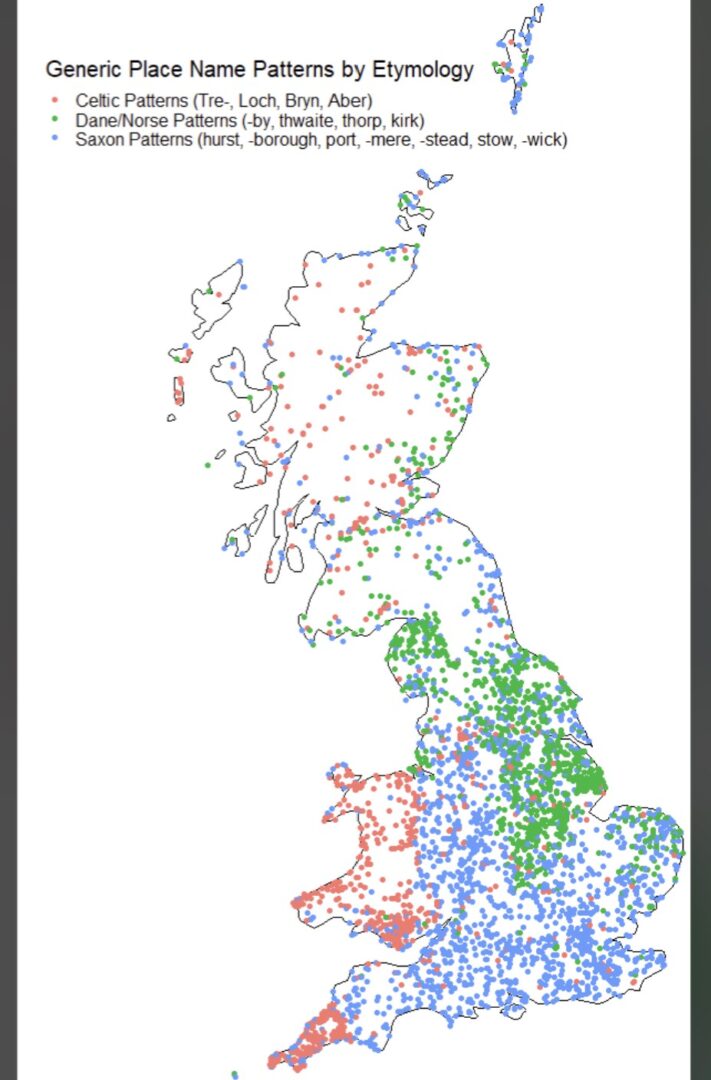
One factor that helps explain all these three puzzles is the “the shadow of history”. Even though the Anglo-Saxons weren’t the first peoples to invade England, they were – in many places – the last invaders who took over a socially and politically devastated state where they effectively “reset” everything from language, economy, social hierarchies AND place names. Yes it’s true that the Normans “won” the battle of Hastings, but unlike the Anglo-Saxons five hundred years earlier they didn’t drive out the vast majority of people, nor did they impose a completely new socio-economic system. The Anglo-Saxons invaded when the Romans were withdrawing from England, and they effectively drove the remaining Romano-Britons and Celts to Wales, Cornwall, etc. And one sign of this is place names. Cornwall, not conquered by the Anglo-Saxons, has very different place names – as does the North of England where despite Alfred the Great’s best efforts, the Vikings forced out and “reset” everyone and everything from place names to farming (arguably, the rise of the English wool industry in the middle ages is thanks to these Vikings introducing sheep)
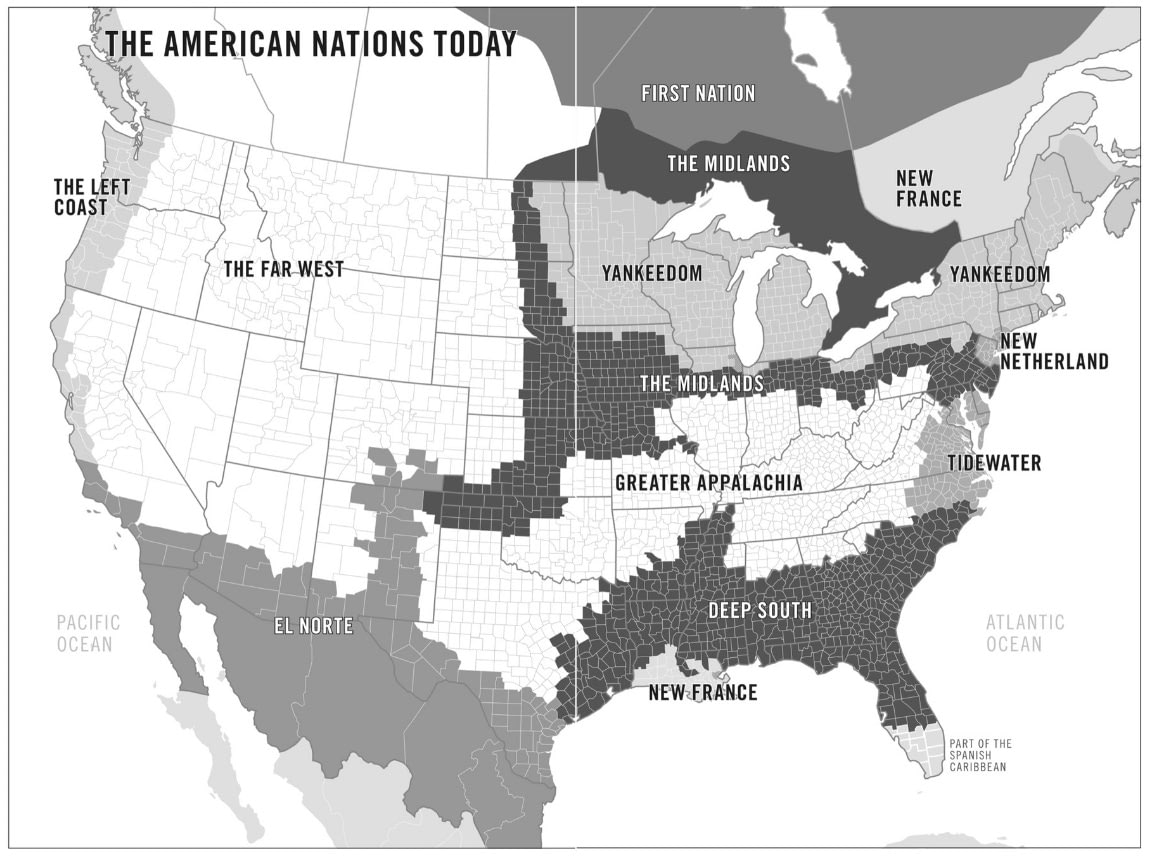
And if you want to understand the extraordinary differences between parts of the USA, a similar set of arguments can be applied. That is to say, if you want to understand why e.g., New York is so different from e.g.Charleston, it’s again “the long shadow of history”, or as the pioneer in this space – Wilbur Zelinsky – would argue the long shadow of geography. In 1973 Zelinsky put forward his “theory of First Effective Settlement”, arguing “the dominant culture and social/cultural geography of a region is primarily shaped and defined by the first settlers who are able to establish a self-sustaining society, even if they were a relatively small group. This initial group of settlers has an outsized influence compared to later waves of immigrants”. Or to make it more tangible, even though less than 0.2% of New York’s inhabitants today are descended from the Dutch, because the Dutch first settled (aka “stole and drove out” the indigenous first peoples), New York is still very mercantile, tolerant, ambitious, etc. – whereas e.g., Charleston still far more “English”, the Appalachians remain influenced by their Borderer Territory, etc
If you want to read more, see the sources below for some great books by David Hackett Fisher (Albion’s seed) and Colin Woodward (American Nations), plus some great summaries by the PSmiths. They are thought provoking – and Woodward has a map of the “11 Nations of America” which may help predict the upcoming election
So what’s all this got to do with Craft Chocolate?
Most mass produced chocolate is eaten either in the afternoon, or late morning, as a guilty, personal “treat” or source of energy – often from a vending machine. The (excess) sugar is key to this experience and treat.
Craft chocolate is VERY different. Yes there is some sugar, but this is to bring out flavour. And most of our subscribers savour a couple of squares of their craft chocolate as a treat after their evening meal. And yes, it’s a great way to explore and satisfy your “second stomach”, aiding digestion, delighting your senses, etc. (see here)
They are both sold in bars. But this is an accident. It’s the long shadow of history. And we should look beyond the habit of bars in terms of everything from how we value (and price) chocolate, to how we share, savour and delight in Craft Chocolate.
Time to start to rewrite history?
Further Reading and Sources
American Nations: A History of the Eleven Rival Regional Cultures of North America, Colin Woodard (Viking, 2011).
https://global.oup.com/ushe/product/albions-seed-9780195069051 David Hackett Fisher (1989)
Summary articles:
https://www.theneweuropean.co.uk/the-origins-of-our-place-names/
https://en.wikipedia.org/wiki/Albion%27s_Seed
https://www.thepsmiths.com/p/review-american-nations-by-colin
History of Chocolate
https://www.atlasobscura.com/articles/the-history-of-vending-machines-goes-back-to-the-1st-century