Why Santa Claus (and Father Christmas) gives out chocolate coins
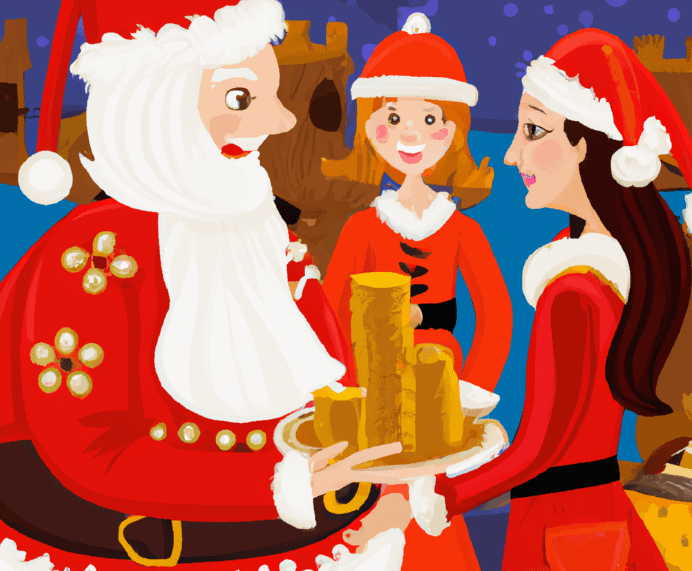
For centuries, we’ve celebrated Christmas with Santa Claus and giving presents; including bags of chocolate coins. Unfortunately, the quality of these coins hasn’t always been that great...
Print / PDFFor centuries, we’ve celebrated Christmas with Santa Claus and giving presents; including bags of chocolate coins. Unfortunately, the quality of these coins hasn’t always been that great.
Also, if you’d like to know more about Santa Claus’ relationship with Father Christmas, how Santa came to be associated with Christmas and giving chocolate coins please read on. As a spoiler alert: It’s to do with damsels-in-distress and chimneys, and Hanukkah. And claims by a well-known fizzy drink maker are greatly exaggerated.

Who was Father Christmas?
Until the Victorians, Father Christmas was a symbol of the Christmas season rather than a historical or mythical figure. Moreover, Father Christmas was more about adult partying rather than gifting and children. For example, in 16th century York a man described as “Yule” would celebrate the “Yule ridings” (i.e. Christmas ridings) by carrying nuts and sweetmeats through York’s streets, and then throwing nuts to the crowds until matters became so unruly that in 1572 the adult bacchanalia was banned after complaints of “verie rude and barbarouse” behaviour.
And just as the Puritans banned Christmas in 1647 via an act of Parliament, so they banned the various traditions of “Captain Christmas”, “Christmas Lords”, “Prince Christmas’, etc.
However, in 1660, along with the restoration of the Stuart dynasty to the throne, Christmas (and Father Christmas) was resurrected. But he remained associated with adult partying, feasting and games, and was not treated with much respect.
It wasn’t until the Victorian era that the idea of Christmas as a time of family gathering and gift-giving emerged, and it was at this point that Father Christmas seems to have been morphed together with a European, and American, tradition of Santa Claus, aka St Nicholas.
St Nicholas, Sinterklaas, and Santa: The early years
At the same time as legends of “Yule Kings”, “Lord Christmas” etc. were emerging in England, a different tradition of St Nicholas (or Sinterklaas) was being celebrated in Europe
St Nicholas is believed to have been a 4th-century Greek bishop of the City of Myra (now in modern Turkey). Amongst his many associated good deeds, one is particularly relevant to chocolate coins and chimneys. St Nicholas is described as coming across a poor man about to sell his three daughters into slavery. To save them from this fate, and to ensure that they had dowries to facilitate their marriages, St Nicholas anonymously threw three bags of gold coins down the chimney. These landed in their stockings, and the basis for good deeds, families, coins, stockings, etc. were all laid.
Following the successful rescue of St Nicholas’ relics from Myra in 1087, and his reburial in Italy, various traditions appeared. For example, in the Netherlands, as Christmas markets appeared, people started to dress up in red bishop outfits, pretend to be St Nicholas or Sinterklass, and hand out gifts, sing songs, etc. In addition, special “Sinterklaas” bishop-shaped biscuits were baked, forming the basis for their “speculoos” biscuits.
St Nicholas, Sinterklaas, and Santa: Crossing the Atlantic
St Nicholas had made his way over to the United States by the late 18th century. Various authors and illustrators picked up the story, and added a few more details. Perhaps most famously, in 1822 Clement Clark Moore published ‘Night Before Christmas’ featuring Santa Claus, and added in flying reindeer, along with a red coat and bushy beard.
Historians are unclear as to how Santa made his way to the UK (other than via a sleigh! Although it could have been via a boat, as various American boats were called Santa Claus in the 1850s and 1860s). The first mention of Santa Claus in the British Library’s archive comes from Wick in Scotland in 1852, where children told a reporter that he filled the stockings they hung by the fireplace with presents. Santa Claus may also have suffered some jet lag, as in Scotland his gift deliveries were often made at Hogmanay rather than Christmas. Moreover, Santa found himself increasingly being merged with Father Christmas, and gradually Father Christmas’ riotous, unruly, and debauched edges morphed into a more child-friendly version.
Increasing commercialisation and advertising in particular further turbocharged Father Christmas’ / Santa Claus’ emergence. Coca-Cola often claims credit for Santa Claus’ omnipresence, and in particular the use of the colour red, following their print and radio Christmas campaigns of the 1930s. But while it is true that in the 19th century Santa Claus could wear either a suit (especially in the US) or a long robe (more of a UK tradition), and these were sometimes e.g. green, for the most part Santa Claus has always preferred red; well before Coca-Cola.
What about (chocolate) coins, Christmas, Hanukkah, and ‘foiling’?
Most history books (and the likes of ChatGPT etc.) suggest that the American confectionery company Loft’s Candies pioneered the US Christmas tradition of gifting chocolate coins in the 1920s. And it is clear that their coins were picked up and incorporated into Santa Claus Christmas gifts with alacrity. However, well before then, chocolate coins (and real coins) were often placed in children’s shoes on the eve of St. Nicholas’ feast day (the 5th of December), so this may well be another case of corporate historians gilding the story a little too much.
Moreover, before being picked up as a popular Christmas stocking filler, it appears that Loft’s Candies were marketed for another holiday; Hanukkah. Hanukkah, the Jewish Festival of Lights, falls at about the same time as Christmas. And since the 17th century there have been traditions of “Hanukkah gelt”; thanking teachers with coins; which gradually morphed into rewarding children for studying well with initially financial, and then chocolate, Hanukkah gelt aka chocolate coins. And it was for this purpose that Loft’s Candies adopted a British invention, that of wrapping small chunks and coins of chocolate in tinfoil, kicking off a tradition that endures.
The impact of shape
Sadly most of the chocolate sold as coins is largely sugar with all sorts of vegetable fats, palm oils, emulsifiers, etc. And they really don’t taste very good.
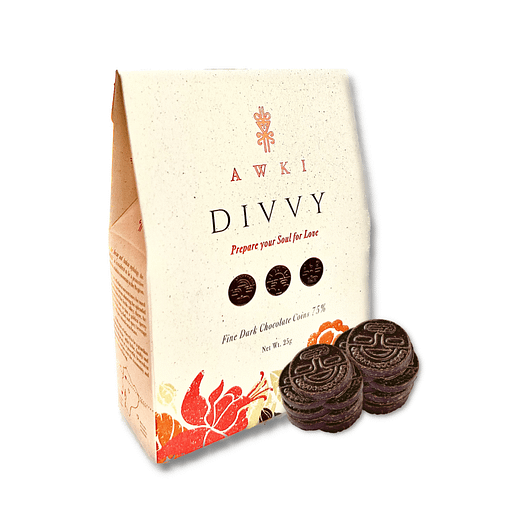
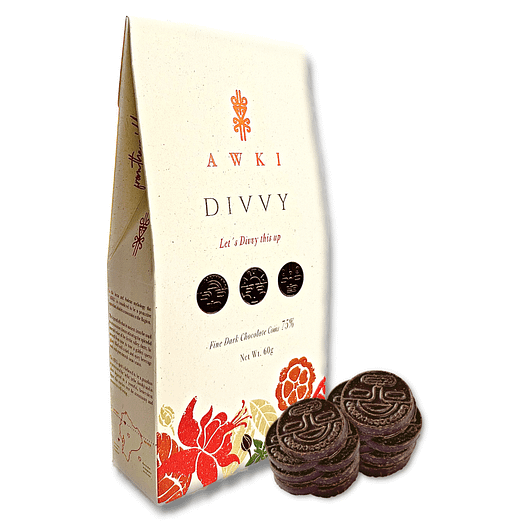
We’re fortunate now to have AWKI’s divvys as a craft chocolate alternative, not just because they have a great flavour wave and intriguing texture, but also because they help illustrate another dimension about flavour, taste, and mouthfeel; that of shape.
Food scientists have long known the impact and importance of different cutlery, plate weight, shape of cup etc. on our appreciation of a meal. Similarly, wine companies have founded massive businesses on the basis that different wines need different glass types to reveal their potential.
In the case of chocolate, the shape and thickness of a chocolate bar’s mould plays a huge role in how flavours can be released. Indeed when Cadbury relaunched their Dairy Milk in 2013, customers were convinced that they’d changed the formula, adding even more sugar as it tasted far sweeter. Mondelēz/Cadbury insisted that they’d made no change to the bars’ ingredients, and claimed that consumers were perceiving more sweetness because the shape of the bar had been changed to a more rounded and less angular format (and also a bit smaller).
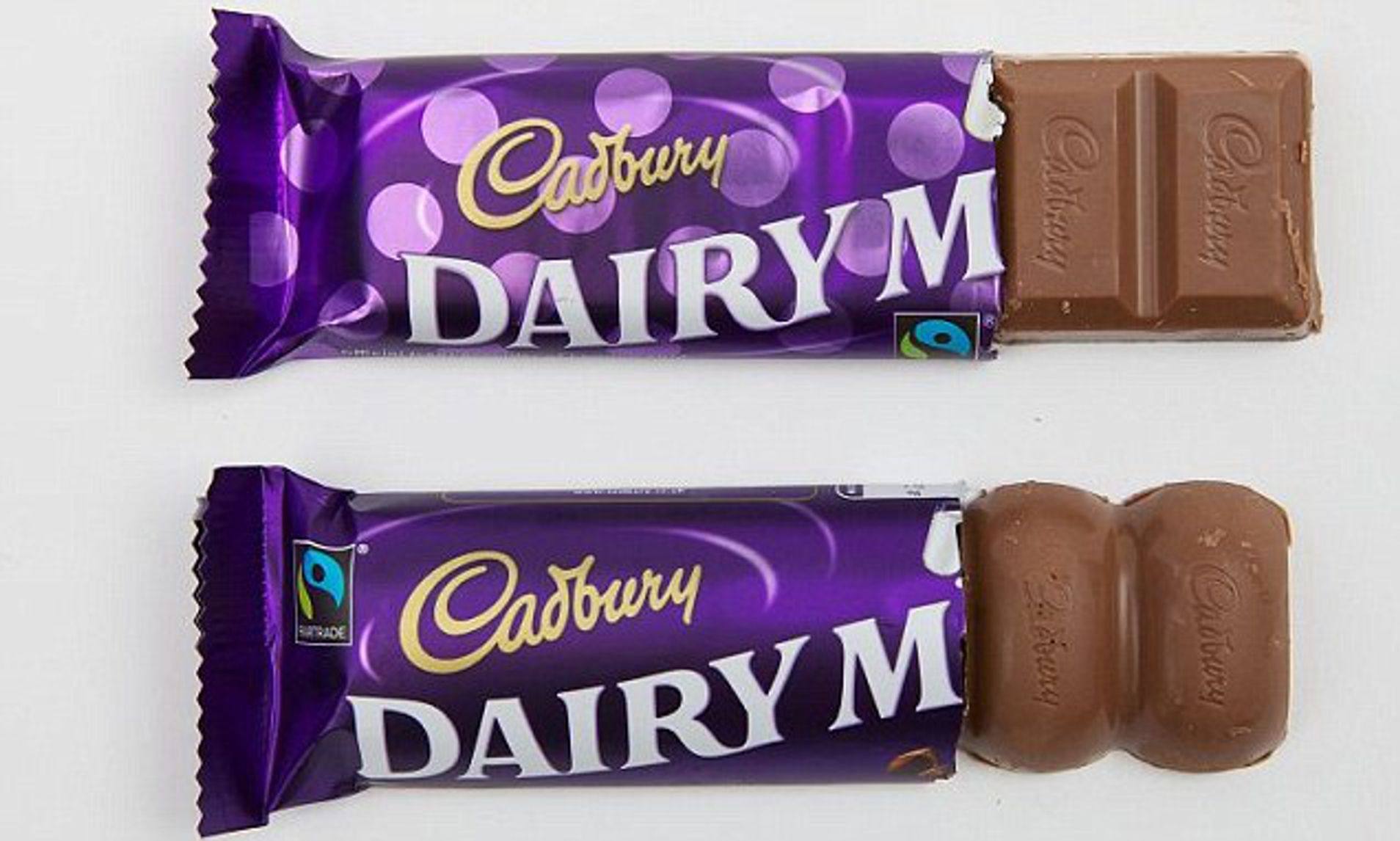
We’re all aware of how a bar’s thickness, and therefore its melt, impacts flavours. But shape is a little harder to experience. Most of the time when we savour craft chocolate, we do so via bars and therefore via squares or chunks. So AWKI gives us another format and shape to explore. And it’s well worth trying these divvys at the same time as another Ecuadorian craft chocolate, such as that of Askinosie, Conexión, Pump Street, bars etc. and try to tease out exactly what is impacting your impressions of flavour, taste and mouthfeel.
So AWKI’s divvys provide you with not just a great way to continue the holiday traditions of exchanging coins, but also exploring a different format and shape for craft chocolate. Plus you can also try their cocoa only divvys, that use dried cocoa pulp as their sweetener.
Wishing you all a great weekend.
Keep savouring!
Spencer
Gift and share better chocolate coins this Christmas and Hannukah
Sources and further reading
Santa Claus and St Nicholas
https://blogs.bl.uk/untoldlives/2014/12/santa-claus-coming-to-britain.html
https://www.english-heritage.org.uk/christmas/the-history-of-father-christmas/
Chocolate coins
https://www.thechocolateprofessor.com/blog/hannukah-gelt-history
https://jellomenorah.substack.com/p/who-invented-hanukkah-gelt
Shape and flavour
https://www.bbc.co.uk/news/magazine-24223182
https://flavourjournal.biomedcentral.com/articles/10.1186/2044-7248-2-28