What Craft Chocolate can Learn from Specialty Coffee
Craft chocolate aspires to enjoy the spectacular success story of specialty coffee. The number of craft...
Print / PDFContents
Craft chocolate aspires to enjoy the spectacular success story of specialty coffee. The number of craft...
Print / PDFCraft chocolate aspires to enjoy the spectacular success story of specialty coffee. The number of craft chocolate makers over the globe has exploded in the last few years from less than a couple of dozen to over a thousand (and the UK now has over fifty, up from fewer than five when we started Cocoa Runners).
Whereas specialty coffee generates over 10% of all coffee sales in the US and the UK, craft chocolate still only accounts for less than 0.1% of the total chocolate sales in the UK and the US.
To understand specialty coffee’s success, and in an attempt to learn from them, we’ve spent many hours with our friends in the coffee world. And we’ve hosted several Craft Chocolate Conversation sessions with coffee experts such as Maxwell Colonna-Dashwood and James Hoffman.
SIMILARITIES
1. HISTORY
Civilisations have drunk both chocolate and coffee throughout time, although chocolate’s history is a few thousand years older. Interestingly, both entered the European mainstream in the mid-17th century as people sought out non-alcoholic drinks. The first UK coffee house opened in Oxford in 1651, and the first recorded chocolate house followed in Bishopsgate, London, in 1657.
2. QUALITY
Consumers clearly understand the difference between mass-produced, convenience products and ethically sourced fine-flavour products. Whether eaten or drunk, you can literally taste the difference.
Both are all about the beans. To make great coffee or great chocolate you need to start with great beans. To get great beans you need high-quality varietals, small-batch fermentation, drying, and careful roasting (many chocolate makers even use coffee roasters for their roasting).
3. ON THE FARM
Both also suffer from opaque supply chains, deforestation, and underpaid farmers. Furthermore, these issues are compounded by treating coffee and chocolate as commodities where price, not quality, is all important. Specialty coffee effectively addresses the plight of farmers and the environment. It proves that it really is worth paying a (small) premium for great beans that are well crafted.
It tastes better, it’s better for farmers, and it’s better for the planet. Craft chocolate is following a similar model of ‘direct trade’ to support farmers and the environment.
Both crops are also great alternatives to growing another crop starting with a C; cocaine. And indeed the US DEA (Drug Enforcement Agency) works to encourage cocoa and coffee farming as alternative high-income crops and livelihoods.
DIFFERENCES
There are also many important differences between specialty coffee and craft chocolate which help explain specialty coffee’s success. Some of these are relatively easy for craft chocolate to learn from and fix. Others are harder, but they offer some important insights for craft chocolate. Given the number of these, we’ve separated them out.
1. DRINKING VERSUS EATING
It’s far easier for specialty coffee to explain how the magic created by a proper barista is different from commercial chocolate. It happens right in front of you, as most people drink specialty coffee in specialty coffee stores. Over 80% of UK specialty coffee consumption is estimated to happen in specialty coffee shops. Everyone can see (and smell) the difference between the magic of a barista in a coffee shop versus a jar of instant coffee.
Chocolate is no longer consumed primarily as a drink. It first became a bar thanks to the pioneering work of Joseph Fry, Rodolphe Lindt, Henri Nestlé, and Daniel Peter in the 1840s and then 1880s (for more on this, please do join a virtual tasting). This move to pre-packaged bars has created a few challenges.
By contrast, when you buy a bar of specialty chocolate you almost always purchase the finished product off a retailer’s shelf (or in an online box). You don’t get to see the magic that goes on behind the scenes to craft a bar. It’s more like trying to tell the difference between different jars of instant coffee. It’s not obvious by looking at the front of a bar of chocolate how it’s been made.
If you turn the bar over, you can tell a lot more about the bar. And in our virtual tastings, we explain what to look for in the ingredients, sourcing and crafting.
In addition, considering every capital city in Europe has hundreds, if not thousands of specialty coffee stores, the number of places you can see chocolate being crafted in the US or Europe in many cities can be counted on the fingers of one hand.
2. UPGRADE
Specialty coffee is a far easier ‘upgrade’. If you want to impress, show how cool you are, etc. you’ll pick a specialty coffee store over a chain. Specialty coffee is lucky here; it fits with the zeitgeist. Working in an office in town, and especially if you worked in a start-up, the coffee shop was the place to meet with your colleagues, hold an interview, etc.
Similarly, it’s relatively easy to switch from instant to awesome beans for your morning cup of coffee at home and even easier now that Colonna Coffee is producing awesome capsules too. Specialty coffee doesn’t require new habits; it replaces and even upgrades existing rituals.
Craft chocolate is a tougher upgrade. Much mass-produced chocolate is consumed as a mid-morning or mid-afternoon ‘pick me up’ or ‘reward’, and easily purchased from a vending machine or local convenience store. By contrast, craft chocolate is regularly savoured in the evening, post-dinner alongside or instead of desert, etc. Equally, it’s hard to find craft chocolate bars in physical retail (although a few specialty coffee stores are now selling craft chocolate bars).
3. RITUALS, FAIRS, KITS
Specialty coffee also has far more fairs, kits, rituals, and hobbies. They’ve HUGE fairs (far bigger than our craft chocolate takeovers at Canopy Market). Indeed, we once shared a stand with Maxwell Colonna-Dashwood at the London Coffee Festival; it was like being at a rock festival with people literally queuing up for selfies with him, his signature, etc.
Specialty coffee also has way more rituals; like cupping. Preparing a coffee at home or in a specialty coffee store is the subject of all sorts of geek debates and intriguing rituals.
And then there is the kit. There is a huge industry constantly launching new coffee grinders, different filters, and pour-over devices. Maxwell has now even come up with a machine to “optimise your water” (PeakWater: Like a home water filter jug that you can tweak for your taste in coffee and according to the water hardness etc. in your house).
4. ADDICTION
Coffee is more addictive. In moderation, this is clearly helpful. But if you drink 5-10 coffees (i.e. ingesting about 400mg of caffeine) a day for 2 weeks, you are likely to get caffeine withdrawal symptoms if you went ‘cold turkey’.
Theoretically, you can get addicted to the caffeine in chocolate, but you’d need to eat an INCREDIBLE 1kg per day for the same period. Theobromine, which is the largest stimulant in chocolate, isn’t addictive; sugar is addictive… but that’s another story. Another argument for craft chocolate is that it contains relatively little added sugar.
5. DEFINITIONS AND PACKAGING
Specialty coffee has far clearer definitions (similar to e.g. craft beer). Q grading of coffee means that it’s very clear which beans can be labelled “specialty”. And specialty coffee makers are good at conveying this via their packaging, labelling and terminology. Specialty coffee packaging is brilliant at telling the story of the individual farmers, their location, fermentation, and giving pointers to consumers.
By contrast, there is no equivalent definition for craft chocolate, and all too often even craft chocolate makers only place the origin, not the farm, estate or co-operative’s details on their labels. (Note: At Cocoa Runners we only sell bars where we know both where the bars are crafted and from where the beans are grown, fermented and dried. Even now, we’re still struggling to persuade some of our makers to include these crucial details on their packaging. It really is crucial to craft chocolate, as both a reminder of its principles and an important tool for consumers.
IN SUMMARY
Bottom line: There is a tonne we can learn from specialty coffee!
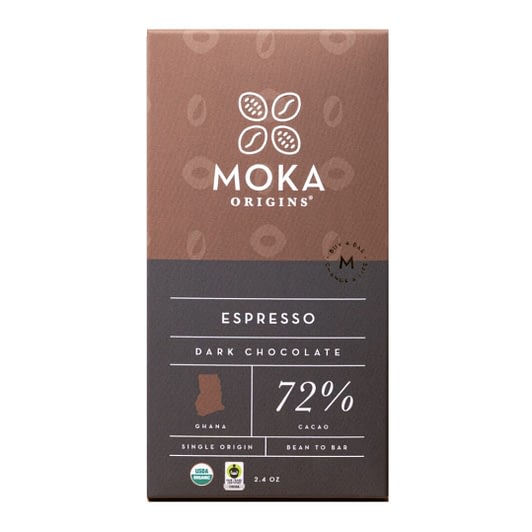
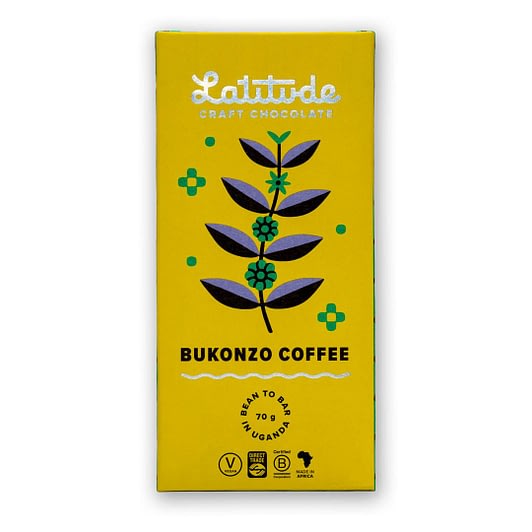
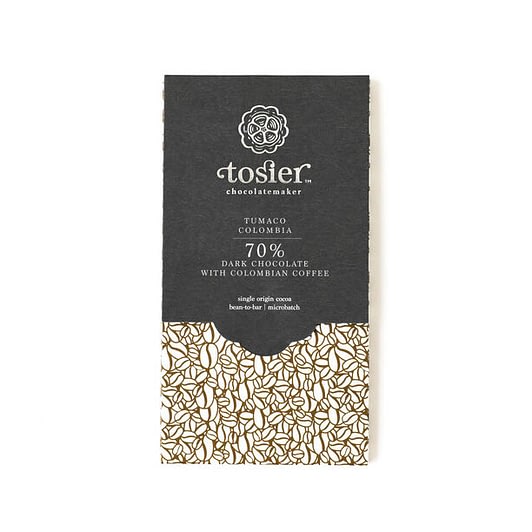
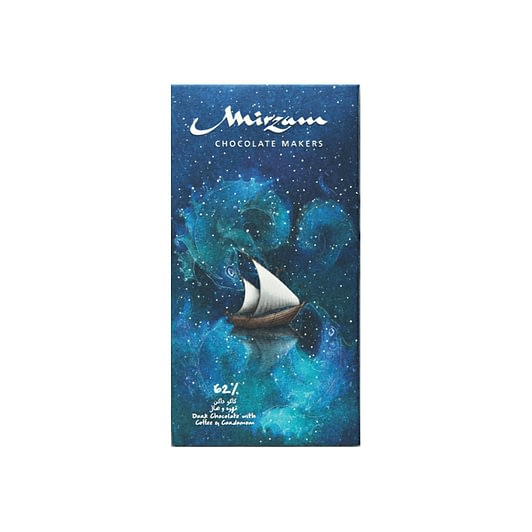
Please see below for some examples of bars which bring great coffee together with great chocolate.
-
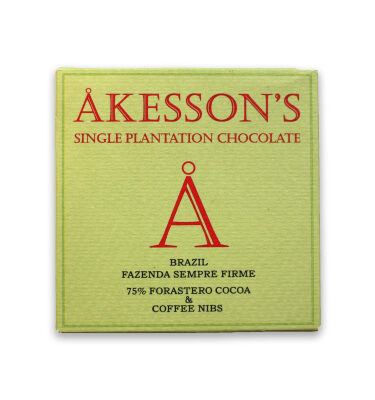
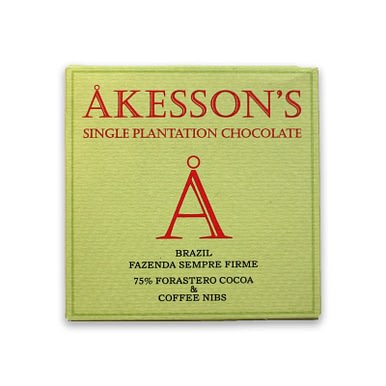
 Akesson’s – Brazil 75% With Coffee Nibs£6.95
 -
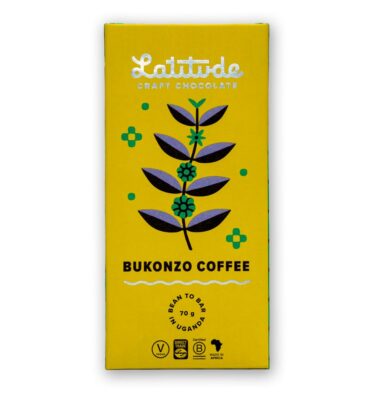
Latitude – Semuliki, Uganda 70% Dark with Bukonzo Coffee£5.95
-
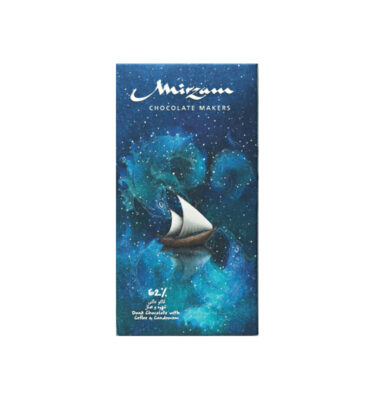
Mirzam – Coffee & Cardamom Dark Chocolate 62%£14.95
-
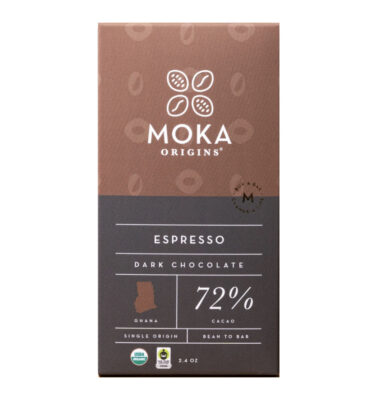
Moka – Coffee infused Dark Chocolate, ABOCFA, Ghana, 72%£9.95
-
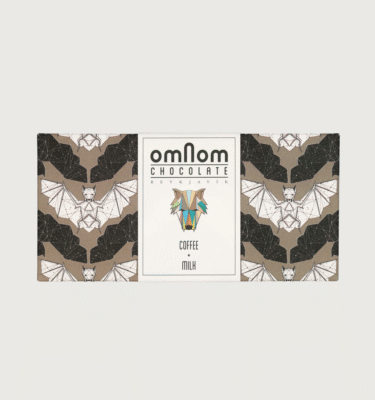
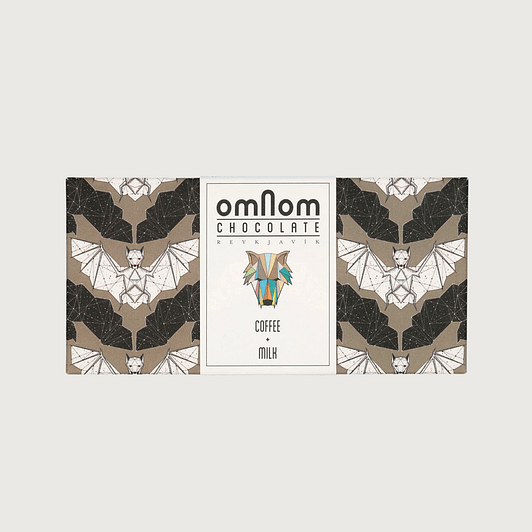
Omnom – Coffee and Milk 38%£8.95
-
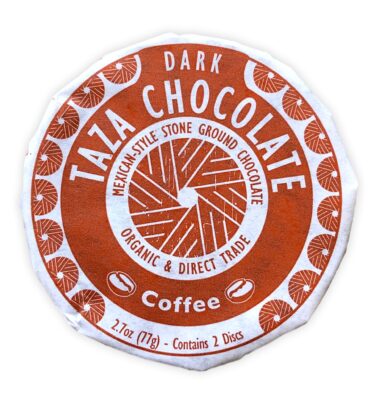
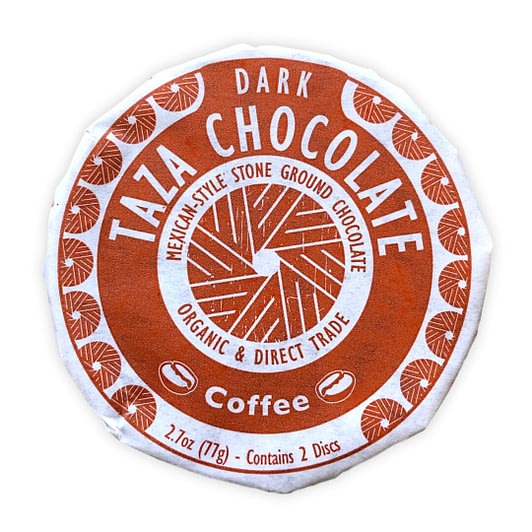
Taza Chocolate – Mexicano Coffee£7.95
-
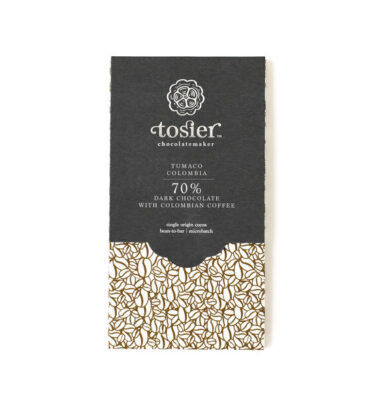
Tosier – Tumaco, Colombia 70% Dark with Coffee£9.95