How to avoid pairing tragedies and achieve delightful synergies
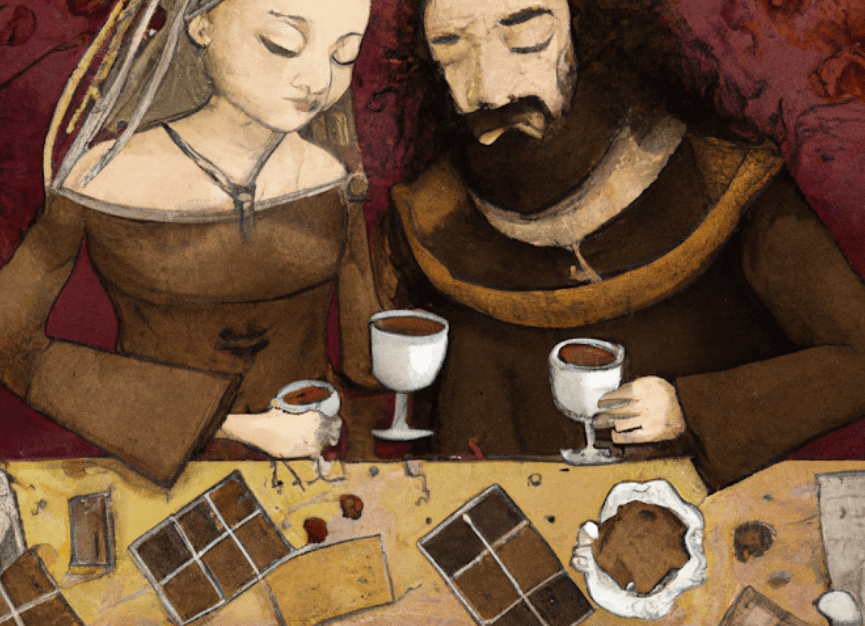
...when you savour a couple of different craft chocolates, and/or pair them with a classic wine, fine tea or speciality coffee it's the comparison which helps one identify the flavours...
Print / PDFMost of us can fill in the blanks to these theatre and film pairings without too much effort:
- Romeo and …
- Anthony and …
- Bonnie and …
- Thelma and …
- Hero and …
And most of us also know that these “pairings”, sadly, didn’t have happy endings.
At our Fidelio craft chocolate fair on the 2nd and 3rd of December, we hope to be able to show a bunch of far more successful pairings, more in the spirit of ‘When Harry Met Sally’ which show how long-term friendships (such as those between speciality coffee, fine tea, classic wines and craft chocolate) can all lead to unexpected delight where 1+1 really can become way more than 2…
As a spoiler alert; this post has some of the principles that we’ll be discussing with James Hoffmann (coffee), Tim D’Offay (tea), and Rebecca Palmer (wine). And whilst we LOVE cheese (especially Neal’s Yard Dairy and Bronwen), these principles may also explain why having separate cheese and pudding/chocolate courses is a GOOD idea (we can argue if it’s before or after the chocolate or pudding). And that’s why in our tasting with Bronwen, we’ll talk more about the similarities in the crafting of cheese and chocolate rather than trying to pair them.
Five suggestions for a great pairing
1 – Start with what your mouth first perceives; texture and tastes
Before we can start to delight in the flavours of chocolate (and tea, wine, coffee, etc.) we first encounter an assortment of tastes (sweetness, sourness, saltiness, bitterness, and umami) and textures (graininess, smoothness, creaminess, etc.). These tastes and textures appear almost immediately; literally in milliseconds (the fastest, and faster than nicotine, caffeine, or any narcotic, is sweetness: Sugar delights your tastebuds in just a few milliseconds whereas it takes up to a few minutes for caffeine to jolt your central nervous system).
So even if you see a similar flavour profile described for e.g. a white wine and dark chocolate, they won’t taste great together as their textures and tastes will be out of balance.
2 – Then move on to balance out mouthfeel
And after taste and texture, chemesthesis and trigeminal sensations like spiciness, cooling, and astringency (your mouth drying out) also have to be balanced. And because tea, coffee, red wine (and some orange wines), and dark chocolate all have tannins they can all pair together very well. By contrast, it’s hard to pair a white wine with a dark chocolate, or a white chocolate with a black tea or coffee.
3 – Now you are ready for flavour
Once you’ve made friends over taste, texture, and mouthfeel, you can then move onto the next level and start to match flavours. And this is where speciality coffee, great wines, fine teas, and craft chocolate really can stand out. In all these products the focus is on coaxing out the flavour of the grapes, leaves, and beans. This is the antithesis of instant coffee, branded tea bags, bulk wines etc. which are literally manufactured to create a uniform consistent taste and texture for the lowest possible cost. This means that these ultra-processed “food-like substances” lack any length, flavour, or complexity, and that there is very little to match and pair.
By contrast, the “wave of flavour” in craft chocolate, speciality coffee, fine teas, and wines gives huge potential for bringing out and enhancing more flavours within each product, so that each pairing should be way more than the sum of the individual components.
4 – Delight in the unexpected
Flavour science is relatively new, with the key insights that won Linda Buck and Richard Axel the Nobel Prize in 2004, and gave us the first clear understanding of how we identify flavours and smells, only emerging as hypotheses during the 1990s. By comparison, Howard Moskowitz helped kick off the junk food revolution in the 1960s and 1970s with his insights into the so-called “bliss point” where humans can be made to stuff and scoff down anything through the (ab)use of our love of sweet, salty, and fatty tastes with a bit of texture. So the world of mass-produced foods and drinks now has had generations of scientists, supported with huge budgets, who have worked out how to encourage all of us to keep scoffing and stuffing ourselves with mass-produced chocolate confectionery, junk foods and fizzy drinks. These junk foods are based on (ab)using our delights in sweet, umami, and salty tastes with fatty and varied textures. And if you’ve ever wondered why you keep reaching for that second bite of a mass-processed bar of confectionery, with lots of crunchy sweet bits of different consistency and chewiness; you’ve been gamed.
By contrast, there is still a huge amount of serendipity in coming up with flavours that work together in food pairings (as any chef will testify). Flavour can’t be reduced to something as simple as the “bliss point”, and indeed it may well be one frontier hard for artificial intelligence to conquer.
So we are always delighted when come across unexpected and delightful pairings that work like “When Harry Met Sally”; two friends getting it together; like OBOLO’s dark milk with ‘rica rica’ (a herb from Chile with some menthol notes) with a fellow Chilean cabernet sauvignon from Chaca, or a naranjo (orange) wine, again from Chile, with Hogarth’s buttered toast milk bar. And in our talks and tastings we’ll explore more of these across tea, wine, and coffee.
5 – 1+1 really is far more than the sum of any individual parts
One golden rule of savouring craft chocolate is that savouring, and comparing, a couple of bars with one another makes it far easier to identify the flavours, tastes and textures of BOTH bars. Appreciating flavour is not like looking at a rainbow and identifying the colours when you can see the individual colours with one glance. It’s more about contrasting different flavours (and taste and textures). So when you savour a couple of different craft chocolates, and/or pair them with a classic wine, fine tea or speciality coffee it’s the comparison which helps one identify the flavours, textures, and mouthfeels.
And because we can only identify two to three flavours at any one time (the so-called ‘Lang limit’), it is always worth comparing your impressions with a friend as their observations can help you not just figure out what it is you are sensing, it can also help identify aromas and flavours otherwise you might have missed. In looking at a picture, we can almost always agree on which colours we are seeing (this puts to one side the difficulty of colour blindness and “the exception that proves the rule” of the “is it gold or blue” dress social media sensation of 2021/2). However, flavours are partly released by enzymes in our saliva’s microbiome and because everyone’s oral microbiome is unique, we often don’t agree on the flavours we savour in a wine, coffee, tea, or craft chocolate. But that’s part of the fun!
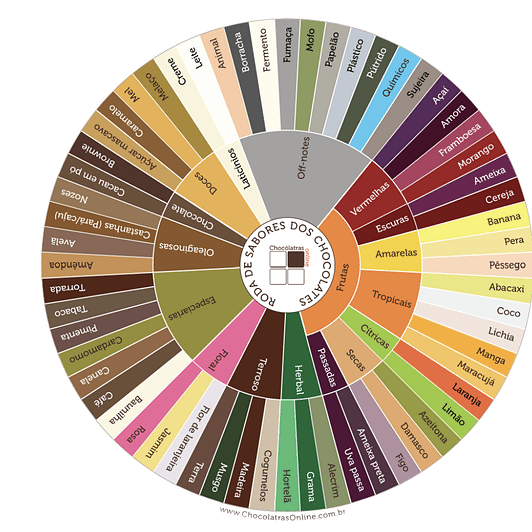
And do use our ‘tasting wave’ to help identify those flavours and sensations that are on the “tip of the tongue” and you can’t quite articulate.
The Cocoa Runners craft chocolate fair
At our tastings and talks we’ll not only be tasting craft chocolates with fine teas, great wines, and speciality coffee but we’ll also explore what we can learn from one another and one another’s insights. For example, coffee has both washed and unwashed fermentation, and craft chocolate has heap and box fermentations; and this is one of the areas we want to discuss with James Hoffman. Plus, we’ll explore how craft chocolate can be an amazing vector for various other unexpected flavours, like wild garlic and other foraged delights, with Charlotte Flower.
Plus, in our talk with Bronwen of Neal’s Yard Dairy, we’ll explore how these principles; matching taste, texture, and flavour to achieve balance; really is far harder with even amazing cheeses and craft chocolates. At the same time, there is so much we can learn from the way that great cheese makers coax flavours, textures, and more from their cows, sheep, and goats.
And if you can’t join us, or can’t wait to try some of these pairings, please see below for some pairing suggestions.
Thanks. And look forward to seeing you soon.
Keep savouring!
Spencer
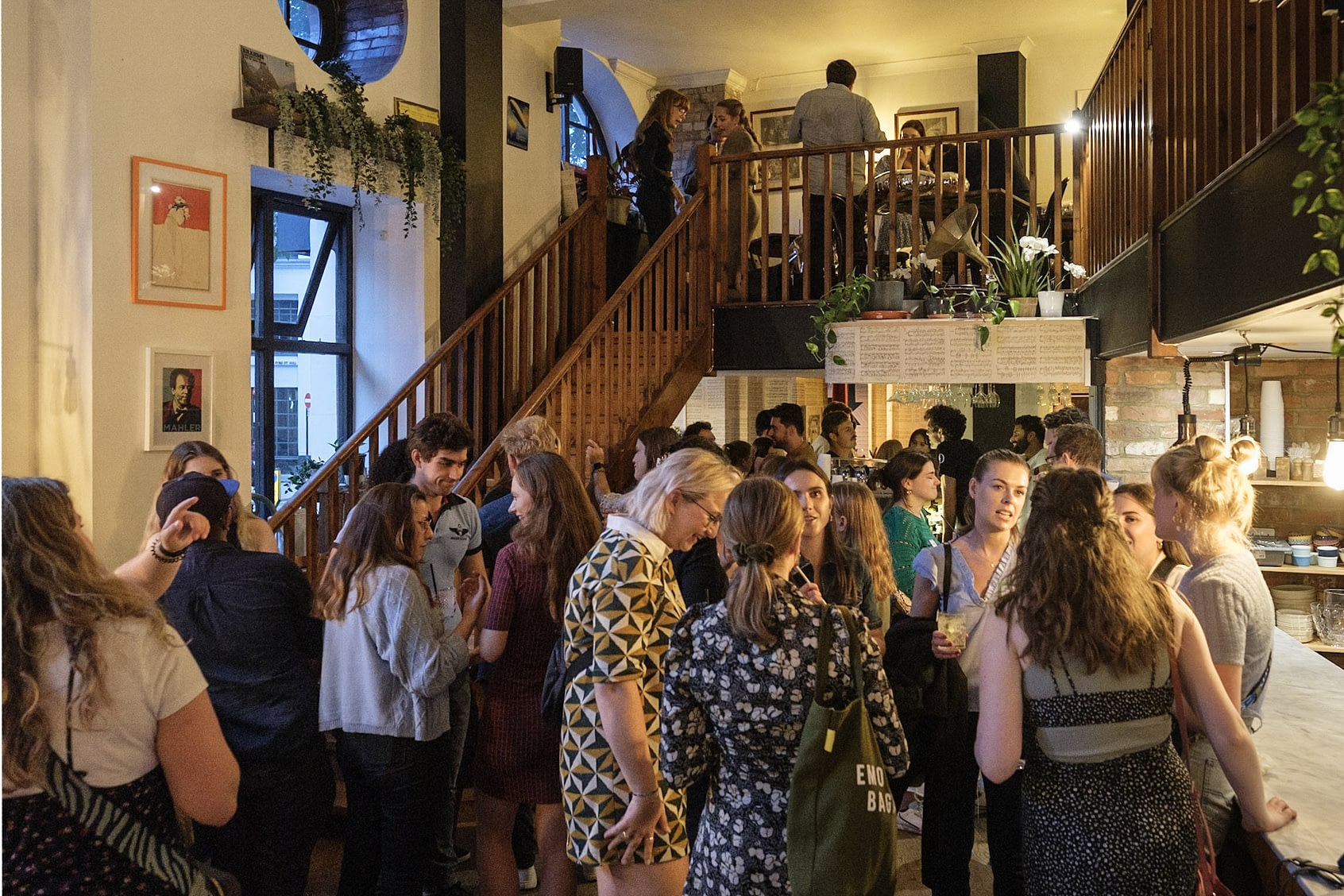
Craft Chocolate Christmas Fair at Fidelio
🎟️ Book now for our upcoming Christmas Fair sessions. Click the button below and purchase tickets to any of the sessions that you’d like to attend.
📍 You don’t have to book a session to just come along to the fair. Find us on December 2nd/3rd at Fidelio Cafe, Farringdon, Clerkenwell Road, London, EC1R 5BX.
👇 Tap the button below for more details about the sessions and speakers we have lined up for you.