Investigating Ultra Processed chocolate

How savouring, flavour and reading the label can protect against ultra processed foods - especially ultra processed chocolate.
Print / PDFSpot the problem(s) with this logic.
- Cocoa beans are full of all sorts of healthy stuff like antioxidants, fibre, flavonoids and rare minerals
- Chocolate bars, snacks, etc. are made from cocoa beans
- Chocolate bars, snacks, etc are therefore good for you as they’ve got lots of healthy stuff in them… and dark chocolate is especially good for you as it’s got more cocoa beans.
Instinctively, most of us realise that this logic is problematic. We are more than aware that many chocolate bars, snacks, and breakfast cereals are really just confectionery. Indeed we now even have government regulations that restrict how these “High in Fat Salt and Sugar” “junk” foods are marketed to children.
More and more of us are now checking the ingredients of pre-packaged foods to try and avoid junk foods and “ultra-processed” food like substances. However over the last decade, it’s been increasingly clear that in addition to “junk” ingredients, the way a food is processed is also critical. Much of this work and categorization is based upon NOVA, a pioneering project started in Brazil over a decade ago.
However, mass produced chocolate can be tricky to identify, even under the NOVA framework. Most of us can easily “see” the difference between an ultra processed chicken nugget and home roasted chicken. And we can easily check the ingredients, and see the difference between a mass produced chocolate snack with all sorts of colourings and additions and a dark chocolate bar. But teasing apart the difference between a craft chocolate bar and a supermarket mass produced chocolate bar of “finest single origin”, or well known European (or US) branded 70% or 85% dark chocolate bars isn’t quite as obvious. Most supermarkets and well known brands, even with their dark high percentage bars, won’t detail where, and how, the cocoa beans have been sourced and then processed. And how a bar is processed makes a HUGE difference to how fibre, antioxidants and many other health benefits in cocoa can go from cocoa bean to chocolate bar.
So if checking the ingredients isn’t enough, what else can you do – how can you tell if a bar has been “ultra processed”? Sadly there isn’t (yet) as simple a process to evaluate manufacturing “ultra processes” as there is for checking for ultra processed ingredients by reading the label. The good news in the case of chocolate is that FLAVOUR can give a pretty clear indication as to whether, using the NOVA classification, a bar is an “ultra processed” NOVA 4. If you find yourself savouring the chocolate, and not wanting to scoff and gobble it all down in one go, and if you can then go on a flavour journey, this is a reasonably good indication that the bar hasn’t been ultra-processed – and it’s healthier for you and better for the planet.
Indeed an exploration of why almost all mass produced chocolate, including your super market number one dark chocolate bar is “ultra processed”, also shows the merits of NOVA’s approach and definitions – and why Big Chocolate is being so curiously quiet. This is not a debate it wants to open up.
To try and put everything into context, we’ll start with a quick introduction to UPFs and NOVA. We’ll also recap (some of) the benefits of (craft) chocolate. Then we’ll explain more about what is meant by “ultra processing” in general, and specifically in mass produced chocolate (plus a quick detour as to why milk chocolate may have accidentally “inspired” some of the move to ultra-processed foods). Then we’ll explore the evidence that this ultra-processing is destroying many of chocolate’s health benefits as well as destroying the planet. Finally we’ll outline how firstly checking the ingredients / back label and secondly focusing on flavour and savouring offers a way forward and a simple means to avoid being duped into scoffing loads of ultra processed chocolate and food-like substances.
It’s a long post. So we suggest you grab a bar to savour and see you through. But the good news is that if you can find the flavour in a bar of chocolate, you’ll not only be eating a healthier bar but also one that is better for the farmers and the planet.
Bottom line: please make savouring the flavour of craft chocolate (and checking the label), part of any plan to avoid ultra processed foods.
Overview of the state of nutrition, project nova and big foods counterattack
“Around 75% of calories across all types of (UK) school lunches came from (Ultra Processed Foods) UPFs – with 82% of calories from UPFs in packed lunches, compared with 64% in school meals – across all ages (of school children” (House Of Lords report on UPFs 2023, National Institute for Health and Care Research (NIHR), through the NIHR School for Public Health Research)
Global height ranking for the UK has worsened over the past 35 years, with 19-year-old boys falling from 28th tallest in 1985 (176.3 cm) to 39th in 2019 (178.2 cm), and 19-year-old girls from 42nd (162.7 cm) to 49th (163.9 cm). … The international team behind the study warn that highly variable childhood nutrition, especially a lack of quality food, may lead to stunted growth and a rise in childhood obesity – affecting a child’s health and wellbeing for their entire life.
(Height and body-mass index trajectories of school-aged children, The Lancet / Imperial College 2020)
Almost a third of British adults are obese and almost a quarter of children are obese or overweight by the time they start school.
Bite Back Charity, Feb 2024 (The Times)
Over the last decade, the phrase “ultra processed foods” (UPFS) has gained traction, adding scientific rigour to earlier criticisms of “junk foods” and showcasing the disasters that Big Food is inflicting on the planet, our health and that of our kids (and their height and weight). This is pretty impressive given that the term was only coined back in 2010 as part of the NOVA study led by Carlos Monteiro, Professor of Nutrition and Public Health at the University of Sao Paulo, Brazil.
Unsurprisingly “Big Food” is mounting a hard counter attack. They point out that their (ultra processed) foods are “cost effective”, “convenient”, “nostalgic” and – as they ask rhetorically – isn’t all food “processed” in some way through cooking, pasteurisation, etc.? In addition to ignoring all the costs of cheap ultra processed foods to your health, the planet, etc. this argument about “all food being processed” is also disingenuous.
But it’s a smart tactic to divert and confuse. It can be hard to understand what exactly is meant by “ultra processed” versus “processed”. And it’s not always obvious how, and why, the added ingredients and complex industrial steps that make up “ultra processed foods” are so problematic – and how they can destroy the benefits of “real” foods (including craft chocolate).
Chocolate is also particularly tricky to evaluate as unlike e.g, bread with the ChorleyWood Process, ice cream with ultra high pressure (UHP) homogenization, crisps with hydraulic extrusion, the “ultra processes” used aren’t as groundbreaking. But they are still critically important.
The good stuff… a recap of the benefits of (craft) chocolate
Chocolate is one of life’s greatest affordable luxuries. And what makes it a luxury is not the price, but the way that we all can appreciate savouring chocolate’s complex, deep and lingering flavours. And before diving in and becoming a “killjoy” who criticises your favourite chocolate snacks, it’s worth re-emphasising this amazing (and affordable) luxury has some amazing benefits too. Note to illustrate chocolate’s benefits, we’ve focused on describing craft chocolate, and mainly dark (or dark milk) chocolate. White chocolate is made from cocoa butter, and whilst it may help satisfy your second stomach (see below), it lacks the “cocoa mass” which contains the fun stuff below. Because of ultra processing, mass produced chocolate and confectionery doesn’t offer so many of these benefits.
- The primary stimulant in craft chocolate is theobromine, a stimulant that provides a smooth, long-lasting energy boost without the jitteriness often associated with caffeine. Craft chocolate also contains some caffeine, though in smaller amounts than theobromine. For more on the difference between the two stimulants, please see here. (By contrast, the primary stimulant – and ingredient in many ultra-processed chocolates – is sugar, which can lead to rapid spikes and crashes in energy levels).
- Craft chocolate also contains a host of other stimulants, including phenylethylamine (PEA), quercetin, catechins, epicatechins, and more. While these stimulants may not have the aphrodisiac properties sometimes asserted by overenthusiastic marketeers, they can provide various physical and psychological benefits (again, see here).
- Craft chocolate is rich in fibre, contributing to digestive health and promoting a feeling of fullness. A typical dark craft chocolate bar contains 5-10g of fibre, and given that most of us don’t get anything like the amount of fibre we need – 25-40g depending on age, sex, etc. even a couple of squares can help.
- Additionally, craft chocolate is abundant in flavonoids (such as catechin and epicatechin), anthocyanins, polyphenols, procyanidins, quercetin and phenolic acids which help create craft chocolate’s remarkable depth, length, and complexity of flavour. These compounds also act as potent antioxidants, helping to protect cells from damage caused by free radicals, lowering heart diseases etc.
- Furthermore, craft chocolate is an excellent source of essential minerals such magnesium, calcium, iron, zinc, copper, potassium, and manganese which play crucial roles in various bodily functions, including muscle and nerve function, immune health, and antioxidant activity.
These stimulants, compounds and rare minerals have been associated with all sorts of health benefits above the ones listed above. Unfortunately overzealous and unscrupulous marketers have abused these claims; perhaps the most notorious ones here are the claims for chocoalte’s miraculous heart health benefits inspired by the observations of Benjamin Keane in the 1940s and then (ab)used by Mars in the 1990s and 2000s (for more on this, and how Benjamin Keane also is criticised for catalysing the US Embassy Hostage crisis in 1979, and also credited with great advice on avoiding salads and ice when travelling, please see here). But this doesn’t mean we have to throw the baby out with the bath water; dark craft chocolate does contain lots of good stuff for your gut, brain, mood, skin, oral microbiome and more (see here for more on this from Professor Tim Spector).
Craft chocolate is also a fantastic way to aid digestion without encouraging overindulgence at the end of a meal – and for more on why you really do have a second stomach for chocolate and puddings, and why craft chocolate is the answer, please see here.
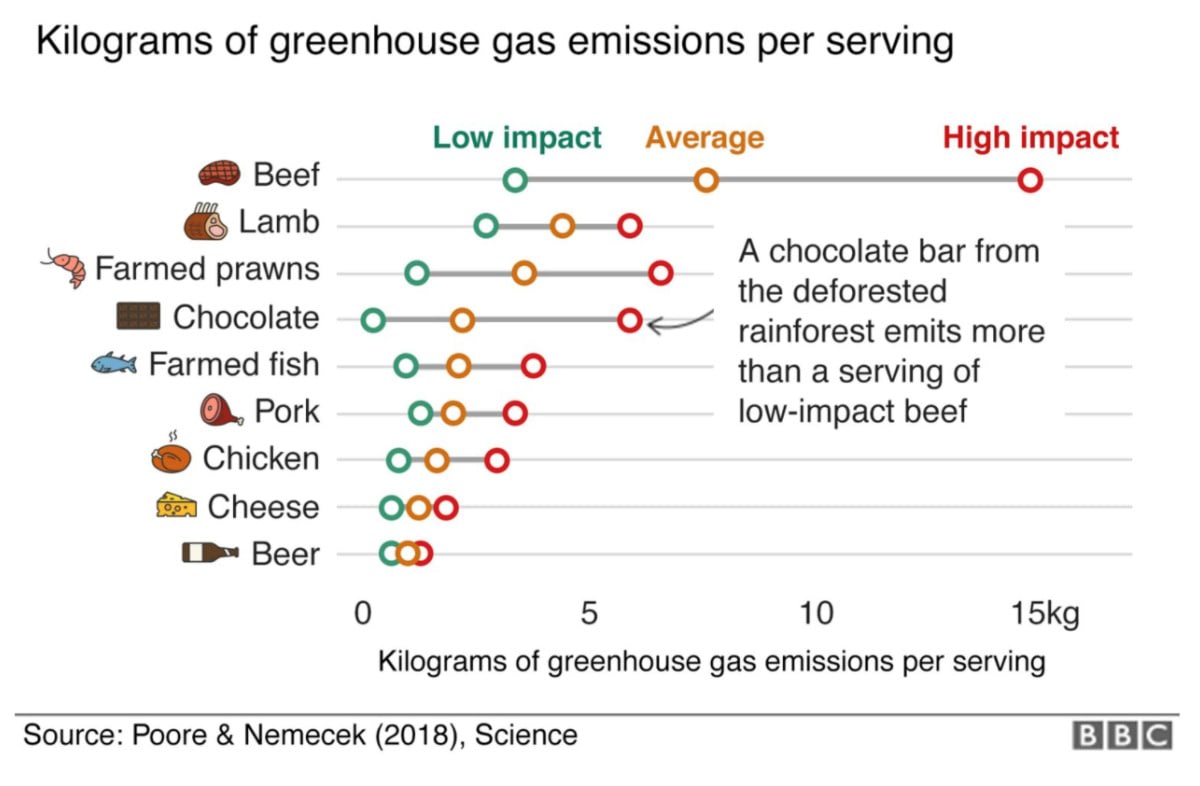
Craft chocolate is also great for the planet’s health. Craft chocolate is all about protecting, preserving and regenerating the rainforest while also providing indigenous peoples with a reliable, long term income and future (see below for some bars crafted with beans from VRAEM, and also some bars where each time one is purchased, a tree is planted in the rainforest). This is in contrast to Big Chocolate / ultra processed chocolate where their commoditization of cacao has led to deforestation, the impoverishment of farmers and extensive use of child / child slave labour – for more see here.
Indeed if there is one food where when you “upgrade” from mass/ultra processed to craft and really can save the planet and rainforest, it’s chocolate – see the Pool and Nemeck Study.
(note: this list isn’t meant to be exhaustive, and please feel free in the comments to add whatever you think I’ve missed out).
What is meant by the term Ultra Processed?
Before the term “ultra processed” foods took off, we often used terms like “fast foods” or “junk foods”. What we meant by “junk” or “fast foods” was, on the surface, relatively obvious. However no one ever really came up with a clear and tight definition that was systematic. Consequently Big Food was able to deflect criticisms and confuse with multiple campaigns against fat, for added nutrients, etc.
Carlos Monteiro and his team in Brazil, facing a twin disaster of obesity and malnutrition for their kids and general population, provided a framework and structure that seeks to give a far tighter definition with an ambition objective to classify “all foods according to the nature, extent, and purposes of the industrial processes they undergo”. They called this project NOVA (it’s not an acronym, this is its name) and proposed four groups that I’ve tried to summarise below (see the footnotes for the full definition)
- NOVA/GROUP 1 – Unprocessed or minimally processed foods (fruit, vegetables, eggs, meat, milk, etc.) that is to say, the edible parts of plants or animals that have been taken straight from nature or that have been minimally modified/preserved;
- NOVA/GROUP – Foods processed in the kitchen with the aim of extending their shelf life. In practice, these are ingredients to be used in the kitchen such as fats, aromatic herbs, etc. to be kept in jars or in the refrigerator to be able to use them later. And they are produced from Group 1 foods
- NOVA/GROUP 3 – Processed foods. These are the foods obtained by combining foods of groups 1 and 2 to obtain the many food products for domestic use (bread, jams, etc.) made up of a few ingredients
- NOVA/GROUP 4 – Ultra-processed foods. These are foods (or food-like substances) that are designed to be as cheap to make as possible, whilst also being as “scoffable” as possible too. They normally use multiple “industrialised” ingredients including food additives that improve palatability and add back in flavour, all sorts of hydrogenated animal and vegetable fats, modified starches, bulking agents, artificial emulsifiers, gums, alternative sugars and sweeteners plus all sorts of synthetic and non food substances (e.g., coal tar) that have been made into “food like” substances which are then turned into packaged “stuff” via industrial processes and complex machinery that extrude, hydrogenate, bleach, alkalinise, refine, reconstitute, etc.
Big Food is doing its best to argue that NOVA’s framework doesn’t really work, often arguing that the difference between “processing” and “ultra processing” is forced and too complex (they also argue that in a time of recession, cheap foods shouldn’t be criticised).
NOVA’s supporters have responded with a simple question to identify ultra-processed foods: the “can you replicate at home” test. In essence, if the ingredients used in a food item are not commonly found in a typical household pantry or kitchen, it likely falls under what NOVA call Group 4 “food-like substances.” It works well. Most of us can’t recognise, and don’t have in our kitchen cupboards, the likes of synthetic emulsifiers, soy protein, mechanically separated meat, HFCS, deodorised palm oil, carrageenan, etc. Similarly we can’t recognise, and don’t have the machines used to make, Group 4 “food-like substances” in our home kitchens. For example, most houses have ovens and /or microwaves, a few may even have sous vide machines or even air fryers, but very few homes will have an industrial extruder, hydrogenation reactor, centrifugal presses, or high pressure water condensers in their kitchens.
To date, Big Chocolate hasn’t engaged as to whether their mass produced chocolate bars and confectionery are ultra processed. But applying these tests .. ie do you really want to ingest those ingredients and are you really aware of how a mass produced bar is “engineered” .. is instructive and illuminating.
A brief digression .. why milk chocolate may have helped lay the groundwork for the ultra processed food revolution and “bliss point” foods
As with any good detective story or massively successful discoveries, there are LOTS of heroes/villains and theories as to how the “ultra-processed food” revolution has come to pass. And some great books have been written about this (Hat Tips to Tim Spector, Chris van Tulleken, Mark Bittman, Michael Pollan and Mark Shatzker to name a few – and see below for links).
Clearly one key part of the story is that over the last fifty years, “Big Food” and commodity trading companies have realised that ultra-processed foods are HUGELY profitable. They’ve done a frighteningly good job of seizing scientific advances in intensive farming, fertilizers, antibiotics etc. to focus on a few high-yield plant foods and animal products that form the bedrock of all that we now eat. Then they’ve seized the genius of scientists in, for example, working out how to refine various natural and synthetic fats, emulsifiers, colourings, sugars etc and then, via new technologies like hydrogenation, extrusion, centrifugation, chemical drying, etc., to process “food-like substances” out of these “commoditised” plant and animal ingredients.
One key part of “ultra-processed foods’” strategy is to be as cheap as possible (not a bad thing) combined with trying to get us to eat as much as possible (not a good thing). Indeed if you want an easy to understand, but hard to apply, classification of “UPFs”, is to think whether you want to “gobble and scoff” (it’s a UPF) or you “want to savour” (it’s a real food). A good meal is one that you enjoy, and yes you are sad you’ve finished, but you don’t crave more and more, and feel you can’t resist “one more Pringle”. Underpinning this Pringle (or Dorito) effect of “once you pop, you can’t stop” are a couple of key insights; the Bliss Point and Sensory Specific Satiety.
Sensory Specific Satiety first described in 1956 by the French physiologist Jacques Le Magnen, and then coined, and pushed as a term by Barbara and Edmund T. Rolls in the 1980s. Essentially it’s the reason why you eat more at a buffet and why ice cream stores try to sell you multiple scoops of different ice cream flavors/ textures rather than e.g., just vanilla, etc. If we offer people variety in texture, flavours, tastes etc. we can pique people’s curiosity and stop them becoming “sated” – so they eat more.
The discovery of the “Bliss Point”is similarly recent and credited to Howard Moskowitz, a psychophysicist and market researcher who was tasked with getting American soldiers to eat more of their MREs (aka rations) in the late 1960s. He discovered that for any food there is a “bliss point” where a combination of salt, fat, sugar, umami and diverse textures can override our innate sense of satiety, and we’d want “more and more” (for more, see here).
Arguably, Daniel Peter – the inventor of milk chocolate – discovered a bliss point food almost a century before Moskowitz coined the phrase. Milk chocolate, even craft and dark milk chocolate, is far harder to resist and far more moreish than dark craft chocolate. And this is because it has more fats, and sometimes even some salt (hat tip to Original Beans Esmereldas 42% Milk here), plus like (most) dark chocolate, milk chocolate contains some sugar.
Over the next decades Daniel Peter and Henri Lindt’s milk chocolate helped chocolate sales skyrocket, moving factory workers from drinking chocolate to eating bars. And since then “Big Chocolate” has taken the bliss point in chocolate and confectionery far, far further. Yes it’s hard to resist a second square of a craft milk chocolate, but you can savour these bars. Unlike ultra-processed chocolate, craft milk chocolate bars aren’t all about scoffing and sugar highs where, before you know it, you’ve gobbled down a whole bar, bag of whatever, box of chocolate flavoured breakfast cereal, etc. But be warned, these milk, and dark milk, craft chocolate bars are very moreish.
“Once you pop, you can’t stop” is good business and great for sales. But it’s not good for your health (or the planet’s well being either). UPFs cause a LOT of problems.
…. and what are (some of) the problems with ultra processed foods
Inside their histories of junk foods and UPFs, the perils and dangers of these “food-like substances” are carefully dissected (again, for links to books by Tim Spector, Michael Moss, Mark Schatzker, Chris van Tulleken etc. see below). They aren’t trying to scaremonger, but they make for scary reading. Essentially they argue that the industrialised ingredients and processes in UPFs are in themselves unhealthy, damaging to the nutrients in real foods and do all sorts of other harm to farmers and the planet –for example:
- UPFs encourage overeating and confuse the body, brain and gut – indeed they are specifically engineered to encourage scoffing (again, see the bliss point etc. for more on this)
- Many of the steps taken to make “ultra processed” foods destroy the flavours, benefits and nutrients of “real” food (that’s why they have to be “fortified” with extra vitamins, nutrients, fibre, flavours, etc.: the steps used to process them destroy much of their nutritional value and flavours)
- Makers also add all sorts of additives, preservatives, stabilisers, flavouring agents, etc. to improve “scalability”, “irresistibility” and also improve the shelf life. But unfortunately, many of these additives are also harmful to our gut, digestion, teeth, etc. (for more on this, and the problems of emulsifiers, please see below and also here).
And these ultra processed foods have created a paradox of obesity and malnutrition not just in the UK, US etc. but also “developing” countries like Brazil (the birthplace of NOVA) where these foods were positioned as a solution to “food poverty” and childhood malnutrition.
These ultra processed foods are designed not just to be scoffable, but also as profitable and cheap as possible. So the key “components” used to make these NOVA4 food-like substances – wheat, soy, corn and, yes, chocolate – are commoditised. And all too often this commoditization involves deforestation, environmental destruction and impoverishment of farmers involving the worst forms of child labour.
What is specifically happening with ultra processed chocolate?
It’s very clear that the commoditization of mass produced chocolate has created an environmental and social disaster in much of West Africa and parts of Latin America. Even Big Chocolate acknowledges this. Sadly much of this “acknowledgement” takes the form of smart, but disingenuous marketing, with the likes of Tony’s taking this to new levels of chutzpah (e.g. their 2023 impact report delights in pointing out that “only 10% of the labour on the farms they work with is done by children”, see here for more.)
Yet Big Chocolate has so far managed to dodge much of the criticism of the health problems associated with ultra processed foods. They’ve package into small portions of less than e.g., 150 calories (e.g. Ferrero Rocher) to obfuscate how much is really scoffed. They’ve obscured their labeling – not listing whether a cocoa powder is alkalised or not, using terms like “various vegetable fats” rather than “refined palm oil”, adding in vitamins, using cocoa pulp sugar, etc. Side note: they are also doing a great job of hiding their nefarious sourcing practises with invented confusing accreditations suggesting they are “green” and most recently, they’ve also started to claim on their bars that they are using cocoa from a “single origin” (which is VERY different to single farm / co-operative).
However if you check out the packaging, websites, PR literature, etc. for Big Chocolate, you’ll struggle to find how they actually “make” their bars (spoiler alert: they aren’t made by chefs in white hats pouring chocolate onto clean tables).
To avoid being tricked, you need to check the label for the inclusion of ultra processed ingredients AND also learn to “savour the flavour” so you can identify what ultra processed steps have been used in processing your well known super market or European and US branded “70% dark chocolate” bars.
What are (some) of the “tells” that a chocolate is ultra processed .. and why are these problematic – the easy stuff: emulsifiers and CBEs
Sometimes the “tells” indicating that a chocolate has been ultra-processed can be seen on the label, especially around “added fats”, emulsifiers and sugar. Taking each of these in turn:
The first of these; added fats are known in “Big Chocolate” as CBEs, that is to say Cocoa Butter Equivalents. In addition to giving chocolate its amazing mouthfeel, cocoa butter is also an extraordinary “fat” that has TONNES of applications in cosmetics. So it’s in high demand and very expensive. And one way for industrially processed chocolate makers to save money is to substitute cocoa butter for vegetable fats, palm oils, emulsifiers etc. (aka, cocoa butter replacements). Expect to see far more use of these CBEs now that the price of cocoa, and cocoa butter, is rocketing.
Next time you check the ingredients and see “responsibly sourced” palm oil, or the increasingly innocuous sounding “vegetable fats” (used so that makers can switch which fat they use without changing the packaging), please be aware that these oils and fats will have been “RBD” (ie refined, bleached and deodorised). Soybean oil, palm oil, rapeseed oil, sunflower oil, all have intriguing and distinctive flavours. So these need to be removed via – for example – bleaching with bentonite clay, degummed with phosphoric acid, deodorised with high pressure steam, etc. Yum. And yes this does remove all the nutrients from these “vegetable fats”.
Another additive in many mass produced chocolates are lecithins and emulsifiers. These are added partly to help the machinery run faster, partly for mouthfeel, partly to stop bars melting in a hot climate, and partly to “bind together” bits that otherwise are hard to bind into the chocolate bar. And adding emulsifiers also means you can not only reduce the amount of cocoa butter, and increase other cheaper ingredients like sugar, while still maintaining some mouthfeel and texture.
Lecithins and emulsifiers have been around for a long time – for example, when you add mustard to make your oil and vinegar stay together in a salad dressing, this is an emulsifier. And soya lecithin, first invented and patented in the 1920s, was first patented to be used in chocolate production (for more see here).
There isn’t very much lecithin in a soya bean or soya oils. And it’s hard to extract. But because the world is awash with cheap soy, soya lecithin is found in many ultra processed foods and many mass produced chocolate brands including: Lindt (e.g, Salt or Milk Bar), Tony’s, Hersheys, Godiva… in fact it’s hard to find a supermarket or big brand which doesn’t use these emulsifiers in many of its bars.
When pinned down, Big Chocolate has tried to argue that adding soya lecithin doesn’t make a product “ultra processed” as soya lecithin is a natural emulsifier derived from soybeans, and is composed of various naturally occurring fatty compounds found in animal and plant tissues. But if you dig a bit deeper and understand how soya lecithin is “extracted”, it’s hard to argue it’s not an ultra processed ingredient. It’s not something you can make at home. It is extracted from crude soybean oil firstly via a degumming process to remove phospholipids, and then the lecithin is further isolated before it’s decolorized and dried using acetone solvents. Despite all these processes, soya lecithin is also super cheap.
Another more recent emulsifier, again often made from soya beans, is polyglycerol polyricinoleate (PGPR), also known as E476. Unlike soya lecithin, PGPR is described as a synthetic emulsifier in the food industry (so it’s clearly an ultra processed ingredient). Big chocolate LOVES PGPR because it makes the chocolate flow through the machines more easily and at lower temperatures. It also helps get rid of air bubbles and means that very thin coatings of chocolate can be laid. And again it’s super cheap, and means you can use lots more cheap ingredients (that’s why the likes of PGPR are extensively used with e.g. chocolate digestives).
Unlike some emulsifiers and “gums” (e.g.,carboxymethylcellulose, polysorbate-80 or carrageenan), to date no studies have suggested that PGPR or soya lecithin may damage and/or unbalance the gut microbiota and e.g. “lead to low-level gastrointestinal inflammation, increased food intake, weight gain, and metabolic syndrome” (note the studies on carboxymethylcellulose and in polysorbate-80 suggesting these problems have only so far been done in mice, and these are mainly used in ice creams and chewing gum – not chocolate).
But it’s worth noting that in the US, UK and EU, the amount of PGPR food companies can add to any “food” is regulated. And carrageenan is still being used in some chocolate milk products sold by Palsgaard.
IMPORTANT NOTE ON SUNFLOWER LECITHIN: Some craft chocolate makers use sunflower lecithin to improve mouthfeel, help chefs use their couverture and to prevent their machines gumming up. This is a major point of friction within craft chocolate, with strong feelings on both sides. But unlike PGPR or soya lecithin, sunflower lecithin does not count as an ultra processed ingredient. It’s extracted similarly to the way that virgin olive oil is crafted, that is to say (dehydrated) sunflower seeds are cold-pressed and no chemical solvents are used. Again, for more see here.
What are (some) of the “tells” that a chocolate is ultra processed .. and why are these problematic – the easy stuff: sugar
The primary ingredient in most mass produced chocolate bars and confectionery is sugar. This is classic “NOVA4” behaviour to optimise profits and scoffing. Sugar is cheap and it’s also highly “pleasurable” to the point that it’s often described as addictive (indeed rats have been shown to prefer a sugar hit to a cocaine hit). And fortunately it’s also relatively easy to identify by reading the back of the label – under EU, US and UK law, you have to list ingredients in order of % weight (although if you use multiple sweeteners and sugars, savvy makers can obfuscate this).
Sugar is also used as a preservative as it dries out any moisture, preventing mould etc. And it makes a great stabiliser and bulking agent. Plus it’s CHEAP – so unsurprisingly, it’s the first ingredient in a TONNE of mass produced chocolates –
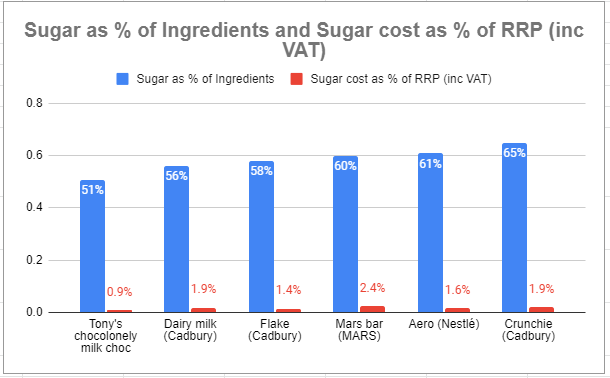
This amount of sugar is clearly not good. Despite the attempts of the sugar industry to obfuscate, the links between sugar and tooth decay, obesity, type 2 diabetes, acne, skin ageing, fatty liver, GI spikes and even cancers are increasingly being researched (see here for more).
And sugar is also up there with commodity chocolate for the environmental and social disasters it causes. For example, Thompson Reuters has produced numerous reports on the problems of slavery and indentured labour, including involving children, in Brazil – the world’s largest extractor of sugar (and yes, this is another reason why we’d REALLY like to see Tony’s, when the primary ingredient of almost all their bars is sugar, actually tell us where their sugar is sourced ….).
A note about sugar in craft chocolate. Almost all craft chocolate bars contain added sugar. But this sugar isn’t being added as a cost saving measure, nor is it to create a sugar hit or sugar high. Rather it’s because sugar helps reduce bitterness, counter astringency and above all reveal the myriad of flavours within chocolate. And it’s this flavour enhancing property which also explains why most craft chocolate makers use refined sugar (which has no flavour) to catalyse and release the aromas and flavours in chocolate. Again, for more on sugar’s powers to reveal flavours, please see here.
What are (some) of the “tells” that a chocolate is ultra processed .. and why are these problematic – the stuff that’s not on the label
Unlike bread, biscuits or ice cream, the technologies used to make chocolate haven’t really “changed” that much in the era of junk and now ultra processed foods. The “Real Bread Campaign” can succinctly observe and define real bread “as bread made without chemical raising agents, so-called processing aids, or any other additives”, highlighting the extraordinary developments in ultra processed bread since the 1950s such as the ChorleyWood process. Ditto yogurts, ice cream, crisps, hamburgers, etc.all have their own complex, and super efficient, “ultra processed” machines and factories now too.
Chocolate is different. The key discoveries made by Frys, Lindt and Daniel Peter – concheing, tempering and dried milk powder – that led to us to switch from drinking chocolate to eating bars were made in the late 19th century and are still used by both “big” and craft chocolate. And Van Houten’s alkalinisation and cocoa press innovations, which revolutionised drinking chocolate and cocoa powder, were a little earlier in the 19th century and still practised today. So these all arguably well “predate” ultra processed food technologies.
However, there are still some processes that big chocolate have “tweaked” that amount to “ultra processed” NOVA 4 practices. Arguably the most important of these are “nib roasting”, (as opposed to full bean roasting), and – often carried out at the same time – alkalinisation of these nibs.
Nib roasting was developed about 50 years ago, and has increasingly been adopted by “Big Chocolate” as it offers numerous advantages including
- More efficiency, reducing wastage by 2-5% (at least)
- Faster time periods and a faster roast; nib roasting is generally a higher temperature (132-140C) and for a shorter roast period (15-30 minutes) compared to whole bean roasting. As a result the whole nib is roasted to that higher point.
- A more consistent and “even” taste (aka, flatter) and one that is arguably better at hiding defects from commodity beans, poor fermentation, drying, etc.
Today “nib roasting” is frequently preceded by “alkalization” (or ”Dutching”). In 1846, Coenraad Van Houten, following his father Caspardus Van Houten’s innovation of applying hydraulic presses to extract excess cocoa butter from cocoa, discovered that soaking the pressed cocoa cakes in an alkaline salts reduced their acidity and bitterness whilst also making them more water soluble and imparted a more appealing reddish hue.This made Van Houten’s cocoa powder far easier to use for drinking chocolate, as well as improving mouthfeel and flavour. Additionally, it expanded the versatility of cocoa powder in applications such as ice creams, cakes, and baking. Rapidly, other chocolate manufacturers adopted this alkalization process, which they called “Dutching.”
It’s fairly easy to replicate this “alkalinisation” at home; melt some high percentage dark chocolate in water, froth it and try it. Then add a small amount of e.g., bicarbonate of soda to the melt, and you’ll find that the drink becomes less bitter and less acidic, and it may even dissolve better.
Under the NOVA guidelines, this form of home “alkalinisation” isn’t ultra processed. However, the alkalinisation process involved in nib roasting is very different, involving all sorts of high tech machinery involving high pressure and steam to process the cocoa nibs, soaking the nibs, etc. And this looks a lot like “ultra processing”.
Unfortunately, and unsurprisingly, it’s hard to extract exact details of how “big chocolate” carries out nib roasting .. but it’s clear that they do. Even the notoriously secretive Lindt boasts of this on it’s website:
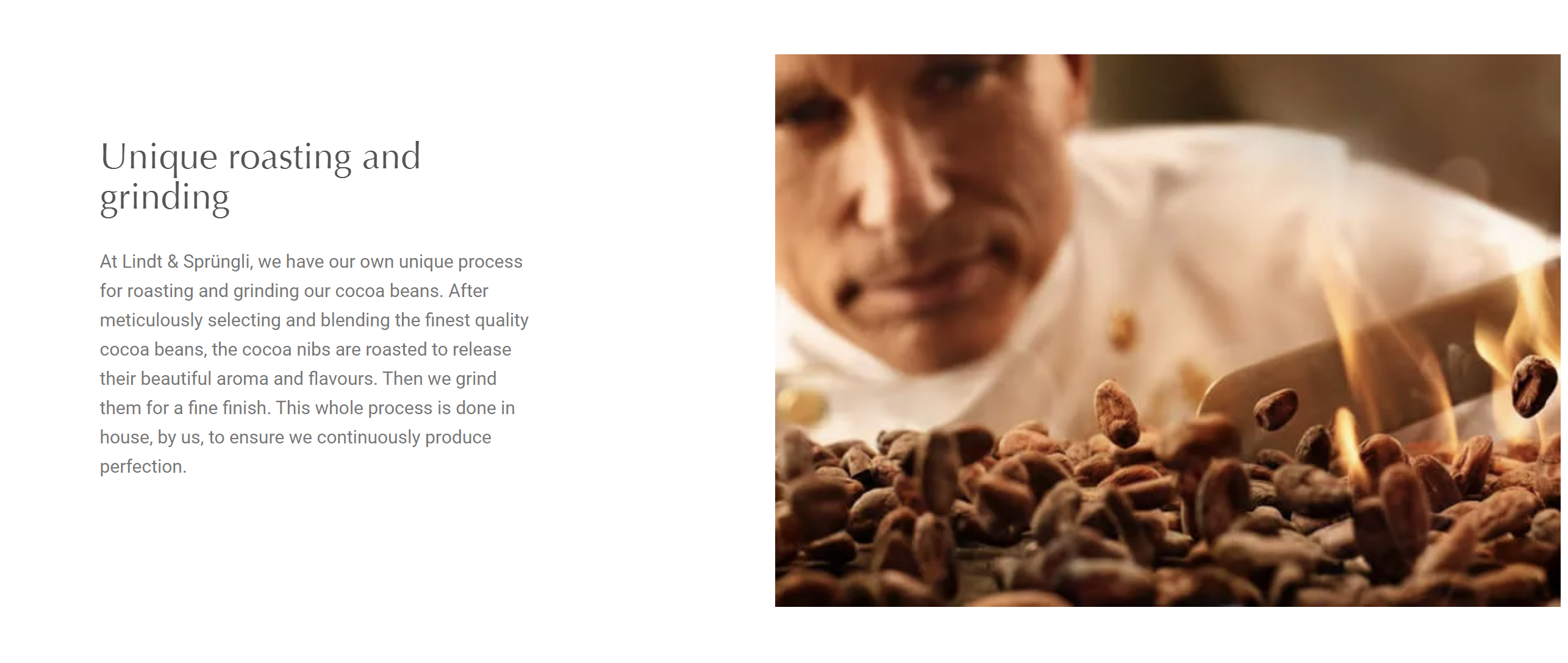
This picture seems to suggest whole bean roasting .. but the words confirm that it’s nib roasting.
Similarly, it’s hard to check if the nibs have been alkalinised; “Big Chocolate” has been lobbying the EU not to have to declare this alkaline washing for the last decade (in the US, it is mandatory). With Cocoa Powder it can be a bit easier when labels such as “Dutched” or “Naturized” (quite why washing cocoa nibs or powder in an alkaline solution is called “naturized” isn’t clear).
Nib roasting and alkalinisation may seem overly esoteric and academic distinctions. They aren’t as blatant an example of “ultra processing” as the way that e.g., some crisps are extruded, margarines reconstructed or the way that the ChorleyWood Baking Process synthetically created ultra processed breads.
But from a flavour and “nutrient” perspective, nib roasting and alkalinisation have a HUGE impact. Unfortunately there aren’t (yet) many published studies on the impact of alkalinisation and high roasts, but those that there are may explain why big chocolate hasn’t been very forthcoming with any proprietary research.
The few publicly available studies have shown that alkalinization can reduce the polyphenol count in cocoa by over 60%, and epicatechin, quercetin and catechin levels have been shown to be even more severely damaged. Similarly, exposing cocoa beans to high temperatures – ie above 135 degrees – has also been shown to destroy the flavonoids and polyphenols (ie the antioxidants) in the cocoa bean.
All that great fiber in dark chocolate is also damaged by this ultra processing. Roasting cocoa beans at high temperatures, such as that used in nib roasting, has been shown to “cause degradation of fiber in cocoa beans”. While Alkalinising / Dutch processing doesn’t directly remove fiber from cocoa, it also can affect the solubility and digestibility of certain components, including dietary fiber. Unfortunately there isn’t – yet – much published research on this. But given all the work being done by Big Chocolate, on added flavonols, fiber, etc. it would be great if they made this available.
The good news/the silver lining
Craft chocolate makers pride themselves on their ability to reveal length, depth and complexity of flavour. They do this at every stage of their crafting – and similarly in the work with their farmers. To them roasting is CRITICAL, and they are well aware of the dangers of over roasting. Many now detail their roast practises on their packaging, it’s normally 20-30 mins and at 120-125 degrees. And they well know that nib roasting, as opposed to whole bean roasting, destroys flavour (as does alkalinization). To craft chocolate makers, nib roasting and alkalinisation is like expecting instant coffee to have the same flavours and aromas as carefully fermented, dried and roasted speciality beans.
Trust your sense of flavour to tell how the bar has been crafted and the beans have been cared for, especially if the maker doesn’t tell you the farm / co-operative where the beans are from and how the bar has been crafted. Don’t get tricked into purchasing a bar that is ultra processed via nib roasting and alkalinisation. These ersatz “real chocolate” bars aren’t as good for you, the farmers or the planet.
Conclusion
The debate on ultra processed foods is important not just to our health, but also the state of the planet. Ultra processing commoditises ingredients and directly leads to environmental disasters, deforestation, desertification, etc. Plus it creates a socioeconomic situation where farmers of these core crops (soya beans, maize, cocoa, sugar, etc.) aren’t paid enough to live on, and where children are forced into indentured labour.
Unsurprisingly, “Big Food” is doing its best to counter attack and deflect, often on the grounds of individual choice, cost efficiency and by attacking the distinctions between “ultra processed” and “processed” foods. Big Chocolate has taken a different tack, ignoring the problem rather than engaging with it, positioning chocolate as a “naughty but nice” delight, and doing its best to limit information on ingredients and how they process their chocolate under NDAs, trade secrets, etc.
There is a ton of good advice on how to avoid ultra processed food like substances, especially ultra processed INGREDIENTS. It’s hard to beat Michael Pollan’s recommendation to check the ingredients and his suggestion that if either your grandmother wouldn‘t recognise items from a product’s long list of additives, preservatives, etc. and/or you don’t have these ingredients in your kitchen, don’t eat that “food-like substance”. Another great bit of advice, this time from Tim Spector is to avoid “food-like substances” which all too often have a sticker on them saying “healthy”, “fortified with xxx”, “natural” etc. – and this works well with loads of chocolate snacks.
In addition to this, think about flavour. Big Food has done an awesome job of getting us to scoff and gobble up more and more food-like substances by appealing to our basic tastes and our love of sugar, salt, fat and texture; they’ve (ab)used Daniel Peter’s discovery of milk chocolate’s bliss point to an unforeseen degree. But they can’t replicate the wonders that nature can create with flavour. Chocolate is a fantastic example here; on the surface it’s hard to see how a supermarket’s single origin bar with no obvious added fats, emulsifiers etc. has been “ultra processed” via alkalinisation, nib roasting, poor cocoa sorting and fermentation, etc as these details aren’t on the label. But when you open the bar, you can savour the difference. Even if the brand is well known, if the bar just has a single flavour “note”, or even worse is flat, and you don’t get a wonderful complexity of flavour that takes you on a journey you want to savour, you may well be having a nib roasted and/or alkalinised bar where much of the fibre, antioxidants and rare minerals have been removed. The bliss point, and simple sugar and mouthfeel aren’t the solution – go for a craft chocolate flavour adventure.
Craft chocolate is one of life’s greatest delights and luxuries. It offers an amazing opportunity to savour depth, complexity and length of flavour – and feed your microbiome and gut with fibre, flavonols and a host of other benefits. And thanks to NOVA, we can understand a little more about why mass produced supermarket bars are far better at getting to scoff their confectionery than giving us flavours to savour.
So please make switching to craft chocolate part of your rejection of ultra processed foods.
Sources:
https://lordslibrary.parliament.uk/impact-of-ultra-processed-food-on-childrens-health/
https://www.imperial.ac.uk/news/207893/poor-nutrition-school-years-have-created/
https://www.thelancet.com/journals/lancet/article/PIIS0140-6736(20)31859-6/fulltext
https://zoe.com/learn/dark-chocolate-health-benefits https://www.ncbi.nlm.nih.gov/pmc/articles/PMC9698929/
https://www.fao.org/3/ca5644en/ca5644en.pdf (Nova study)
https://www.context.news/just-transition/we-investigated-brazils-ethanol-sector-and-uncovered-slavery
https://www.foodnavigator.com/Article/2021/04/23/Sugar-the-next-ingredient-set-to-come-under-fire-for-its-climate-impact
https://link.springer.com/article/10.1007/s00217-019-03333-w
https://www.foodbeverageinsider.com/food-ingredients/in-full-bloom-sunflower-lecithin
https://www.perplexity.ai/search/what-are-the-kg83MglNT1acU0h3DlrnyA
https://www.researchgate.net/publication/268821639_Flavanols_proanthocyanidins_and_antioxidant_activity_changes_during_cocoa_Theobroma_cacao_L_roasting_as_affected_by_temperature_and_time_of_processing
BOOKS
https://www.markschatzker.com/doritoeffect-home-page
https://www.markschatzker.com/the-end-of-craving
https://www.penguin.co.uk/books/451300/ultra-processed-people-by-tulleken-chris-van/9781529160222
Tim Spector – Spoon-Fed: Why Almost Everything We’ve Been Told about Food is Wrong