From cacao to cocoa to chocolate: What’s in a name?
Cacao or Cocoa? White or Dark? And Why the EU and US Can’t Even Agree on What “Chocolate” Is…
Print / PDF
Remember last week’s exploration of Plopp chocolate bars, Spunk salty liquorice, and the theory that Spanish traders may have switched from saying “cacao” (uncomfortably close to “caca”—i.e., poo) to “chocolate”? If you missed it, see here.
This week, we’re untangling even more chocolate related confusion and obfuscation —from cacao vs. cocoa, to why some Europeans insist UK and US “chocolate” shouldn’t even be called chocolate. Plus, we’re exploring what truly defines dark, milk, and white chocolate across different countries and what the likes of “raw” and “dutching” really mean?
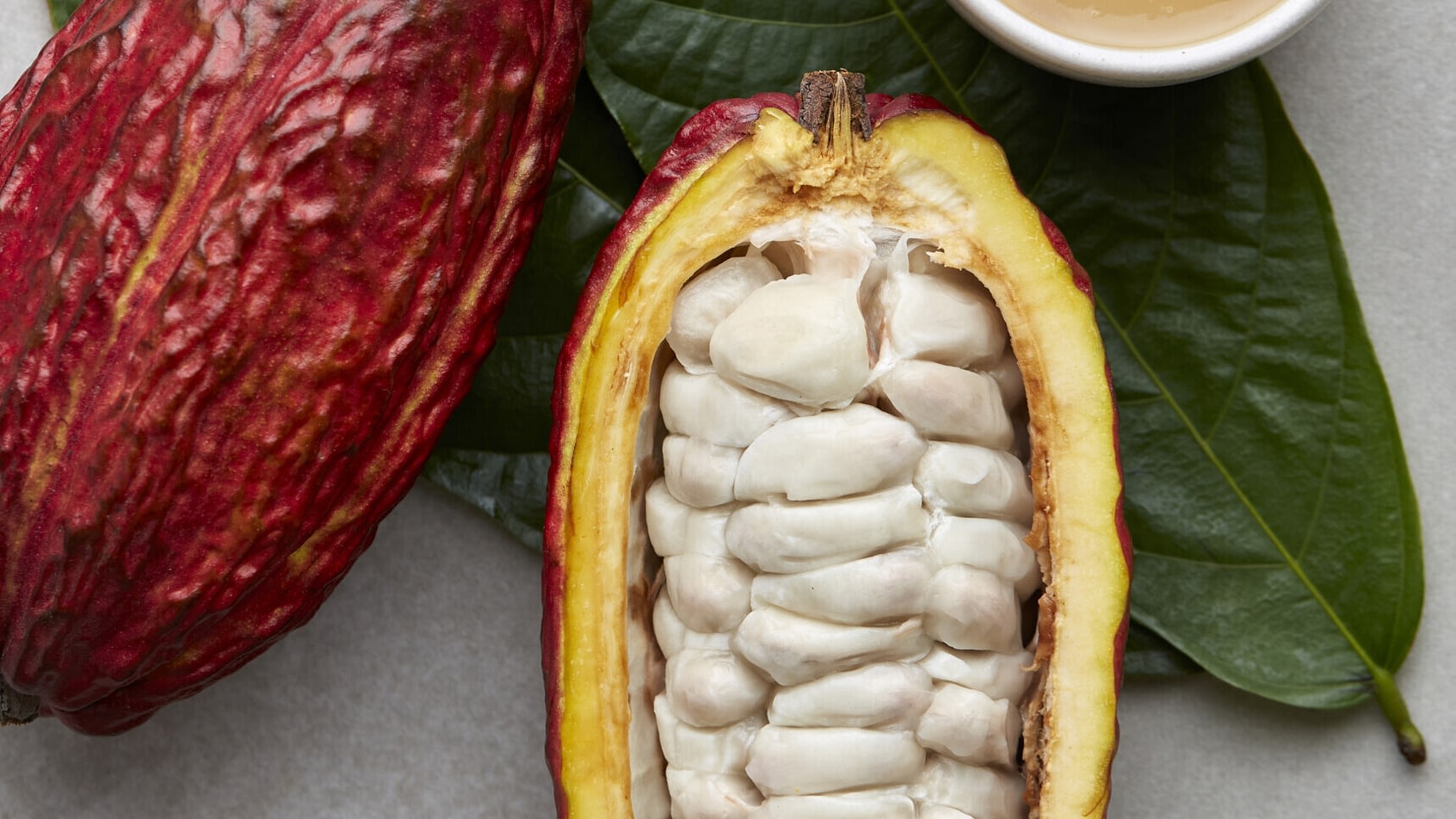
Cacao or Cocoa? What’s the Difference?
Although “cacao” and “cocoa” are often used interchangeably, they typically refer to different stages in the chocolate journey:
- Cacao is used to describe what happens on the farm, from growing and harvesting to fermenting and drying the beans.
- Cocoa refers to the post-roasting stage, which involves grinding, pressing, and processing into cocoa mass, cocoa butter, or powder.
Other Ca/Cocoa words worthy of more (and less!) attention – “Dutching”
What’s arguably more important than cocoa versus cacao is the use of other descriptive words before these terms like raw (an effectively meaningless, but remarkably potent marketing term – see here) and, even more importantly, the words “dutched” (or alkalanised) or “natural”.
Two decades after Coenraad J. van Houten “invented” the Dutch hydraulic cocoa press in 1827 his son, Casparus van Houten, followed this up with the creation of “dutching”. Although there is an argument that the British locksmith Joseph Bramah deserves the credit for the hydraulic press (he used a hydraulic press to flush toilers rather than pressing cocoa butter out of cocoa beans), Dutching clearly was invented by the Dutch Van Houten family. The “Dutching” process Casparus invented was to “wash” the pressed cocoa powder in an alkaline solution (usually potassium carbonate). This not only gives the pressed cocoa a more attractive red hue it also – and more importantly – reduces bitterness and improves its solubility in liquids (ie it makes a less grainy drink).
However “Dutching” also incurs significant nutritional costs, degrading many of the beneficial compounds in cocoa/chocolate. Theobromine (chocolate’s primary stimulant), Flavanols (antioxidants linked to heart and brain health), Polyphenols (anti-inflammatory compounds beneficial for the cardiovascular system) and essential minerals like magnesium, iron, and potassium that are also in cocoa / chocolate are all diminished and/or destroyed. These nutritional benefits are also massively impacted by roasting, pressing, etc. so it’s hard to disentangle what process is “doing what damage”, but see the blog for more articles and also here for more on why, and how, to spot and avoid “ultraprocessing” in chocolate.
Natural cocoa isn’t “dutched”. So while it may be a little less soluble and darker, it’s also preserves all the key nutrients.
In the US, the FDA requires companies to disclose if cocoa powder has been “dutched” or alkalised. However in the EU (and UK) Big Chocolate lobbied against mandatory labeling, arguing it might “confuse” consumers. As a result, many European bars and powders don’t specify how their cocoa was processed, leaving us in the dark.
If you want to taste the difference and retain all the nutrients intact, try non-dutched craft chocolate. Great options for starting: Chocolarder, Kokoa Kamili, and Chocolat Madagascar.
Why do many European countries still insist that British and American “chocolate” isn’t really chocolate?
This debate boils down to two key disagreements:
1. Different Minimum Cocoa Content Standards
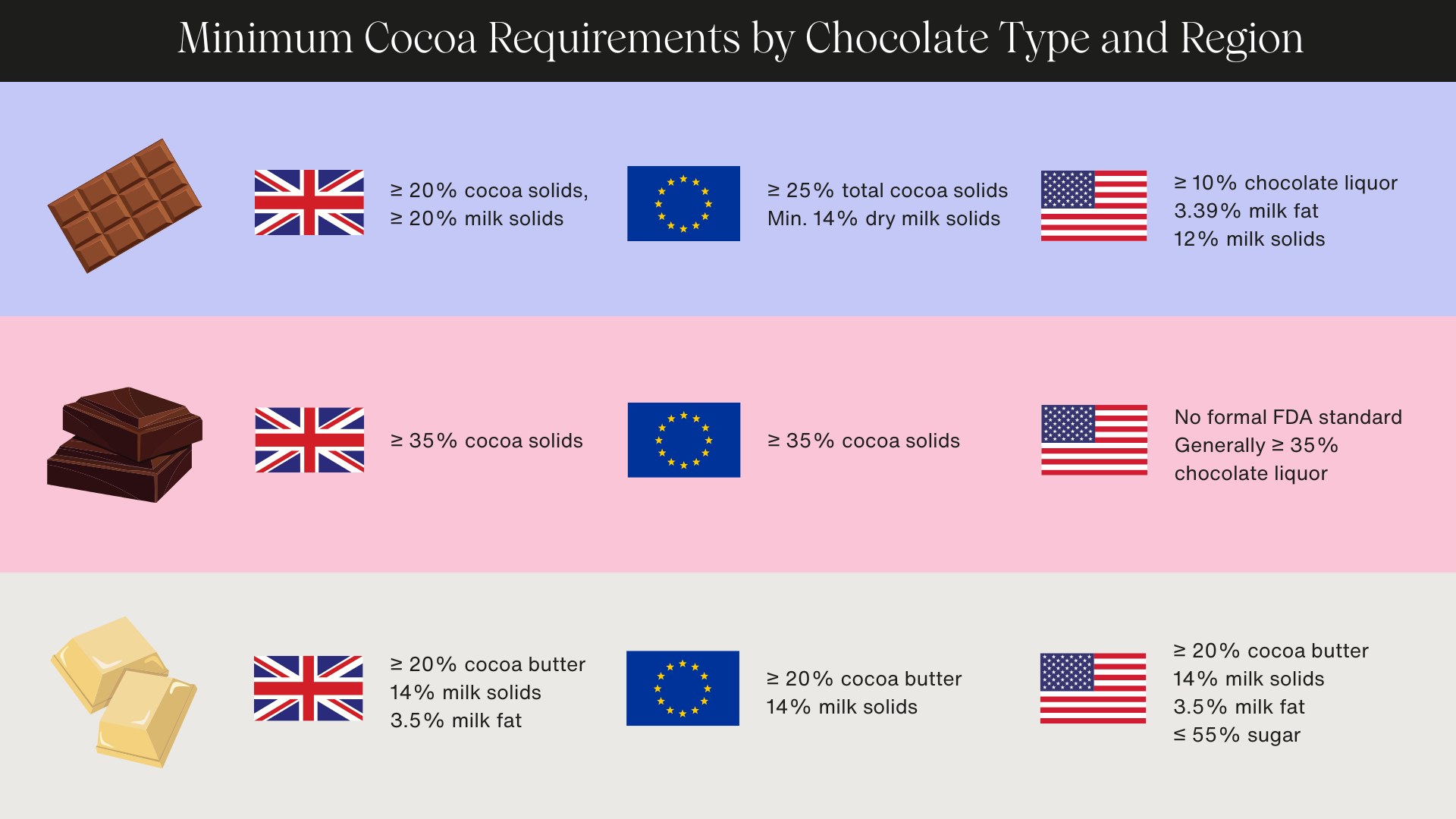
Despite the efforts of various international organisations, especially the FAO (see below) each country (or bloc) sets its own rules for how much cocoa must be present in dark, milk, or white chocolate (see table below). These minimums vary significantly—especially in the US, where products with as little as 10% chocolate liquor can still be labelled as “milk chocolate.”
2. Additives and What Can Still Be Called “Chocolate” – and why Europeans are dubious about some British and American chocolates
Countries like France, Germany, and Switzerland have long insisted that vegetable fats other than cocoa butter should not be allowed in chocolate bars. Instead, they maintained that bars should contain only cocoa-derived fats (with lecithins and emulsifiers as permissible exceptions).
However, Britain and Portugal have historically allowed a variety of additional vegetable fats in their chocolate-making. Cadbury’s original patent for Dairy Milk in the 1900s even specified the use of CBEs (Cocoa Butter Equivalents) “including illipe, Borneo tallow, tengkawang, palm oil, sal, shea, kokum gurgi and mango kernel”. Yum.
When the UK and Portugal joined the EU, this sparked a chocolate definitional debate. The solution? A compromise: Up to 5% vegetable fats other than cocoa butter would be allowed, as long as they were declared on the label.
This fudge (pun intended) became part of wider trade and food labelling negotiations and even featured in Brexit-era discussions. It also highlights the deeply complex rules around what counts as “ultra-processed chocolate.” See more here
So… what exactly is dark, milk, or white chocolate?
This is really complicated—and often counterintuitive. Many mass-market “dark” chocolates contain milk, butter, and other dairy additives (see here).
And despite the efforts of the FAO to standardise definitions, each geography has very different definitions. Starting with percentages of cocoa by type / region.
Minimum Cocoa Requirements by Chocolate Type and Region:
It gets more complicated when you look at “additives” (ie what else can be added to a bar of chocolate .. and it still be called “chocolate”) like “CBEs” and “CBRs” (cocoa butter equivalents and cocoa butter replacements).
- In Europe, milk chocolate may include up to 5% non-cocoa vegetable fats—as long as they are clearly labelled.
- On the surface, the US is far stricter on alternative fats. The FDA’s Standards of Identity for Milk Chocolate, clearly specify that “ cocoa butter must be the sole fat source for chocolate products”. However there is a list of optional ingredients comprising “safe and suitable vegetable derived oils, fats, and stearins other than cacao fat. The oils, fats, and stearins may be hydrogenated” that are permitted if these ingredients have specific functional purposes such as making a smoother mouthfeel, easier production handling, improved lubrication, etc. So that’s why PGPR and all sorts of emulsifiers are on mass market US milk chocolate bars. Theoretically they are “just” there for “functional” enhancement and process improvement – not as a substitute for “cocoa butter. Hmm
The Low Percentages… and Big Chocolate’s Sleight of Hand
With such low cocoa content required in many bars, Big Chocolate pulled off another extraordinarily cheeky sleight of hand in the EU. in 2011, the EU introduced Regulation called the “Food Information to Consumers” (FIC – Regulation (EU) No. 1169/2011) to help consumers identify where food was grown and processed.
Big Chocolate secured an exemption to this, threatening that it would have to dramatically raise prices to comply. And in addition, with straight faced candour, Big Chocolate argued that because chocolate wasn’t the main ingredient in many of their bars they didn’t need to say where their beans were coming from. (Yes, seriously.) Read more here.
The Craft Chocolate Solution
If you are irritated by the barefaced hypocrisy of big chocolate evading labelling requirements, if you’re tired of ultra-processed chocolate filled with sugar and “processing” ingredients, if you are fed up with being bamboozled by packaging emblazoned with misleading claims to be “fair” and “environmentally sensitive”, craft chocolate offers a delicious and transparent alternative.
We sell over 1000+ craft chocolate bars, and have tasted over ten times that number. And we only stock chocolate where we:
- Know the farm or cooperative that grew, fermented, and dried the beans
- Have visited (in person or via Zoom) the makers to ensure they’re crafting chocolate off their own recipes —not remelting mass-market couverture
- Love the flavour journey: Every one of our 1,000+ bars is taste-tested to guarantee it delivers on BLIC: Balance, Length, Intensity, and Complexity.
So if you’re looking for chocolate that:
- Truly delights and is worth savouring
- Avoids ultra-processing
- Respects farmers and ecosystems
- Is based on transparency
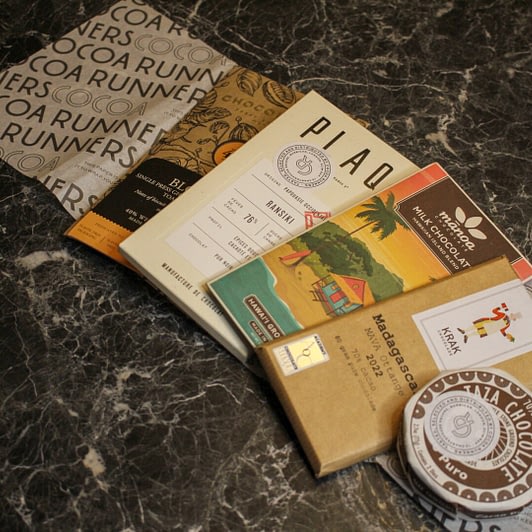
Check out our latest bars here.
Final Thoughts
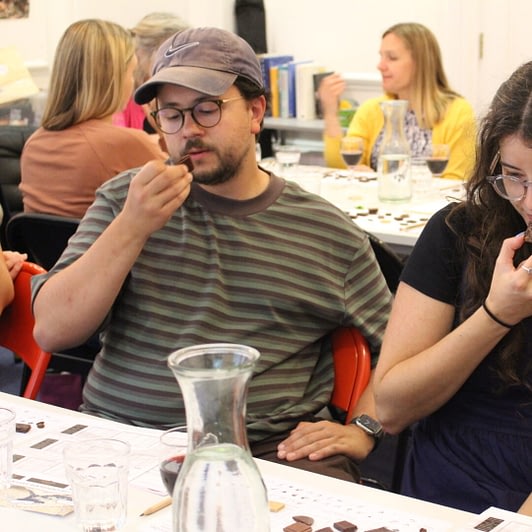
Cocoa / Chocolate is far more complex than it seems, from its varied definitions to historical feuds over vegetable fats and cocoa thresholds. Understanding these nuances can help us appreciate the true craftsmanship and efforts of the farmers behind our chocolate bars —and avoid the pitfalls of over-processed mass-market bars. Yes you need to read the label. But you need to do a bit more research here. And also – and this is the fun part – you need to learn to “savour the flavour”. Craft chocolate is all about flavour .. it’s not about (ab)using your taste buds for sugar, salt and fat with commodity cacao / cocoa /chocolate. Come to one of our in person or virtual tastings and within an hour, you truly will be able to delight in the flavour journeys offered by great craft chocolate – and move beyond what are all too often, misleading labels and weird definitions.
Footnotes on alkalinisation
Miller, K.B. et al. (2008). Impact of Alkalization on the Antioxidant and Flavanol Content of Commercial Cocoa Powders. Journal of Agricultural and Food Chemistry, 56(18), 8527–8533.
https://pubmed.ncbi.nlm.nih.gov/18710243/
Rodriguez-Carrasco, Y. et al. (2022). The effect of cocoa alkalization on the non-volatile and volatile mood compounds in cocoa powder. Food Chemistry.
https://www.sciencedirect.com/science/article/abs/pii/S0308814622000437
USDA FoodData Central. Comparative nutrient profiles for natural vs. alkalized cocoa powders show reduced levels of minerals like magnesium, iron, and potassium in processed powders.
https://fdc.nal.usda.gov/
Cooper, K.A. et al. (2007). Cocoa and health: A decade of research. Free Radical Biology and Medicine, 43(5), 645–659.
https://doi.org/10.1016/j.freeradbiomed.2007.01.058
Full text on EUR-Lex: https://eur-lex.europa.eu/legal-content/EN/ALL/?uri=CELEX%3A32011R1169