Crunchers, Chewers, Smooshers and Suckers
This week, we’d like to invite you to savour and delight in TEXTURE; another wonderful...
Print / PDFThis week, we’d like to invite you to savour and delight in TEXTURE; another wonderful...
Print / PDFThis week, we’d like to invite you to savour and delight in TEXTURE; another wonderful yet oft-overlooked aspect of craft chocolate.
Scientists have long understood and devised intriguing experiments to demonstrate the importance of texture in food. For example, Professor Ole Mouritsen of Copenhagen University’s Food Science Department has a wonderful experiment to show that over 90% of us can’t identify the flavour of cabbage when it’s presented as a jelly (i.e. he extracts the flavour from a cooked cabbage, adds this to some jelly and asks people to identify it without any of cabbage’s textural hints; most fail to do so).
The neuroscientist Gordon Shepherd has also shown the extraordinary way our memories and experiences determine how texture can impact our perceptions. For example, try eating some toast while holding some stale bread and see how this can confuse your senses. Those of you who have attended our ‘Welcome to the Craft Chocolate Revolution’ tasting know that stroking some smooth velcro and then some rough velcro can dramatically change how you ‘sense’ chocolate.
With all these complexities, enterprising scientists have also been working on a way to measure texture via the wonderfully named ‘acoustic tribology’, which involves placing small microphones in your mouth as you eat.
If you’re short on time, you can watch my video summary instead:
This week we’re doing a ‘deep dive’ into chocolate and texture with a bunch of experiments and chocolates. We’ve assembled one box containing all these pairings, and you can also pick a few pairings to try out.
Next week, we’ll review how craft chocolate makers are using texture to encourage us to savour, and also how mass-produced chocolate (ab)uses texture to encourage us to scoff by overriding our ‘sensory specific satiety’.
How do we perceive texture?
Humans are REALLY good at perceiving texture; our sense of touch is dedicated to this task. Our mouths are also sensitive to texture, with a host of receptors and mechanics that broaden and deepen our perception. Just think of all the words we use; grainy, sandy, smooth, fudgy, creamy, slimy, chewy, silky, etc. Arguably, the English language is a laggard here; Ole Mouritsen notes that the English language has around 80 words commonly used to describe texture versus over 400 for Japanese or Chinese.
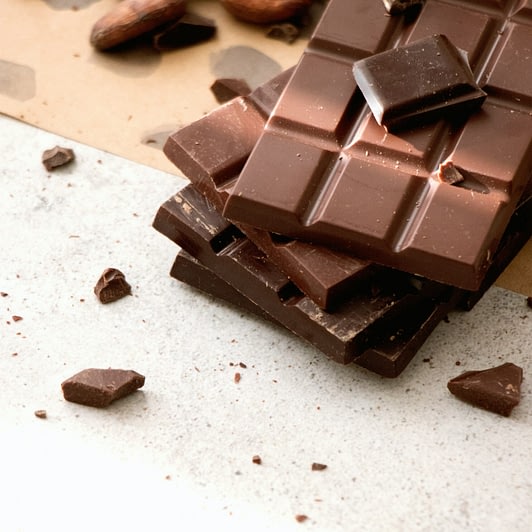
Just as with the sense of touch in our hands, we have mechanoreceptors (i.e. sensory receptors) in the skin and mucous membranes of our mouth that respond to the feel of anything in our mouth. They are also sensitive to forces such as pressure, stretch, and vibration (Mouritsen has the wonderful analogy of our mouth resembling a mattress with thousands of super-sensitive bedsprings). We are remarkably nuanced in detecting the fineness of anything that is placed in our mouths. Our fingers can detect something as fine as 30 microns (think of something that is a third as fine as the finest human hair, and you’ve an idea of how sensitive this is). Our tongues can detect similar levels of granularity, and indeed part of the genius of chocolate is that it can be ground and conched down to below 10 microns so that it feels silky and liquid. For example, compare the two Oialla bars below; one has chunks of nibs sprinkled on top and this dramatically changes our perception of the bars.
The Even Finer Nuances of Texture
This is where food science rapidly becomes very complicated (and please note that the below is NOT an exhaustive list!). To cite just three examples:
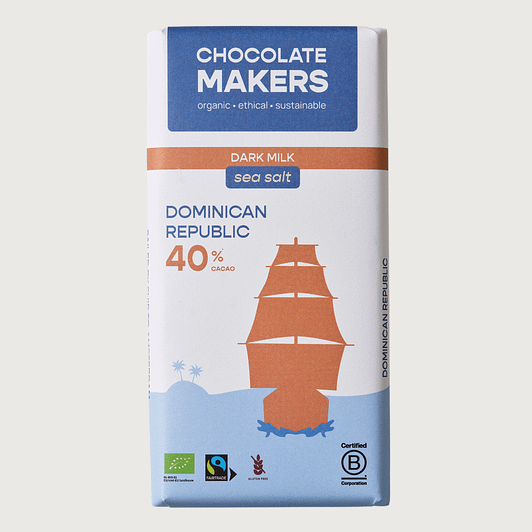
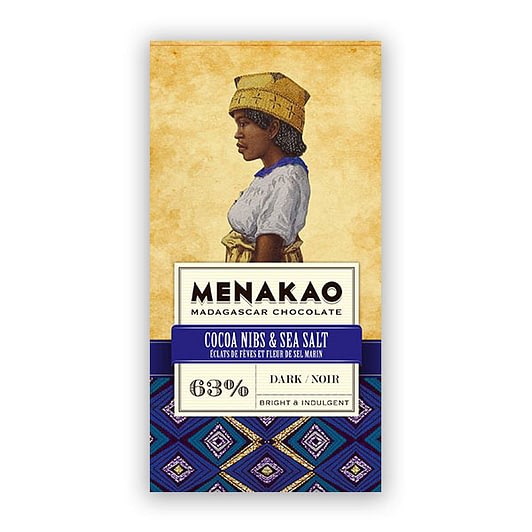
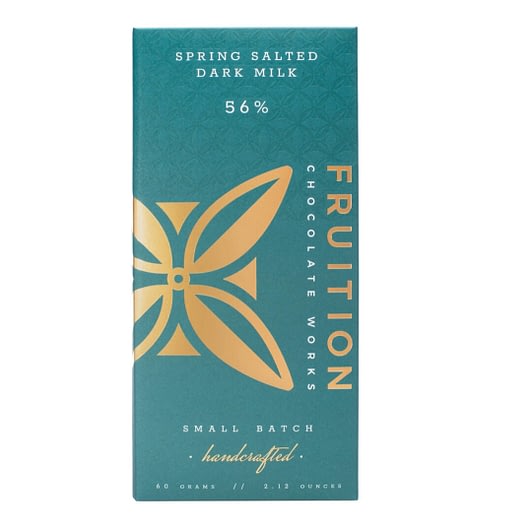
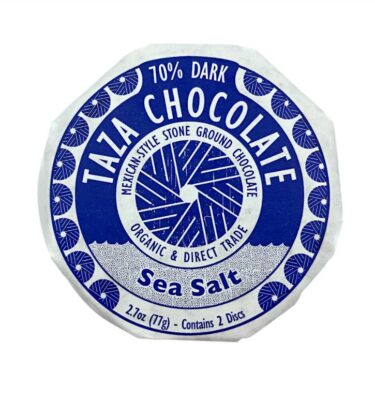
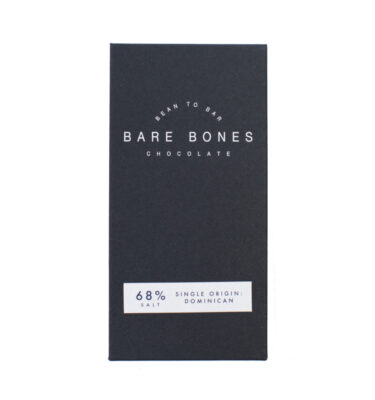
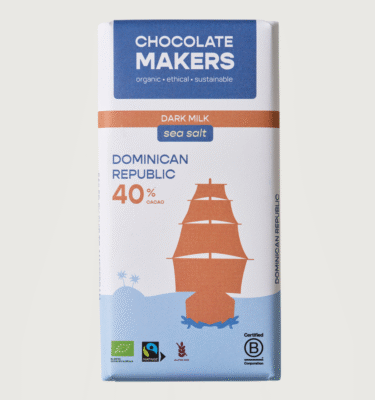
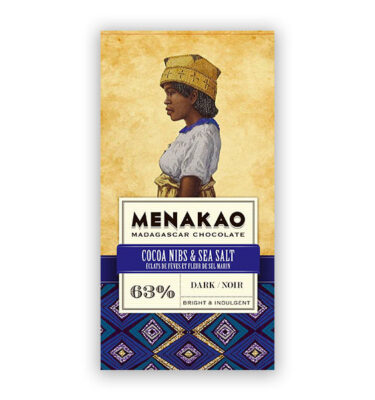
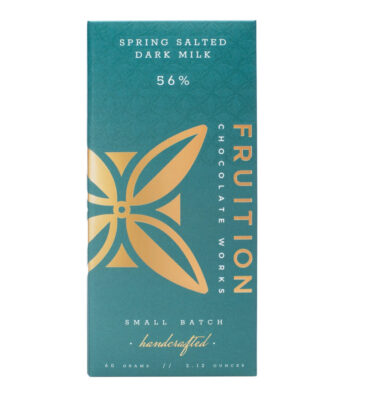
- Our Taste receptors can change how we detect texture. For example, certain tastes such as salt, bitter, and sour can enhance the perception of texture by activating different regions of the tongue and mouth. Just to add to the complexity, different tastes can also impact our perceptions of other tastes and flavours, hence why salt and sugar ‘enhance’ certain flavours, and how salt can also reduce the impression of bitterness.
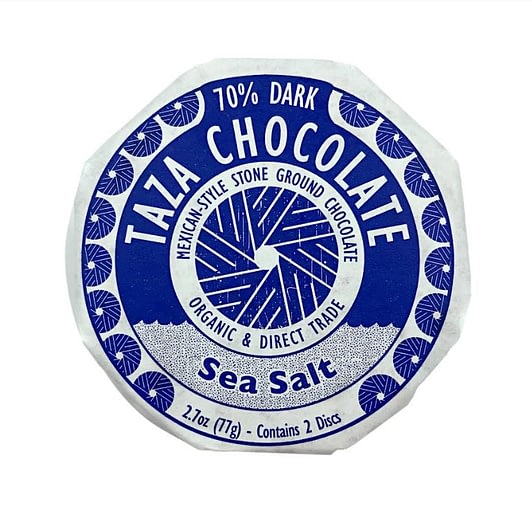
- The Saliva in our mouths is also critical in texture perception by lubricating our mouths and helping to break down food. Or to put it another way, the amount of saliva in your mouth, and its composition, can influence texture perception by affecting the way food interacts with the tongue and other sensory receptors. Try some astringent 100% chocolate; the astringency causes the saliva in your mouth to dry out. Then compare this to the stone ground Taza bar which is “only” 95% (i.e. it has some added sugar). Does your mouth still feel dry?
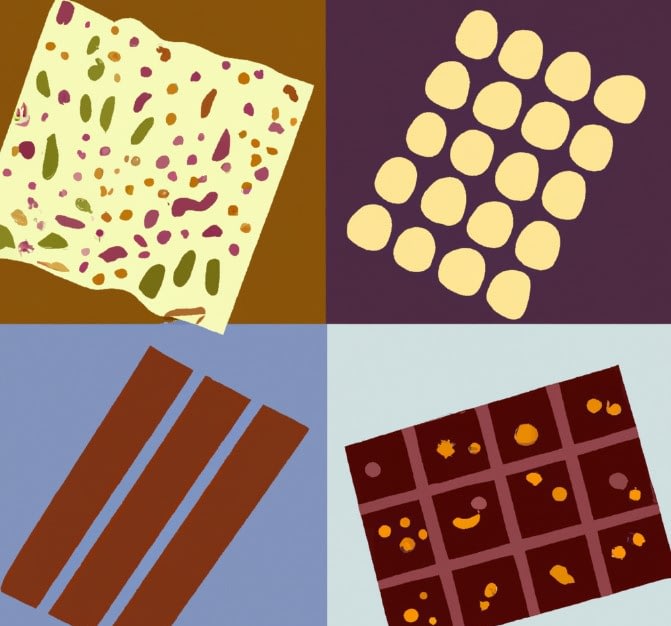
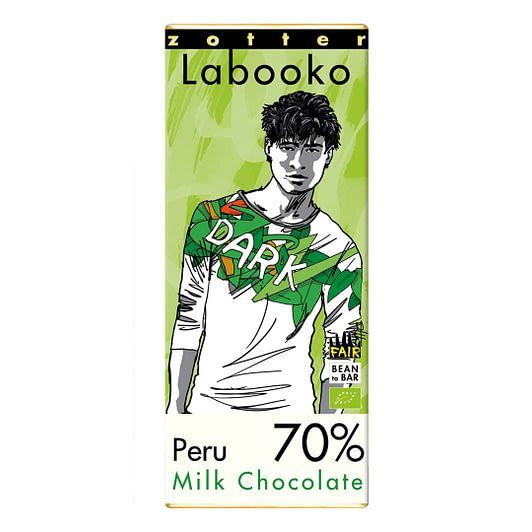
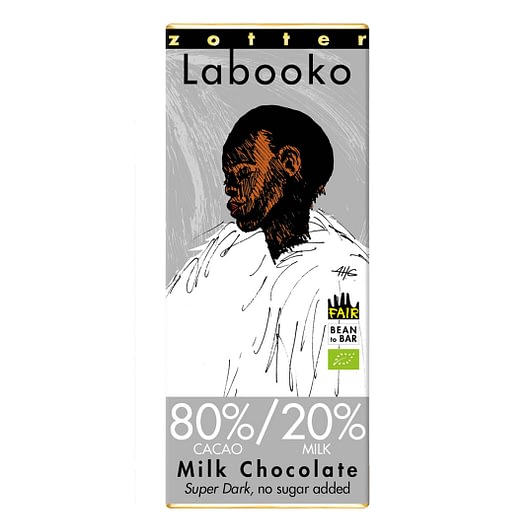
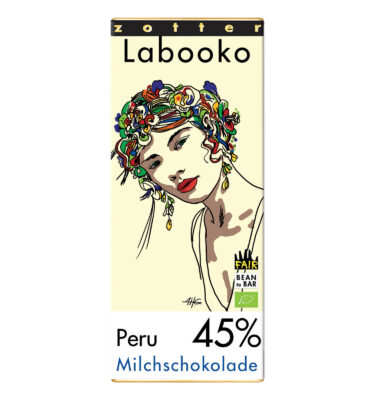
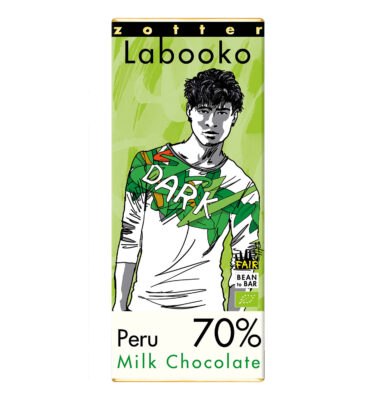
- The Oral Muscles in our mouths also impact how we perceive texture. Naturally, this is further complicated by the different ways in which people enjoy their food. Food scientists argue that there are four different eating types; crunchers, chewers, smooshers, and suckers. Depending on whether you, for example, prefer to suck or chew, your perceptions of a food’s texture (and tastes) will be very different. Try ‘sucking’ and then try ‘chewing’ the classic milk and dark milk bars from Zotter to see how this can work.

Combining Multimodal Complexities
It doesn’t stop there! The neuroscientist Gordon Shepherd has researched how our perception and enjoyment of food is influenced by our memories and expectations. It’s easier to explain this with a simple example: If you take a rich ice cream and a water-based sorbet out of the freezer and try them both, most people will perceive that the sorbet is colder even though both are the same temperature. The reason here is that we associate ‘creaminess’ with warmth (and also sweetness). Texture can fool our perceptions of temperature and taste.
Texture plays a huge role in chocolate. Again, compare Taza’s 95% Wicked Dark bar to Chocolate Madagascar’s 100%. Many of us will assume that the Chocolate Madagascar has more added sugar because of its creaminess (hat tip to Professor Barry Smith of University of London who perfected this test), but this really isn’t the case.
For another example of multimodal perception and the importance of sensation memories, try Menakao’s 45% milk bar. The addition of vanilla makes it appear far smoother and sweeter than Original Beans’ Esmeraldas milk bar, even though they have similar amounts of added sugar and milk, and even though the Original Beans bar is more finely conched and ground. Again, scientists suggest that since we associate vanilla with “sweet treats”, it’s tricking our brains to think that what we are eating is sweeter and smoother, etc.
How to measure texture with ‘Acoustic Tribology’
Almost a decade ago, George Van Aken, a scientist in the Netherlands, came up with an intriguing way to measure how we perceive texture, founding the discipline of ‘acoustic tribology’.
Van Aken asked a group of participants to perform a series of tactile tasks, such as tapping their tongue against their palate, trying various foods and drinks etc. He recorded the sounds of different textures via a specialised microphone placed above their front incisor teeth, which recorded the vibrations on their tongue as it rubbed against their palate. Participants also rated their subjective perceptions of the sensations they experienced.
The results showed that there was a significant correlation between the acoustic emissions produced during the tactile tasks and the subjective perception of the sensations. Specifically, high-frequency acoustic emissions were associated with sensations of roughness and stickiness, while low-frequency emissions were associated with sensations of smoothness and slipperiness.
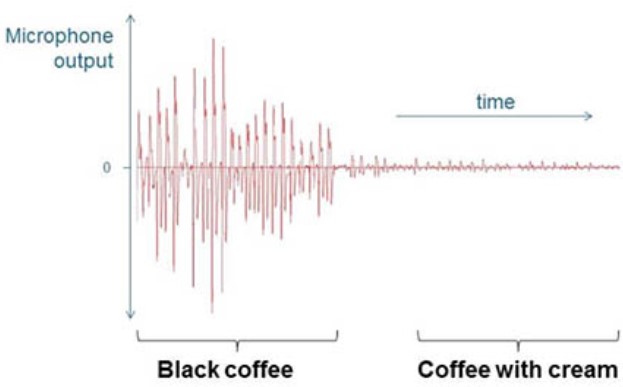
Van Aken then used these insights to see how participants perceived the texture of different foods and drinks. For example, he compared how people could perceive the difference in texture between black and milky coffee. Almost all participants described the sensation of drinking the black coffee as being a little rough, with some perceptions of fine friction. When some full-fat milk was added to the coffee, participants described the sensations as being far smoother and silkier, almost velvety in texture. The fattiness from the milk-coated participants’ tongues, providing more lubrication and augmenting the perception of smoothness.
The microphones in participants’ mouths picked up sounds that mirrored the way they described their perceptions. When participants drank milky coffee, the milk covered their texture receptors on their tongues, dampening any friction, emitting a softer sound. By contrast, with black coffee, there was nothing to cover the tongue’s taste receptors so there was more friction, oscillation and a louder acoustic signal.
A taster for next week: Texture and ‘Sensory Specific Satiety’
‘Big food’ is notoriously secretive about its research, and it’s hard to find many studies where acoustic tribology has been used to develop new food products or drinks. We do know that this technology is being used to help makers work out how to keep biscuits, crisps, etc. from going soggy. There are some mentions of studies in alternative sugars in different sodas and fizzy drinks (alternative sugars’ textures are perceived as different to cane sugar, e.g., Xylitol is often described as leaving a cold aftertaste).
A cursory review of big chocolate’s’ latest product launches does suggest that they are learning that the human palate can easily tell the textural differences between cocoa butter and the likes of palm oil, vegetable fats, PGPR etc., so they need to ‘up their game’. Worryingly, big chocolate (and all the ultra-processed food companies) are really good at (ab)using our delight with texture and the insights from the field of ‘sensory specific satiety’ (aka, why it is you can easily scoff five scoops of five different ice creams but you get bored after the second scoop of the same ice cream?).
At the same time, craft chocolate makers are using cocoa butter, milk, and caramel to create textural delights that are all about savouring. Try this tasting set of different milks from Zotter; one 42% classic milk, one 70% dark milk and then the delectable butter caramel; and see how the different textures delight and transform your senses.
Until next week; thanks as ever for your support.
Keep savouring!
Spencer
p.s. If you’ve other topics you’d like to see us cover, please comment below, and we’ll see what we can do!
References and further reading:
https://www.sciencedirect.com/science/article/abs/pii/S0268005X12002858?via%3Dihub
https://www.rheologylab.com/articles/food/tribology-testing-of-sugar-replaced-soft-drinks/
https://www.goodreads.com/book/show/12420783-neurogastronomy
https://www.goodreads.com/en/book/show/30151814