Dry January, craft chocolate, and …Finland?

...we’d also like to use Dry January to recommend experimenting with craft chocolate this January (and indeed for the rest of the year too) to both those on and off the wagon. From all sorts of social, savouring, and sensual angles, there are all sorts of delightful parallels to explore...
Print / PDFHats off to you if you are one of the 15-30% of drinkers in the US who are estimated to “go on the wagon” for January in the US, and one of the 200,000 people in the UK who formally sign up to the “Dry January Pledge” here in the UK. And for more on the history, why Finland may well have the claim to being the first country to kick start the ‘Dry January’ habit, and how Dry January has been exported to the US, please read on.
We’d also like to use Dry January to recommend experimenting with craft chocolate this January (and indeed for the rest of the year too) to both those on and off the wagon. From all sorts of social, savouring, and sensual angles, there are all sorts of delightful parallels to explore. You can learn all sorts of new skills, embark on all sorts of adventures and have fun. So if you want to know how craft chocolate can literally expand your brain, and learning to articulate flavour can give your brain a workout, if you want another great experience to share with friends and family please do read more below.
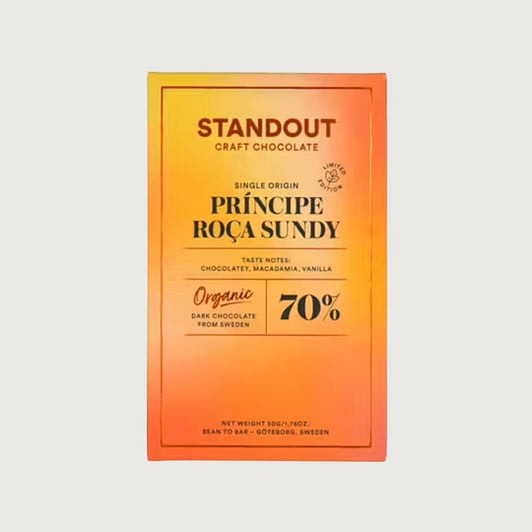
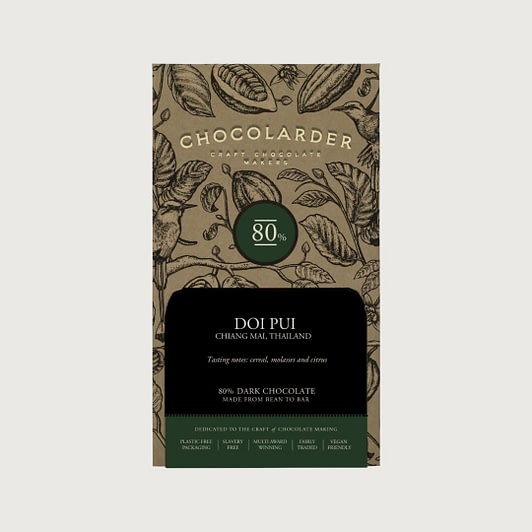
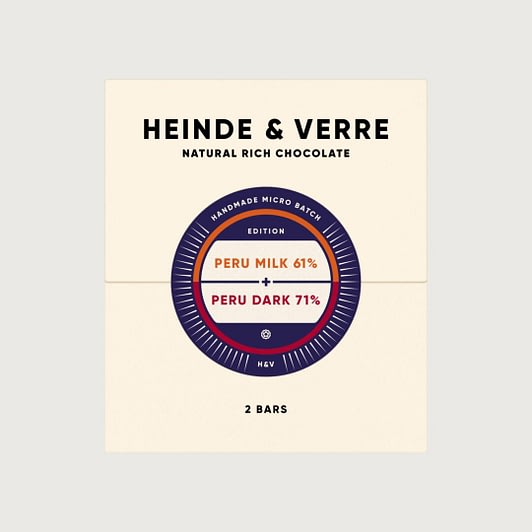
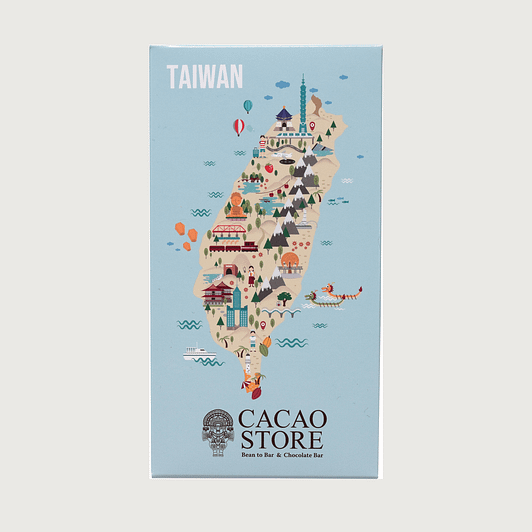
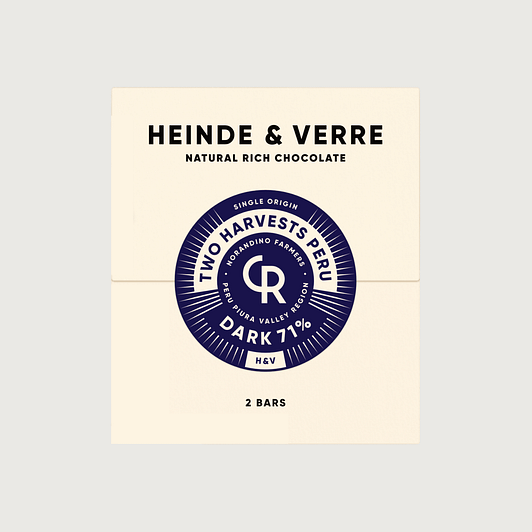
And do please check out our latest bars too!
Dry January …and Finland
Many historians of food and drink suggest that the first modern example of a ‘dry January’ on a national scale was in Finland, where in 1942 the Finnish government, as part of its war effort against the Soviet Union launched “Raitis Januar”(“Sober January”). To preserve resources, the Finnish government encouraged all Finns, and in particular the army, to stop drinking any alcohol during January. This novel initiative was extensively promoted through newspapers, magazines, etc. and was a MASSIVE success. I’ve tried to find out if Finns still practise Sober January, but can’t find any information; so if you are reading this in Finland, or have any inside information, please do let us know!
Dry January pledge in the UK
Just over a decade ago, Alcohol Change UK trademarked the term “Dry January”. The initial impetus is attributed to Emily Robinson, who gave up drinking for a month in January 2011 to better prepare for her first half-marathon. According to the official charity website: “She loses weight, sleeps better and feels like she has more energy to do the run …[and discovers that LOTS of] people want to talk to her about what it’s like to give up drinking for a bit”. And then a year later, she joined Alcohol Concern (now called Alcohol Change UK) and again gave up alcohol during January, and found more and more people wanted to chat to her about her experience. And according to the charity: “That got us thinking. If we got more people having a break from booze in January, could we get more people thinking about their drinking? And would they drink less after their month off because actually they enjoyed the break so much?“. The idea for the Dry January campaign was born. The campaign was formally launched the next year (in 2013), with advocacy from Alastair Campbell (Tony Blair’s spin doctor), who candidly talked about his past drinking, and Peter Oborne a well-known bon viveur and Telegraph columnist who wrote extensively about “trying out the month off booze”.
In addition, the charity worked with “alcohol behaviour change expert Dr Richard de Visser from the University of Sussex … to see what effects taking part in the campaign has on them … [finding] that six months after the campaign has finished, seven out of ten people have continued to drink less riskily than before. Almost a quarter of the people who were drinking at “harmful” levels before the campaign are now in the low risk category“.
And the popularity of the pledge has grown; from 4,000 in 2013 to 14,000 who used an app launched in 2016, to over 175,000 in 2023 (and a targeted 200,000 this year) here in the UK.
Indeed so successful has this pledge mechanic become that Meharry Medical College (Meharry) signed a five-year exclusive licensing agreement with Alcohol Change UK to launch Dry January® in the USA.
Great reasons to try craft chocolate
We’d respectfully like to suggest that if you are pledging you should investigate craft chocolate during this period; and even if not, there’s much to be gained.
In addition to helping save the environment, ensuring farmers (and their families) are paid transparently and fairly, showing that you are ahead of the curve, preventing you from scoffing too many profiteroles (yes, really you do have a second stomach, and craft chocolate is BRILLIANT here), giving you a means to go on all sorts of virtual and in-person geographical adventures, here are three other parallels for those of you who are practising Dry January (and which also hold for those of us not signed up too) to what else you can learn:
- Craft chocolate is a fantastic means to learn about savouring. And we in craft chocolate have learnt much about appreciating and articulating about flavour from fine wine, speciality coffee, craft beer, real bread, artisan cheese, etc.
- For example; hat tip and thanks to Rebecca Palmer (wine) and James Hoffmann (Coffee) for helping us develop our ‘great wave of savouring‘, and appropriating the concept of ‘BLIC’; balance, length, intensity, and complexity (do come to a tasting to learn more).
- Thanks also to Professor Barry Smith for so deftly explaining, and demonstrating, the differences between taste and flavour (and why you should hold your nose when first trying some craft chocolate). Essentially, mass-produced confectionery is all about basic tastes (sweet, saltiness etc.), fattiness, some texture, and giving you an immediate bliss point “hit” via receptors on your tongue, whereas craft chocolate (and all fine foods and drinks) are about flavour. And flavour is all about your sense of smell (and uniquely human), and flavour takes time to emerge, hence why you need to savour (and hence the ‘great wave again) and take your time.
- Craft chocolate can also help you learn a new ‘language’. And this new language has similar cognitive benefits to learning a new foreign language, how to play a musical instrument, or even acquiring “the knowledge‘ (what black cab drivers learn about London streets). Plus as you learn to articulate this ‘language of flavour’, it’ll help you figure out what you like and what new bars, beans, and makers to experiment with.
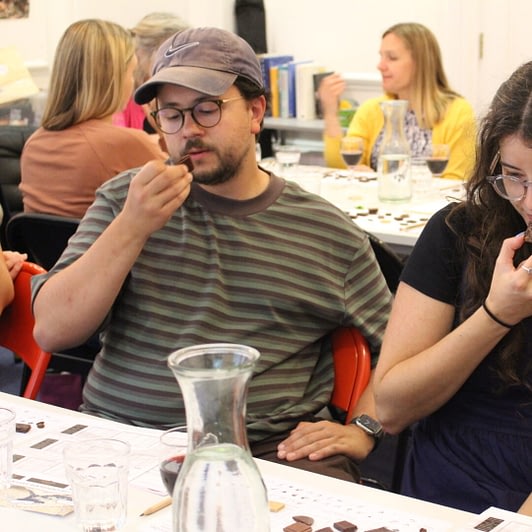
- Food, and alcohol, are often cited as the basis of society and civilisation. And craft chocolate is FANTASTIC to share. Unlike mass-produced confectionery that is purchased from a vending machine, petrol station, corner shop, etc. and then scoffed surreptitiously on your own, at your desk, under the covers, in private etc. CRAFT CHOCOLATE cries out for being shared. Indeed, if you want to get the full flavours, it’s best not just to compare and contrast a couple of bars at the same time, but to do this with multiple friends, families, etc.
So please raise a bar to Dry January and practise saying “cheers”, “kempai”, “salut” etc. with some craft chocolate.
Keep savouring!
Spencer
Our latest bars
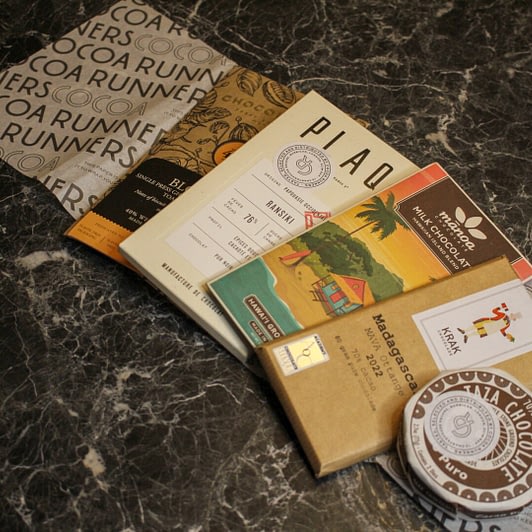
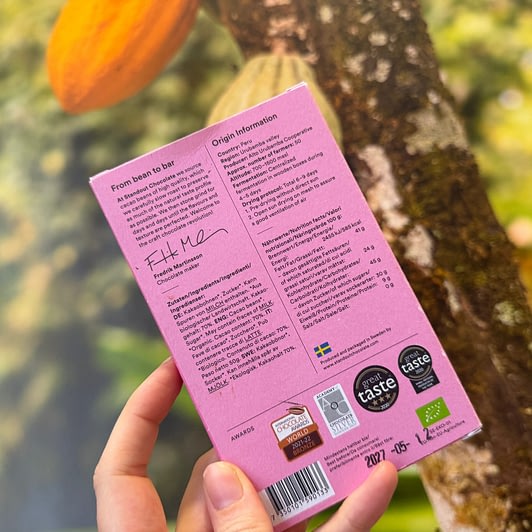
Explore some of the latest bars in our library, to savour this Dry January