Making Cocoa Pulp One of Your Five a Day
As a fruit, cocoa is more than just cocoa beans. A cocoa pod also contains...
Print / PDFAs a fruit, cocoa is more than just cocoa beans. A cocoa pod also contains...
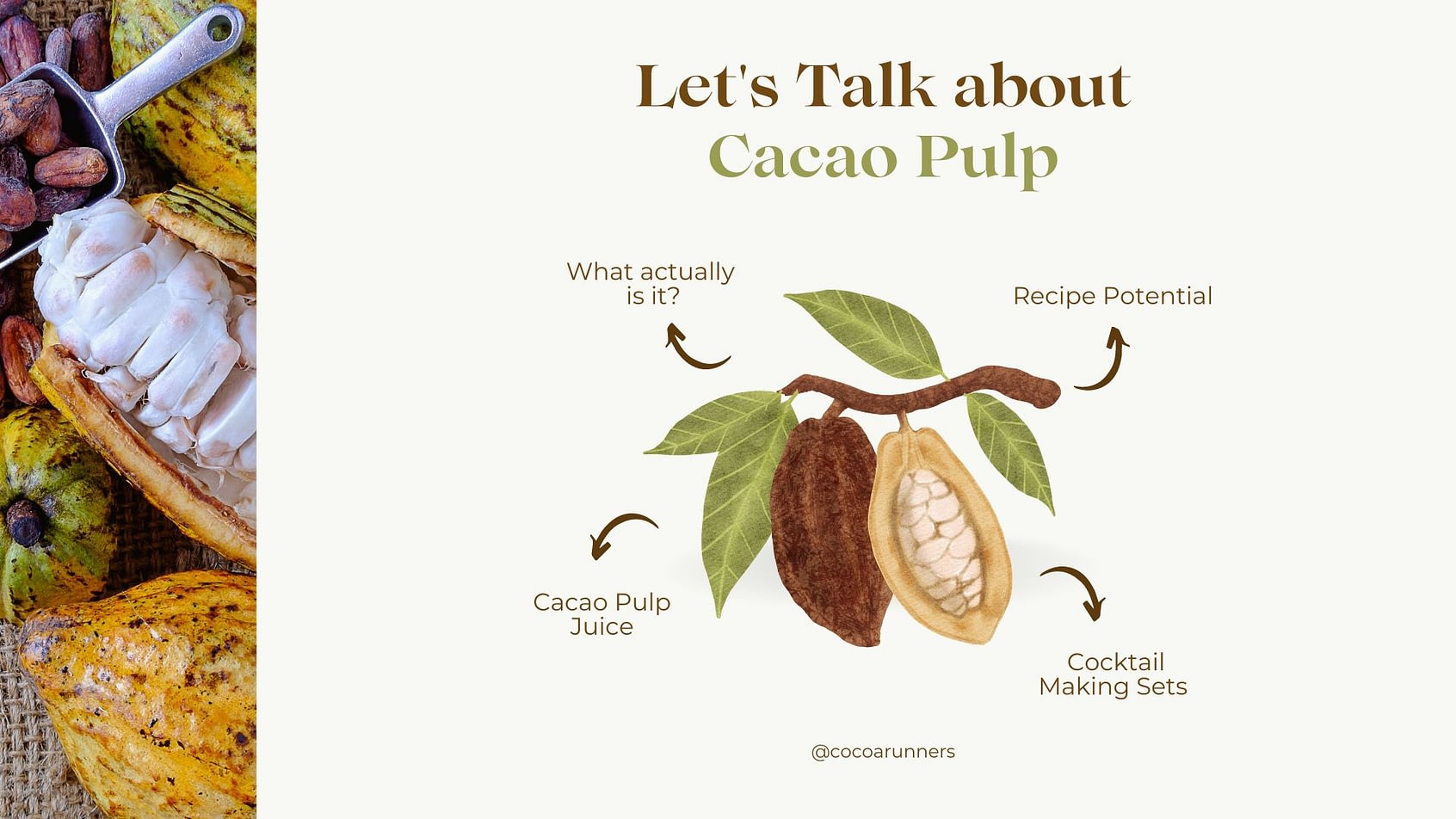
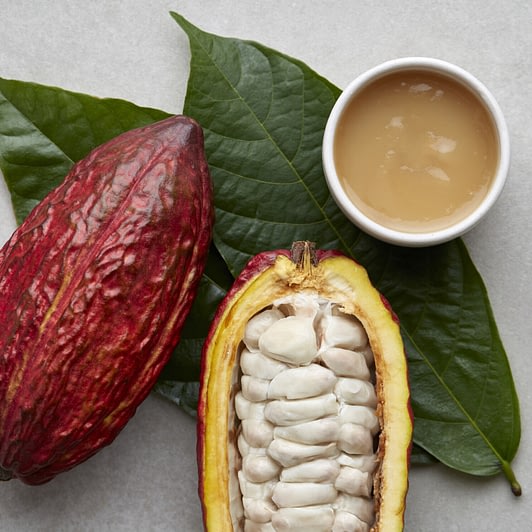
Print / PDFAs a fruit, cocoa is more than just cocoa beans. A cocoa pod also contains cocoa pulp, also known as cocoa fruit. This week, we are celebrating the joys of cocoa fruit and invite you to make it “one of your five a day” (along with, of course, craft chocolate).
Cocoa pulp has bedazzled civilizations for centuries now. What made it so magical? Let’s explore the history of cocoa fruit, and debunk some of the crazier claims around it.
If you can’t wait to read the whole blog post, you can check out my video summary instead:
The Magic of Cocoa Fruit …In Fermentation
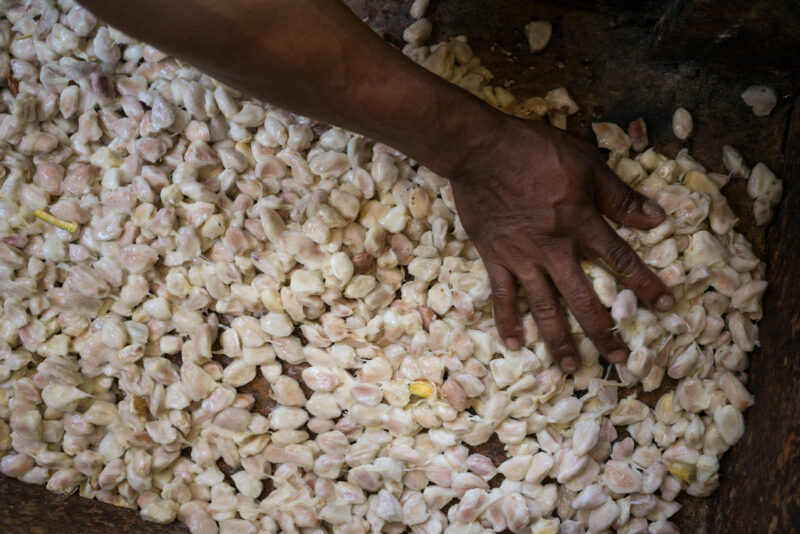
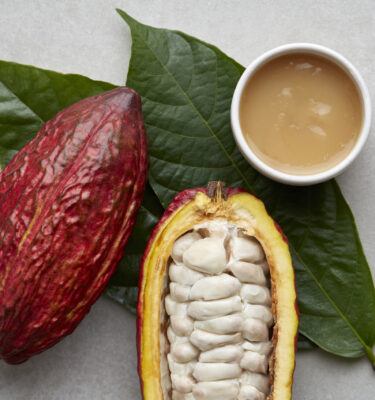
As anyone lucky enough to have experienced cracking open a cocoa pod at a cocoa farm knows, cocoa seeds are incredibly bitter and astringent. Fortunately, these bitter and astringent seeds are surrounded by a delicious fleshy fruit, aka cocoa pulp. And via the magic of fermentation, this cocoa pulp transforms the astringent cocoa seeds into flavourful cocoa beans.
Technically, this is what happens: Once a pod is opened, and the cocoa fruit and seeds placed in a heap or box, a wide-ranging series of biochemical reactions known as fermentation kick-off. The pulp provides the critical moisture needed for this fermentation, and cocoa pulp is also the source of numerous yeasts and bacteria (both lactic and acetic) that carry out this fermentation, transforming cacao seeds into cocoa beans. And it’s this fermentation that engenders all the amazing flavours in chocolate; those floral, nutty, green, vegetal, caramelly notes and a plethora of aromas that we treasure in chocolate.
That is to say, fermentation is the bedrock to the flavour profile of any great craft chocolate bar. Different yeasts, different ‘turns’, different approaches (box versus heap), different fermentation lengths, all create radically different flavour profiles. Craft chocolate makers don’t ‘create’ these flavours, they unpack and then combine the flavours into wonderful concoctions with balance, length, intensity, and complexity to savour. They work with the flavours created by a fermentation made possible by cocoa pulp.
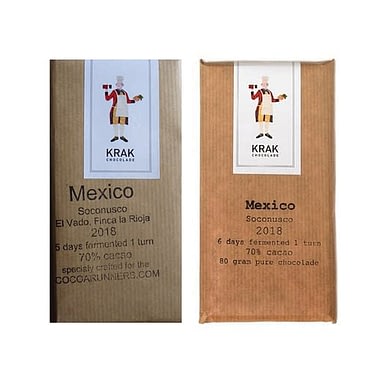
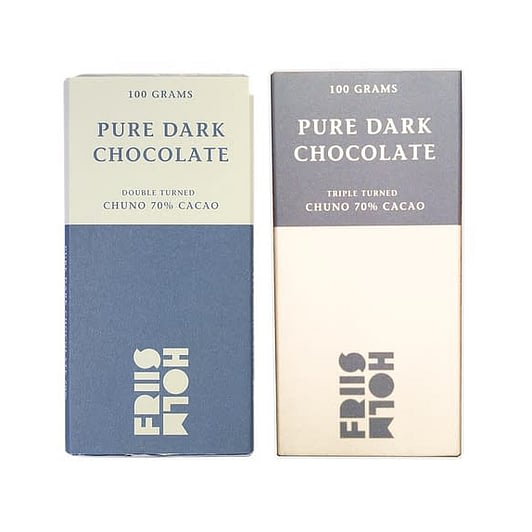
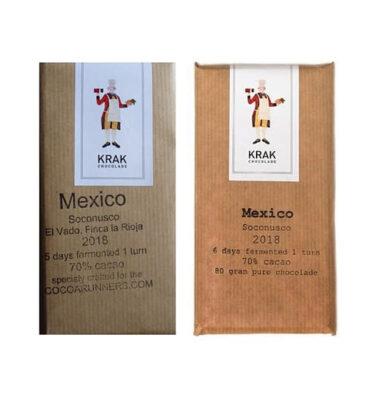
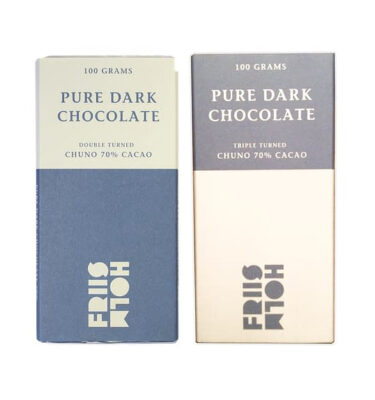
This is a radically different approach to that of mass-produced chocolate and confectionery where sugars, salts, fats and artificial flavourings are all added in the factory. Commodity cocoa is (normally) fermented, but as often or not beans are over or under fermented, and if they aren’t well-dried, they can also go mouldy. But as the tastes, textures and flavours of mass-produced chocolate are all ‘engineered’ via additives and preservatives in the factory, these faults are unimportant and the sheer magic of fermentation is under-appreciated.
…And in Chocolate
Today, the craft chocolate world is fortunate to have experts like Zoi Papalexandratou and Daniel O’Docherty travelling all around the world teaching cocoa growers and co-operatives how to improve their fermentation processes. And this enables cocoa farmers from Hawaii to Haiti, Costa Rica to the Congo, from the Solomon Isles to Sierra Leone, to sell their well-fermented beans at far higher prices to craft chocolate makers.
But five thousand years ago (when we have the earliest archaeological evidence of people fermenting cacao) there weren’t any fermentation experts flying around the world.
And fermenting cocoa wasn’t obvious or inevitable. Once he learned how to make a fire, cooking was a natural progression for Neolithic man. Turning bitter, astringent cocoa seeds into flavourful cocoa beans via fermentation is a different learning curve altogether.
Anthropologists, botanists, archaeologists and historians have long pondered how Mesoamericans who lived 5000-plus years ago discovered fermentation and turned bitter cocoa seeds into delicious and nutritious cocoa beans.
Over the last few decades, an intriguing new idea has emerged to solve this puzzle. Back in the 1950s, the botanist Jack Sauer suggested that “beer, not bread, gave rise to civilisation”, arguing that early farmers needed more incentive than just bread to start farming crops given “the pitiful small return of grain“. He believed that the discovery that “a mash of fermented grain yielded a palatable and nutritious beverage… acted as a greater stimulant toward the experimental selection and breeding of the cereals than the discovery of flour and bread-making“.
Edward Slingerland has recently put it even more succinctly, and graphically: “The desire to get drunk, along with the individual and social benefits provided by drunkenness, played a crucial role in sparking the rise of the first large-scale societies. We could not have civilization without intoxication“.
And the key to intoxication? …Fermentation!
We know that the Mesoamericans made (and indeed sometimes still make) a drink they called chicha by allowing cocoa pulp to ferment. To make a chicha out of cocoa pulp, you can just pile together lots of pulp (and cocoa seeds) and then filter off the light alcohol a few days later. And in so doing, they may also have accidentally, as a by-product, discovered how to ferment cocoa seeds into cocoa beans.
John Henderson and Rosemary Joyce have even found archaeological evidence from Puerto Escondido, in northern Honduras, to show this progression from drinking ‘cocoa pulp beer’ to ‘cocoa bean drinks’. They analysed pottery fragments found over the period 1500 to 500 BC. They found that more recent pottery fragments contain not just theobromine but also chilli, sweeteners, and spice that we know the Mayans and Aztecs added to their chocolate drinks. And the shape of these more recent pots also suggests that they could be poured in such a way as to create the chocolate froth that the Aztecs and Mayans highly valued. By contrast, the older pottery fragments, dating back 500-800 years, just contain theobromine and have a pot design unsuitable for ‘frothing’ but great for ‘swigging’, which suggests they were used to store chicha (cocoa beer).
It may well be that we have to thank cocoa pulp, and chicha, for helping our ancestors discover how to ferment astringent cocoa seeds into flavourful and nutritious cocoa beans.
Cocoa Pulp Today
Today, most of the cocoa fruit is used up in the process of fermentation. Very little chicha/cocoa pulp beer is made.
In the 1970s however, Ecuadorian scientists developed some new cocoa varietals, like CCN51, in an attempt to improve yield and reduce diseases of cocoa plants. Sadly, CCN51 isn’t higher-yielding or disease resistant. Worse still, its flavour profile is awful; Ed Seguine memorably described it as having the flavour of “acidic dirt“. Most disastrously, CCN51 is also responsible for extensive deforestation following a policy of planting sapling CCN51 clones in cleared jungle land (‘clearing’ is a euphemism for destroying the rainforest).
There may be a glimmer of a silver lining now. CCN51 has a LOT of pulp; way more than is needed to ferment the cocoa seeds. Indeed, the time involved in fermenting and evaporating off this excess pulp is blamed for CCN51’s less than enthralling flavour profile.
A number of interesting experiments are now underway with CCN51 farmers to remove some of the excess pulp ‘pre-fermentation’. Not only does this reduce waste (the excess pulp evaporates or drains away), but it also creates an interesting new revenue stream for cocoa farmers. And this is the source of the cocoa pulp we are selling, from Palo Santo in Ecuador, from a family farm of three generations.
At the same time, there are fears that encouraging farmers who aren’t growing CCN51 to switch from selling cocoa beans to cocoa pulp may create longer-term problems. There is no guarantee that this cocoa pulp boom will be a massive and/or enduring success. Farmers are literally throwing away the baby (cocoa beans) in the hope that the bathwater (the pulp) is going to be worth more. Most importantly, they are not investing enough in learning how best to ferment their beans.
Health Claims
Cocoa fruit is only just starting to appear in the market. But already ‘big chocolate’ is promoting cocoa pulp with all sorts of amazing health claims. Let’s not forget how big chocolate hit upon this tactic of suggesting that chocolate is full of amazing ‘nutraceuticals’ that can solve everything from tooth decay to heart palpitations!
Back in the 1990s, Mars funded various research on the Yuna tribe in Panama arguing that the Yuna’s consumption of “high flavonoid chocolate” explained their enviable heart health. Even though this ‘research’ has been thoroughly debunked, big chocolate continues to make all sorts of health and ‘superfood’ claims for chocolate. And now, they have moved to cocoa pulp; Callebaut for instance is applying to the EU for ‘nutraceutical status’ for its pulp-based drink.
Fortunately, there is some newly published research from the FDA that provides clear data that puts these claims into context. Cocoa pulp clearly is a great source of magnesium, manganese, and potassium, and it’s also full of fibre.

But this is very different from the assertion that, for example, cocoa’s flavanols promote circulatory health via cocoa pulp drinks. Even if/when Callebaut manages to obtain ‘nutraceutical status’ for its cocoa pulp drink, it is not a silver bullet to effortless health. Cocoa pulp is NOT a superfood (or ‘super drink’).
In fact, there is no such thing as a ‘superfood’ (except in marketer-speak).
But you can eat healthily, and deliciously, with a sensible diet. And step 1 in a sensible diet is to ignore the silver bullet-like claims for nutraceuticals. Step 2 is savouring real food; to quote Michael Pollan; “Eat food. Not too much. Mostly plants“. Step 3 is cutting down on scoffing junk, processed food-like substances. To avoid these ‘food-like substances’, read the label on any packaged food and, if you don’t recognise the ingredients listed and/or you don’t have them in your kitchen at home, leave that packaged, ultra-processed food-like stuff on the shelf! Soon, this will inevitably include a number of ultra-processed foods where some cocoa pulp is added for marketing purposes.
Pasteurised cocoa pull can add variety to your cooking as an intriguing, delicious ingredient. You can bake with it. You can cook with it. You can make great ice cream and sorbets. It also makes a refreshing drink. But please make sure it’s not packed with loads of additives, preservatives, etc. …Read the ingredients! And please don’t call it a superfood (or a nutraceutical).
How To Use Cocoa Pulp
Getting Ahead of the Curve
Until recently, it’s been hard to obtain cocoa pulp unless you were ‘at origin’ (i.e. one a cocoa farm). A few chefs managed to obtain some pulp and produce wonderful dishes (for example, Jordi Roca). But cocoa pulp has not been a readily available ingredient. As a result, there are very few recipes.
We’d like to ask for your help to fix this deficiency. This week, it’s time for you to experiment with cocoa fruit. Pick up your pulp sachets, and send us your recipes and ideas for how to use this intriguing new ingredient. And for everyone who sends us a recipe or idea that we publish, we’ll send you a free pouch with your next order.
Here’s something to get you started: These are a few ways we’ve discovered to drink, bake, cook, freeze, and enjoy cocoa fruit:
Drinks
“Just add water” (one part cocoa pulp, two parts water). It works well with both sparkling and still water.
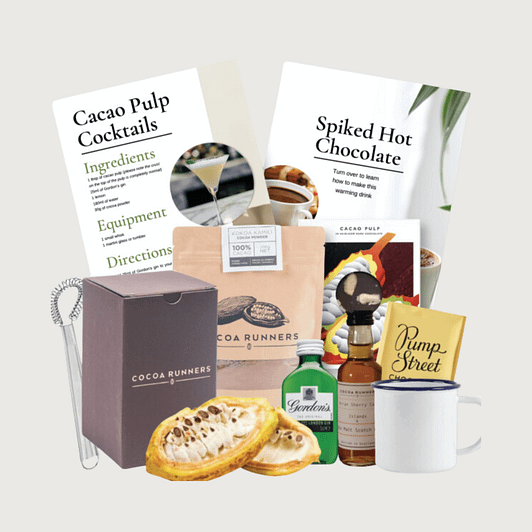
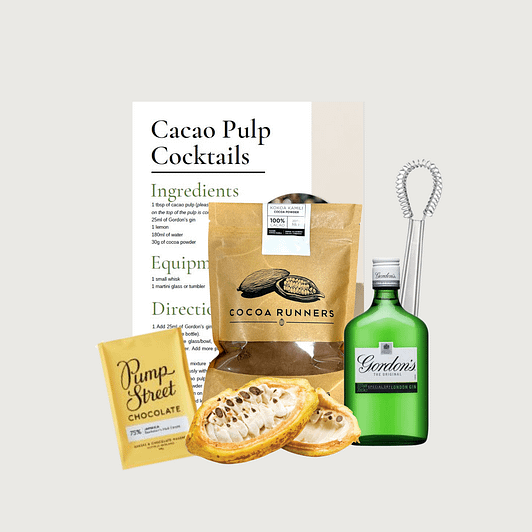
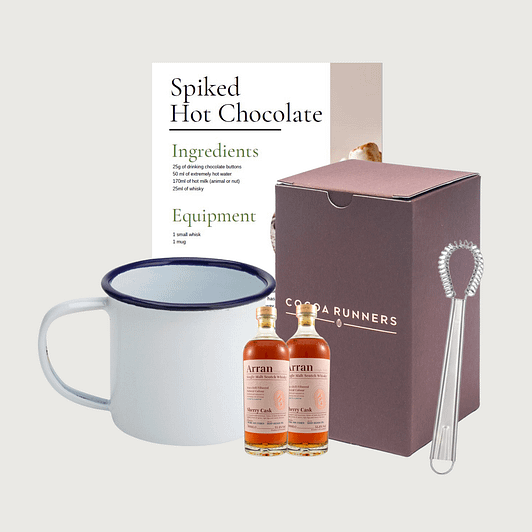
You can also make your own cocktails. Try our brand new cocoa pulp cocktail kits:
-
 Deluxe Craft Chocolate Cocktail Set£59.95
 -
Cacao Pulp Cocktail Set£32.95
-
Hot Chocolate Cocktail Set£29.95
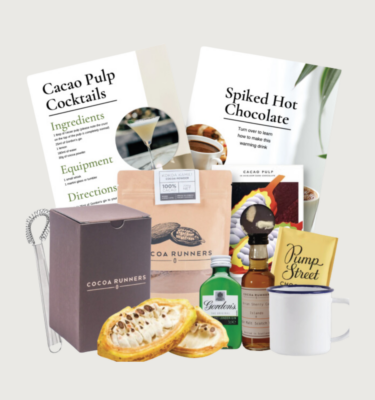
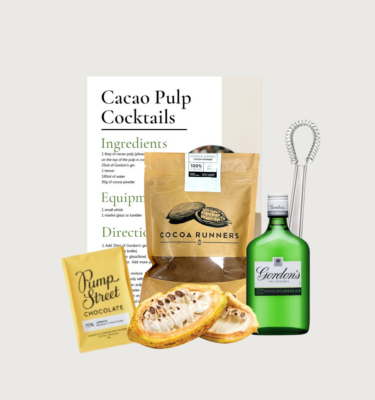

If you’ve more cocktail, or mocktail, ideas and recipes, send them in!
And for what it’s worth, scientists have also carried out some intriguing experiments to make cocoa pulp based kefir grains, and to use cocoa pulp in beer fermentation and brewing.
Home Baking
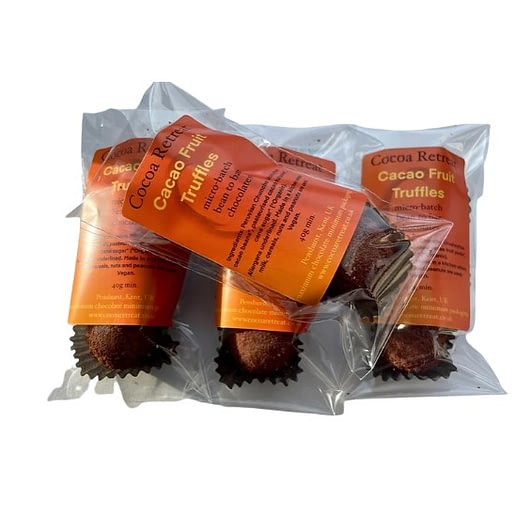
Cocoa pulp can be used as an intriguing alternative to other sweeteners when baking and cooking. Try it in your next brownie. Or if you like tempering your own chocolate truffles and bars, please do experiment with it; although it is hard to get a good snap, it has an intriguing texture.
And if you want an AWESOME example of a cocoa pulp truffle, check out Cocoa Retreat‘s latest “amaze ball”.
Sorbet and Ice Cream
The oldest description we have for anyone using chocolate as an ingredient in Europe is from a 1692 work which talks about chocolate sorbet. And today, only vanilla is more popular as a flavour than chocolate in ice cream.
We’d love to try and include cocoa pulp as a new ingredient in sorbets and ice creams. Jordi Roca and Plaq have shown us how wonderful the results can be. So please do experiment and let us know!
Savoury Dishes
Many great chefs use chocolate when cooking the likes of venison, stews, chilis and, of course, moles. We really hope that you’ll discover, and share, some great recipes to use cocoa pulp in your savoury dishes.
Use coupon code CRPULP3F2 for a limited time to try out cocoa pulp at home!
Conclusion: Craft chocolate and cocoa pulp as one of your five-a-day
More than a quarter of the UK population eat chocolate every day, and nearly 75% eat chocolate at least once a week.
Although chocolate is a fruit, most of us don’t count it towards one of our “five a day”(or “thirty a week”). Craft chocolate, especially dark craft chocolate, contains very little sugar; less than half the sugar in low-fat vanilla yogurt; and indeed less than many fruits. It may raise some eyebrows, but so what; it can be one of your five a day!
And we now have a new way to use the fruit of the cocoa tree in our five a day. The gamechanger: Cocoa fruit.
And please do send us your recipes and suggestions for cocoa pulp.
Thanks again for your support.
Keep savouring!
Spencer
p.s.
After I had the pleasure of meeting George Takei as a fellow guest on ‘Sunday Brunch’ a few weeks ago, I was invited to go see his new show ‘Allegiance’ at Charing Cross Theatre. It’s an amazing and moving play. I strongly suggest you consider going along!

Resources and Further Reading
https://www.ncbi.nlm.nih.gov/pmc/articles/PMC5395165/
https://www.sciencedirect.com/science/article/pii/S0963996912001974
https://www.businessinsider.com/how-beer-led-to-the-domestication-of-grain-2013-12