Good Eggs, Bad Eggs …and Rotten Eggs!
In recent news, Be Slavery Free have just released the Chocolate Scorecard with the much-awaited...
Print / PDFIn recent news, Be Slavery Free have just released the Chocolate Scorecard with the much-awaited...
Print / PDFIn recent news, Be Slavery Free have just released the Chocolate Scorecard with the much-awaited “Good Egg” and “Rotten Egg” awards; deftly using humour to nudge ‘big chocolate’ into stopping their “rotten” practices. A timely release as we all set out Easter shopping for some chocolate.
Normally this scorecard is all about big chocolate. But this year, Original Beans also entered… and came out with flying colours! They were awarded the “Good Egg” award for their regenerative approach to growing cocoa and making chocolate. Well done, Philip, Nina, Gijs, and team!

The scorecard is a quick and easy read. If you wanted your darkest suspicions confirmed, that reams of companies associated with chocolate; from Starbucks to Mondelēz (i.e. Cadbury), from Godiva to Kellogg’s, and from Whole Foods to Tesco; feel they can go on with business-as-usual (i.e. child labour, deforestation, agrichemical (mis)management etc.), take a gander:
But it begs a couple of questions: Firstly, why does this sort of ‘eggcellent’ work seem to fall on so many deaf ears? And secondly (this may be connected), how can the likes of Tony’s score so highly? Spoiler alert: It’s partly because the scorecard places a lot of stress on ‘progress’ rather than absolute standards, and also because the scorecard focuses on cocoa supply chains, rather than all the other stuff (sugar, preservatives, PGPR, palm oil, artificial flavourings, etc.) that is in mass-produced chocolate.
Read on for a quick recap of this very important and useful work. And in the final hop and skip to Easter, we’d love to hear your thoughts on The Chocolate Scorecard and suggestions on how to argue the case for craft chocolate.
If you’re short on time, you can watch my video summary instead:
A quick overview of the rotten eggs and Be Slavery Free
This is the fourth year of The Chocolate Scorecard. Hopefully it will expand to include more participants and other sectors (e.g. the sugar used in the chocolate bars). Note: We aren’t formally affiliated with this initiative (although we, and many of our makers and growers, have had lots of conversations with them), and the summary below is based on our research (please let us know if we’ve made any errors).
Who is behind The Chocolate Scorecard?
The Chocolate Scorecard is one of a number of initiatives published by Be Slavery Free, a global advocacy group that works to end modern slavery and human trafficking in supply chains. It’s a massive and true labour of love by a number of eminent academics (mainly in the UK and Australia) and many well-respected advocacy groups like Mighty Earth, the WWF, etc. who operate both in cocoa-growing and chocolate-consuming countries.
What is The Chocolate Scorecard? And what are they measuring?
The Chocolate Scorecard is an attempt to help consumers understand the environmental, ethical and social impact of the chocolate purchased along six criteria:
- Traceability and transparency,
- Living income,
- Child and forced labour,
- Deforestation and climate,
- Agroforestry,
- Agrichemical management.
…and these are then totalled up to present an overall score.
The scorecard aims to encourage (and shame) companies to be more transparent and adopt positive policies. Top marks go to those “leading the industry on policy”, next is “making progress on implementing policies”, then “starting”, followed by “needs to catch up” and finally “lacking in transparency: did not respond or complete survey”.

Who is included?
According to their website at chocolatescorecard.com:
“We’ve made a strategic decision to focus on the bulk of the chocolate industry where we can have most impact. By focusing on the biggest chocolate companies, we are able to assess about 85% of the chocolate companies. And if just a few of these companies make the changes we are seeking – the impact will be immense. We do assess some smaller companies with stellar policies and innovative practices but only if it’s scalable, so that we can show larger companies with complex supply chains that it can be done, and show what good looks like”.
It includes brands and suppliers (from Ferrero to Hershey, from Nestle to Ben & Jerry’s, and from Cargill to Callebaut, Godiva to Meiji, etc.) as well as retailers (from Aldi to Albertsons, M&S to Metro, and Waitrose to Walmart).
In light of this, well done to Original Beans for showing the way with their scaleable stellar practices; to celebrate their achievement, please use OBGOODEGG15 for 15% off any Original Beans bar or cooking chocolate until Easter.
How is the research done?
Be Slavery Free have an exhaustive paper detailing their methodology available on their website to download in multiple languages. This paper is actually longer than the full eggs report, and is solidly constructed with many interesting insights.
The primary mechanism for the reports and scoring are a series of forms that companies are asked to complete. These forms have multiple questions and sub-questions, and they’ve been assembled by respected subject matter experts in each of the six areas that are graded. The researchers then check and challenge the responses from the makers, and tally up the results.
The research focuses on nudging companies to be more transparent, set clear goals and monitor their progress. To quote the methodology paper:
“The Chocolate Scorecard… was developed to evaluate the participating companies’ performance in addressing human rights and environmental challenges and facilitate a productive dialogue to enhance their policies and practices towards improving the whole industry”.
“The research explores contemporary developments in policy and practices that companies in the chocolate supply chain are undertaking towards improving their sustainability performance”.
It’s worth stressing that the eggs report is focused only on the chocolate supply chain. That is to say, the report doesn’t address or research all the other ‘things’ in mass-produced chocolate; palm oil, PGPR, emulsifiers, sugar, etc. (again, Be Slavery Free is very clear about this, and does work in areas other than chocolate too). But here’s the issue; there are many problems with the sourcing of palm oil and sugar, and the primary ingredient in most mass-produced chocolate is sugar. Assessing the egg-worthiness of a chocolate brand without looking at its overall sourcing results in us overlooking important ethical and social issues.
So how come Tony’s does so well?
To our amazement, Tony’s Chocolonely, despite being evicted from the Slave Free Chocolate list a few years ago, has come second in this year’s awards.
As anyone who has been to a virtual or in-person tasting of mine knows, a sure-fire way to arouse a wry laugh from me is to ask, “what about Tony’s?”. Tony’s is BRILLIANT at marketing, and Teun van de Keuken (the journalist who founded Tony’s 20 years ago) is certainly a hero for raising the issue of child slavery.
But Tony’s does NOT address the problems of desertification, rainforest destruction, and inadequate pay to cocoa farmers in West Africa. Remember; these cocoa farmers are earning less than half of what they need to live on even AFTER any ‘fair trade premium’ paid by Tony’s and their main supplier, Callebaut. Tony’s and Callebaut, have repeatedly been caught using child labour. Every time, their mea culpa is brilliant marketing; “we promise to double down and do better…”.
Furthermore, their bars are designed to be scoffed; sugar is the primary ingredient in all too many of their bars, and they’ve included additives that no one has in their kitchen cupboard. Their website ruefully acknowledges that; “sugar happens to be an inconvenient ingredient”, before going on to say, “we’re part of the sugar problem” and producing a 69-page PowerPoint full of snazzy graphics. In the end, they do come down in favour of a sugar tax and more labelling. But they don’t explain where and how they source their sugar (remember; sugar, like chocolate, is notorious for its use of child slave labour, deforestation, etc.).
The Chocolate Scorecard is doing a great job of shining a light on the lack of transparency in the chocolate supply chain for ‘big chocolate’. They are doing their very best to encourage big chocolate to solve the challenges of deforestation, child slave labour, etc.
Perhaps then, it’s not surprising that Tony’s have been awarded a “Good Egg” award for “seeking to bring structural change to the entire cocoa sector through collaboration”. They are indeed collaborating with Callebaut in sourcing their cocoa, and they do talk a lot about slavery. But maybe next year, the scorecard should include SUGAR too? And the real question is how do we start to pay cocoa farmers more so that they can afford to send their kids to school etc.
Tony’s talk a great game about the really awful problem of child labour. But this shouldn’t paper over the fact that they are perpetuating the problem of sugar-based confectionery designed to be scoffed. As long as cocoa is ‘just’ another commodity where it’s a race to the lowest price, farmers will continue to cut down the rainforest in an effort to grow more chocolate, cocoa farmers will continue to earn less than they need to live on, and their children will suffer.
This scorecard reminds me of one of the best end-of-term school reports I received where my teacher wrote “he shines amongst the lowest elements of the class“. Ouch. To put it another way, the bar is set so that Tony’s is seemingly making more progress, doing smarter marketing, than the other sugar-laden bars made out of bulk-produced cocoa liquor designed to be discounted and scoffed from ‘big chocolate’.
We need to learn to savour the flavour, and pay for great beans. (Sometimes, at least) we need to move beyond scoffing where smart marketers (ab)use our taste for sugar, fatty, and crunchy confectionery.
Beyond scorecards. And the challenge for craft chocolate
Back to the main question; why is it so hard to get the message across about ‘big chocolate’ destroying the rainforest, causing desertification, ruining children’s (and adults’) health, and leaving cocoa farmers in a destructive, downward spiral?
Partly perhaps, this is because craft chocolate is a bit different from other causes e.g., specialty coffee versus instant coffee, craft beer versus mass-produced beers or fast-fashion t-shirts versus ethically sourced fashion brands. All chocolate is a personal indulgence, wrapped up in the delight of a private, and perhaps naughty, treat. You may share it with your partner (or friend or parent). Chocolate is rarely social. It doesn’t lend itself to ‘social signalling’. It’s hard for craft chocolate to find a social way to signal that it is as ‘cool’ as choosing a craft beer in the pub, selecting a pour-over in an achingly cool specialty coffee store, etc.
Mass-produced chocolate is not much different in this regard; it is primarily a private indulgence that very often involves delight in sweetness and richness. All too often, this encourages scoffing. Snacks, confectionery, and mass-produced chocolate bars are generally consumed immediately after purchase from corner stores, vending machines, etc. for immediate pick-me-ups and rewards; we want that sugar fix.
By contrast, craft chocolate is designed to be savoured (although many craft milk chocolate bars, and quite a few dark, and inclusion ones, are very moreish too). Many of you will savour a few squares after dinner to ‘wind down’.
The danger of ‘nannying’
Despite our best intentions, craft chocolate’s passion to save the planet, end child labour, and stop scoffing can come across as too earnest. In the wrong context, these messages can sound like a spoilsport (and yes, I accept that this charge can be levelled at the above diatribe against Tony’s!).
Our hats off to The Chocolate Scorecard here; it manages to make some serious points without coming across as too holier-than-thou or haranguing. They are raising important issues. They are trying to get ‘big chocolate’ to set goals and be more transparent (even if they presently don’t cover sugar, the main and most concerning ingredient of most mass-produced chocolates).
Let’s face it; nobody likes to hear that the beloved chocolate treats that they grew up with, which evoke fond memories of Easters past, may have a dark side. And they certainly don’t want, or like, to be scolded.
Craft chocolate is not about making people feel bad. It is not about shaming. We don’t want to guilt and sully anyone’s fond memories. At the same time, wouldn’t it be great if chocolate could be delightful for both the consumer and the farmer? To that end, what we do want is to offer an alternative that is delightful, and has hugely positive benefits for farmers, the environment and your health. And we are determined to call out the greenwashing being practised by Tony’s and their ilk.
There isn’t (too much) wrong with delighting and celebrating Easter with Creme Eggs, Caramacs and Crunchies (some of the time). But it’d be great if there were more balance, more savouring rather than scoffing, more craft chocolate.
Hop to it!
To make this case more effectively, we need some eggcellent marketing (anyone from Tony’s who wants to jump ship, and shun the Dark Side, please let us know!).
We need you to share the love. So this Easter, hop to it. Also, please don’t feel like you are hectoring or being a party pooper by bringing up the ethics, environmental impact, additives and sugar-laden, artificial ingredients of those chocolate eggs that dearly beloved aunts, uncles, cousins, and grandparents have brought for you. Just say “thank you”, quietly put the present aside, and offer them the real stuff too; and watch them delight.
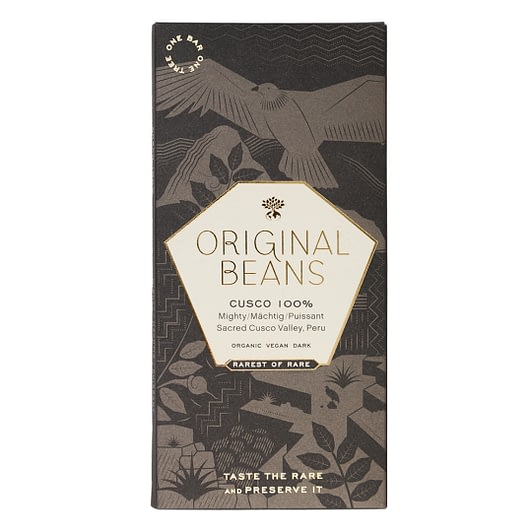
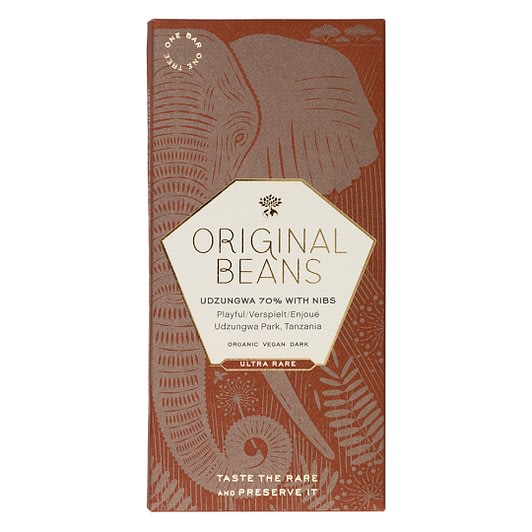
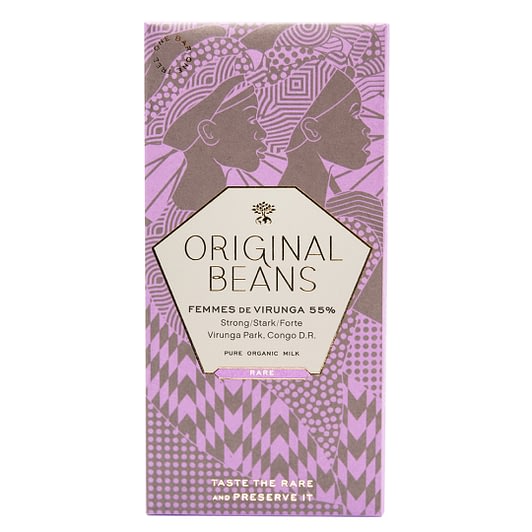
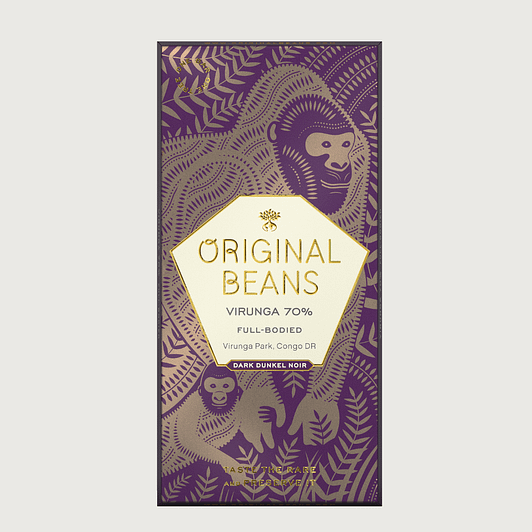
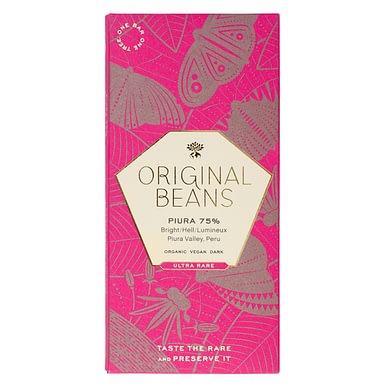
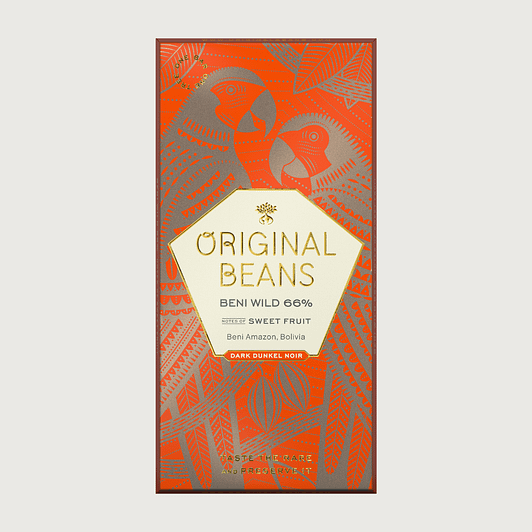
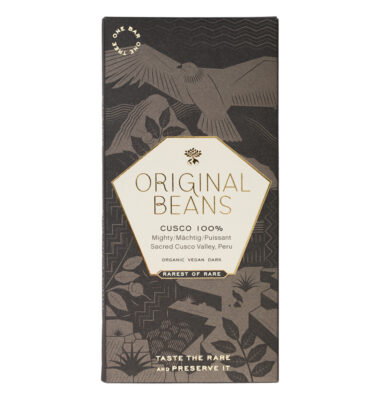
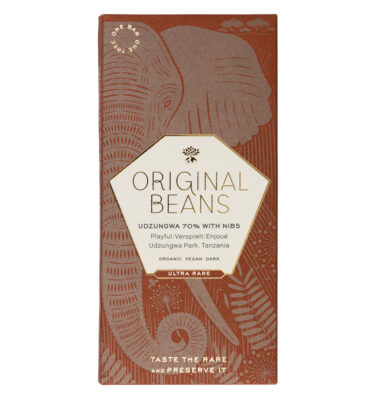
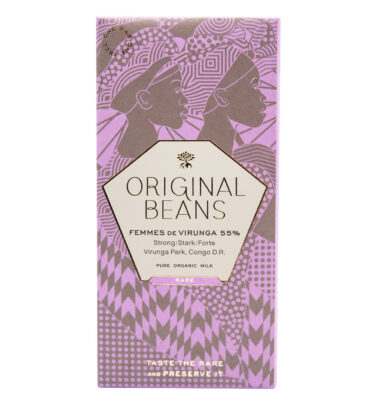
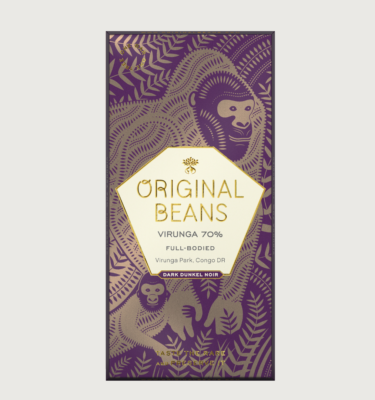
Please gift some Original Beans “Good Egg Award” bars this Easter and use the discount code OBGOODEGG15 for 15% off:
-
 Original Beans – Cusco Chuncho 100%£6.95
 -
Original Beans – Cru Udzungwa, Tanzania Dark 70% with Nibs£6.45
-
Original Beans – Femmes de Virunga, Milk 55%£5.95
-
Original Beans – Cru Virunga, Dark 70%£5.95
-
 Original Beans – Piura Porcelana, Dark 75%£6.45
 -
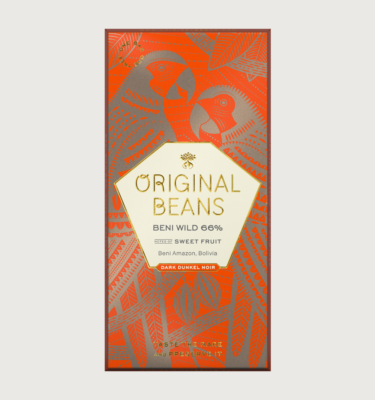
Original Beans – Beni Wild Harvest, Dark 66%£6.95

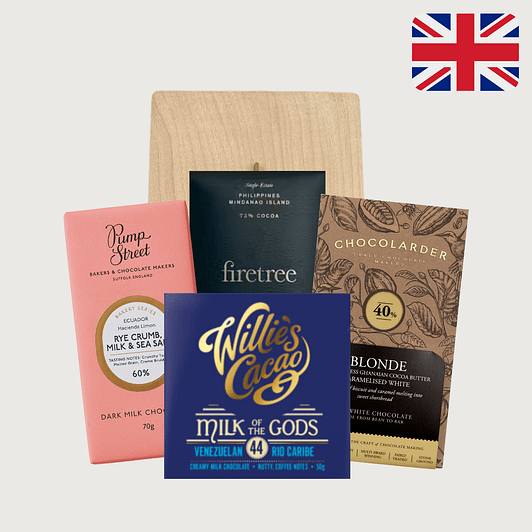
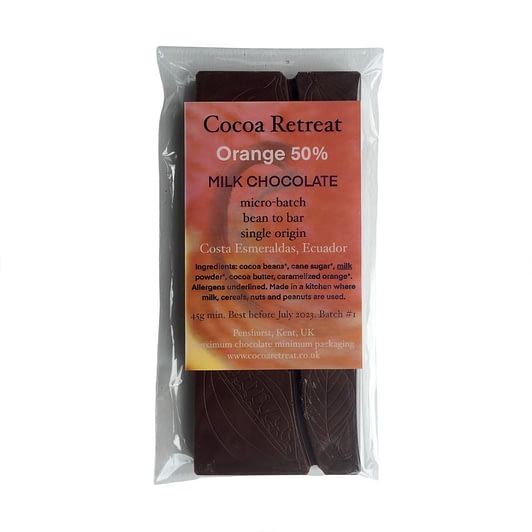
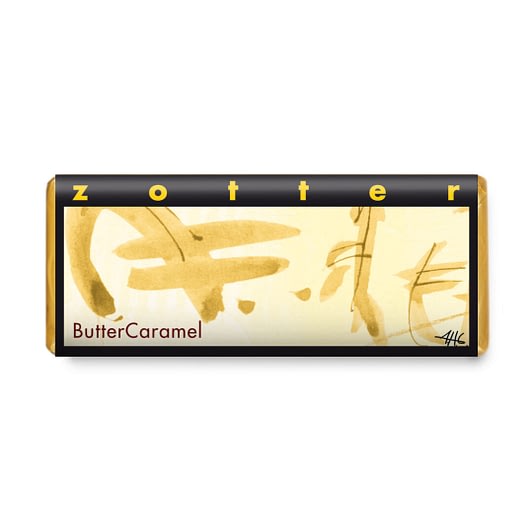
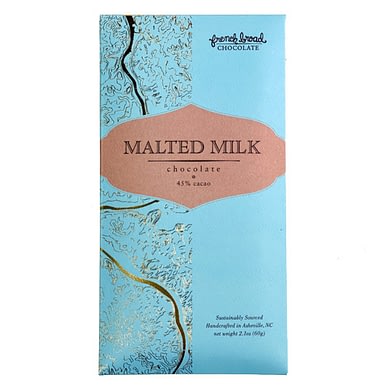
You can also gift some bars that really will remind you of your favourite milk bar from your childhood; try these craft bars that are consciously crafted to evoke those memories:
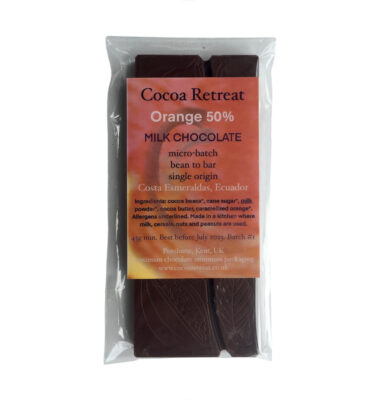
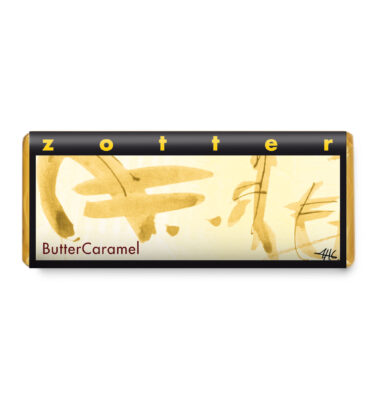
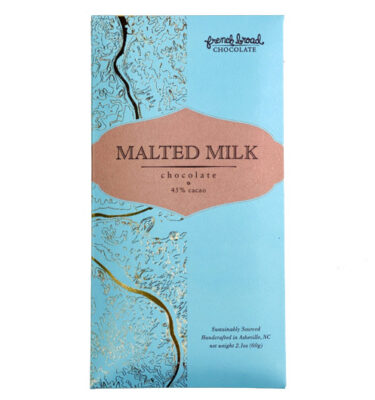
If you want to push the boat out, this white chocolate Easter egg from Chocolarder will have you asking why it took Nestle over five years to realise that Nestrovit (the original white chocolate) could be sold other than as a Vitamin supplement:
Thanks again for your support. Please consider opening a wider conversation by commenting on here, sharing your thoughts.
Keep savouring!
Spencer