Colour Teaches Us About Flavour
Craft chocolate can learn a lot from the history and science of colour studies. From Pantone to peacocks, read below to find out more...
Print / PDFCraft chocolate can learn a lot from the history and science of colour studies. From Pantone to peacocks, read below to find out more...
Print / PDFMost of us take it for granted that we can look at a picture and explain it via objects, shapes, and colours to another person. We also assume that when the other person sees the picture they will (generally) see the same objects, shapes and colours as we do.
This is very different to when we savour foods and drinks like chocolate. We can generally describe the texture of a drink (e.g. frothy, fizzy, or still), the temperature (if it’s hot, lukewarm, or cold) and its basic tastes (if it’s sweet, sour, salty, or bitter). But it is very different when it comes to describing, and even agreeing, on ‘flavours’ (like “fruity”, “caramelly”, “metallic”, “earthy”, etc.).
Craft chocolate can learn a lot from the history and science, of colour studies. And it can be made even more fun by savouring some craft chocolate while exploring “colourful lessons” like:
- How do designers, painters, etc. ‘agree’ on colours?
- Is it true that some cultures/languages don’t have words to describe specific colours?
- What can peacocks teach us about colour (and craft chocolate)?
- How do I know if I’m synaesthetic (and what does synaesthesia actually mean)?
If you don’t have time to read the whole thing, check out my videos for some bitesize explanations:
Standardisation of Colour Definitions
Just over sixty years ago, Lawrence Herbert took over a company that printed colour cards for cosmetics companies. He had spotted a far bigger opportunity than merely printing colour cards. He renamed the company Pantone and positioned the cards as a colour-matching system that would enable anyone in the fields of graphic design, film, printing, etc., to compare and agree on colours at any stage of their production processes.
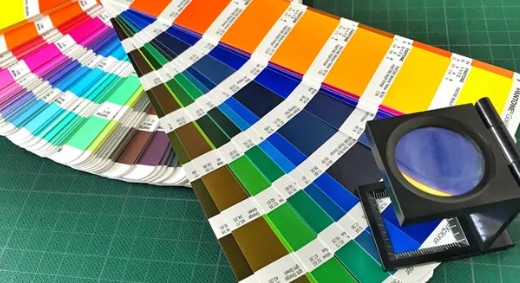
Lawrence Herbert wasn’t the first to develop such a system. Darwin took a precursor of this system (Patrick Syme’s ‘Werner’s Nomenclature of Colors’) with him on The Beagle and often referred to it in his diary and notebooks. Newton’s experiments with prisms provide an even earlier blueprint and scientific grounding. However, Herbet launched the Pantone cards and system at a time of increasing globalisation, when there was a massive need to agree on colours across continents with minimal delays.
It’s become so successful that fashion companies now use the Pantone system to publish their predicted “colours of the year”. This year’s colour is ‘Viva Magenta’; described as being “brave and fearless, and a pulsating colour whose exuberance promotes a joyous and optimistic celebration, writing a new narrative“.
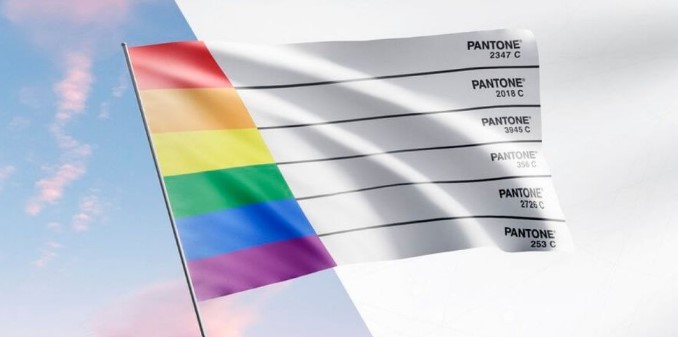
And for those in the know, the Pantone system even gave the LGBTQ community a means to wear their logo and flag on hats, armbands, and t-shirts, despite being banned at the Qatar World Cup.


Some Lessons for Chocolate
The coffee and wine industries have established protocols to agree on and define desirable and undesirable tastes, and seek to standardise these tastes similar to how the Pantone system compares colours. This is crucial for coffee roasters, baristas, winemakers, and retailers to avoid accidentally selling a cup of coffee or bottle of wine with faulty beans or grapes. One mouldy bean really will undo all the hard work of your coffee barista and roaster.
Unfortunately, there are no such standards in craft chocolate. Even the most stringent of the International Cocoa Organization’s (ICCO’s) current cocoa protocols permit up to 3% of mouldy beans to be included in a sack of dried beans. As a side note, the same applies to insect infestation; that is to say, up to 3% of a bag of commodity cocoa can consist of insects. Hence why craft chocolate makers spend so much effort hand sorting all the beans that they receive.
Martin Christy is leading an initiative through the IICCT to address this issue and implement more stringent quality standards. In parallel, Kate Cavallin is offering a course to help farmers, makers, and even consumers learn to taste and identify different defects in cacao (write to us for more information, the course also has lots about cocoa history, sourcing, etc.). For farmers who may have never even tasted chocolate, let alone craft chocolate, these courses are crucial. Without the ability to identify what is meant by terms like ‘under-fermented’ or ‘mouldy’, they cannot sell their beans as ‘speciality’ and achieve higher sales prices.
Towards a Common Language
The Pantone system provides descriptions and words to distinguish thousands of colours. However, most of us only use a small subset of these colours. In English, eleven colours form the basis of how colour is described: black, white, red, green, yellow, blue, brown, orange, pink, purple, and grey.
There are a few cultures and languages where blue and green are far more nuanced. These are often known as the “grue” countries, including for example Japan where the word AOI (青) is used for everything from the go colour of a traffic light (i.e. what we call green, coming after red and amber) through to “sky blue” and “earth green”.
Even more intriguingly, some languages and cultures only have words for a few colours. For example, a Bolivian Amazonian language only has words to describe black, white and red. Back in the 1960s the linguists Brent Berlin and Paul Kay suggested that languages and cultures “progress” in what colours are articulated; suggesting that:
“In the history of a given language, encoding of perceptual categories into basic colour terms follows a fixed partial order. The two possible temporal orders are;
- black and white; then red followed by green, yellow, blue and brown, and then purple, pink, orange and grey, or;
- black and white; then red followed by yellow, green, blue and brown, and then purple, pink, orange and grey”.
Although linguists and anthropologists continue to discuss certain aspects of Berlin and Kay’s hypothesis, it is widely accepted. Nevertheless, the reasons why certain colours appear in a language before others are still debated. And similarly, scientists remain puzzled as to why people tend to agree on classifying some colours, like red and yellow, but struggle with others, such as blue and green. Some scientists argue this is because of the way our brain is wired. Others argue it is a matter of practice and depends on what we are used to seeing regularly.
Some Lessons for Craft Chocolate
The insights into how we perceive and describe colour can easily, and fruitfully, be applied to the world of craft chocolate, debunking myths and encouraging us to savour and enjoy.
One of my pet peeves at a tasting is being told by a presenter (or even fellow taster) what flavours, tastes and textures one should be able to identify. The delight of savouring is way, way more nuanced and personalised than this. And the mechanics are very different. For example:
- While it’s possible to see and identify multiple colours at once when you look at a painting, the experience of detecting flavours and aromas is quite different. Our olfactory sense can only identify two to three smells at a time (known as the ‘Laing limit’). Therefore, it’s crucial to savour the tasting experience, relax and let the different notes develop (“follow the flavour wave“).
- The flavours and aromas of chocolate are released in your mouth by multiple factors. Initially, the heat of your mouth releases the aromas and flavours. And after this, the saliva in your mouth will release other flavours. And because we all have different saliva, and different bacteria, in our mouths, we often will release and detect very different flavours (one great example of this is with New Zealand Sauvignon Blanc, where those blessed with the bacterium Fusobacterium nucleatumi will often detect “gooseberry aromas”.
In summary, simply savour your craft chocolate and don’t worry about what anyone else may insist that they can taste. These pontifications may help you identify any flavours that are on the top of your tongue. But you shouldn’t treat anyone else’s tastes as a Pantone-like oracle for a chocolate bar’s flavour. Compare and contrast them to our craft chocolate tasting wave to help you work out what flavours and aromas you are getting.
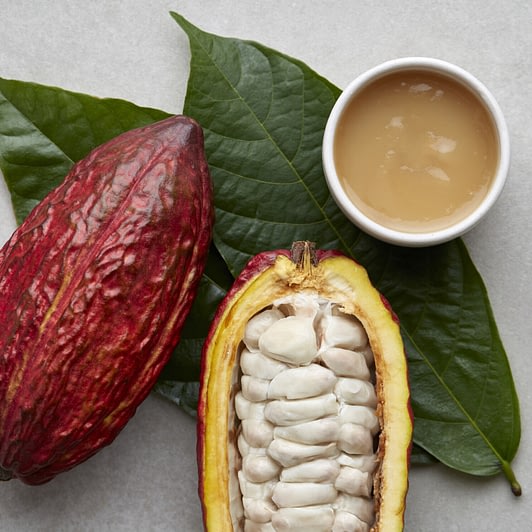
While you are describing what you savour, another challenge is whether you have the vocab to describe the flavours. For example, cocoa pulp is regularly described as having flavour notes like guava and lychee. This is great for those who’ve enjoyed guava or lychee, but many people live in places where it’s hard to try these fruits. So if you’ve not tried guava and lychee, or if you have tried them and like them, why not try some cocoa pulp for yourself?
What can peacocks teach us about colour …and savouring?
The Pantone system, along with most other colour systems, relies on colour pigments that are printed on cards. These pigments are composed of molecules that absorb all wavelengths of light except for those corresponding to the colour that the human eye perceives.
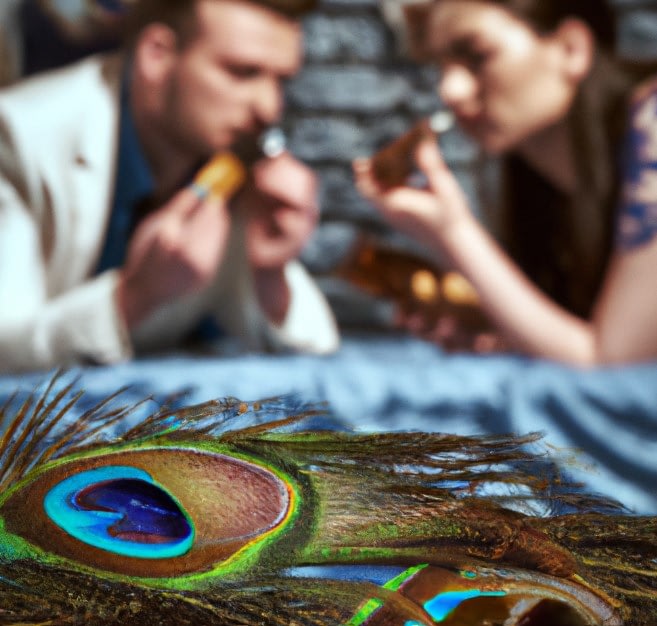
This isn’t the only way we perceive colours. Scientists, and artists, have long marvelled at the way that, for example, peacock feathers seem to shimmer. In the 1930s, with the invention of the electron microscope, they finally worked out the principles of what is now called ‘structural colour’ and that peacock feathers had a structure that REFLECTS, rather than ABSORBS light rays. Technically peacock feathers contain optical structures called ‘photonic crystals’ that cause an iridescent blue colour to be seen even though technically the pigment in a peacock feather is brown. Many insects and sea creatures have similar optical structures and recreating photonic crystals for commercial purposes is, unsurprisingly, the subject of extensive research.
Lessons: How to ensure that your craft chocolate shimmers and shines
Just as colour is more than just pigments, flavour is also multifaceted, and this is essential in the world of craft chocolate. Mass-produced chocolate prioritises the taste buds by combining sugar, salt, and fat to reach the ‘bliss point‘ and get you to scoff.
Craft chocolate is about savouring the complex favour of amazing beans which are enhanced, and revealed, by sugar, salt and (sometimes) inclusions. Just as a great painting is more than a collection of Pantone colours, so a great chocolate bar should be more than simply assembling a bunch of additives, sugar, salt, fat and some commodity chocolate to create a scoffable, bliss point snack.
Food and flavour scientists have made it relatively easy to make anything have a single flavour; that’s what food additives are for. You can easily make a chocolate milkshake with strawberry notes by combining a variety of commodity ingredients. But it will taste artificial and lack depth. Achieving balance, intensity, length, and complexity, that evolve and linger, is far more challenging. Just as scientists are still struggling to recreate the photonic crystals that make a peacock’s feathers shimmer, they cannot match the magic that nature has created with the cocoa bean.
Having said this, there are still some intriguing lessons that craft chocolate makers have learnt from ‘big chocolate’, and they (and you) can use these to make craft chocolate bars even more delightful.
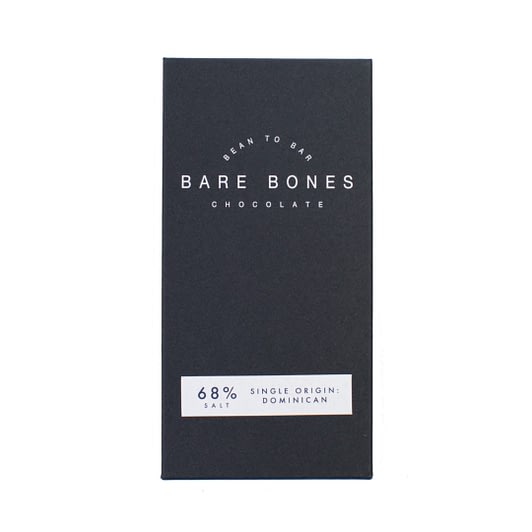
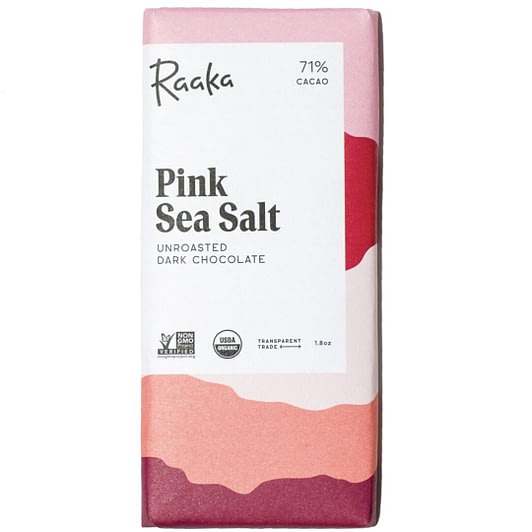
For example, the addition of salt to a chocolate bar can suppress the sensation of bitterness (salt overrides some of your bitter taste receptors). Try sprinkling the merest hint of salt on some dark chocolate and see what happens. Or try these bars which already include it:
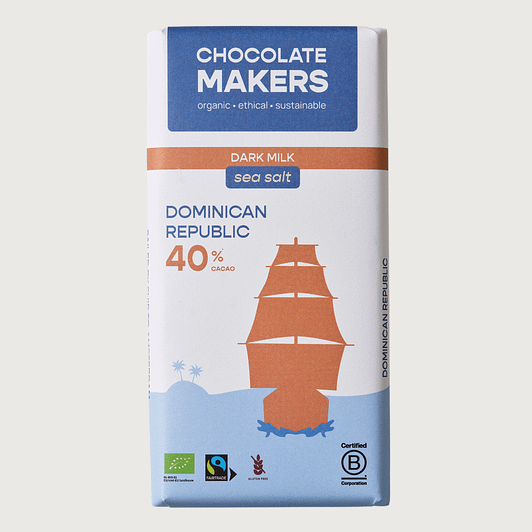
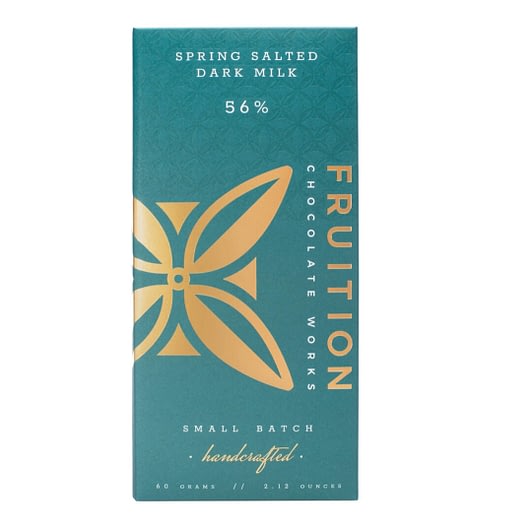
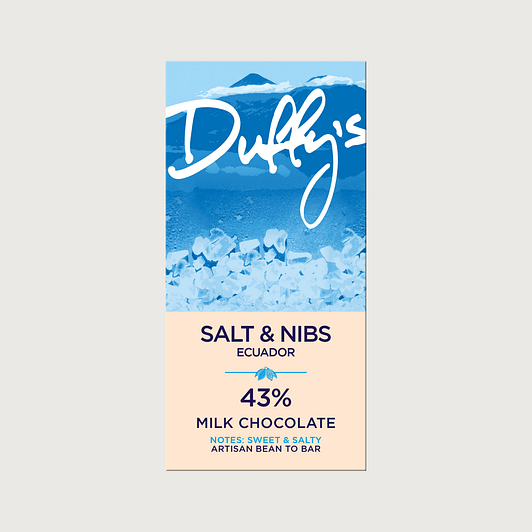
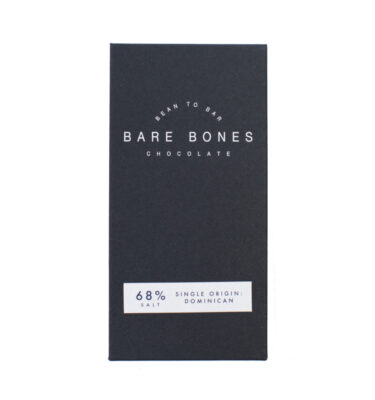
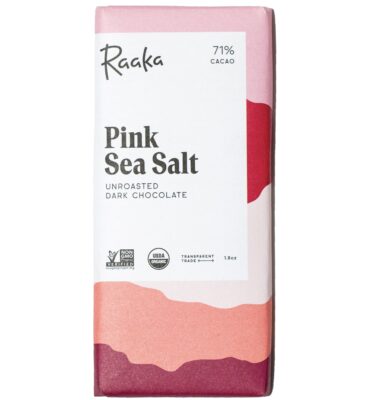
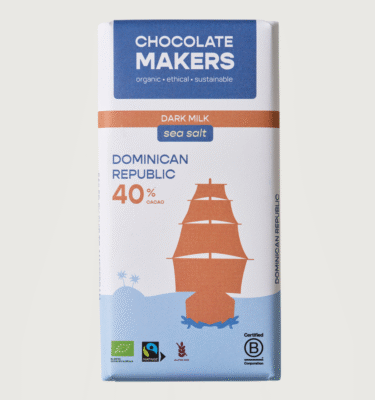
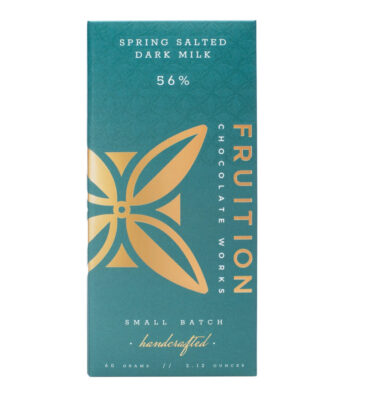
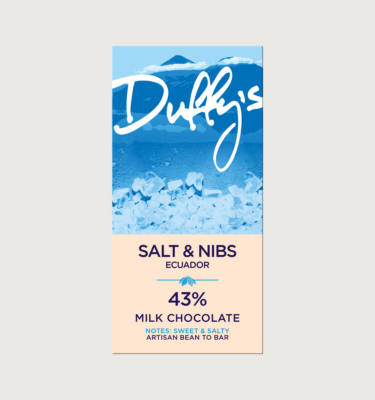
And other additions can work across the different senses. Professor Barry Smith uses the term “cross modal” to explain this, showing how “stimulation of one sense boosts activity in another“. He cites the example of vanilla, which is technically a flavour and aroma. Yet for many of us in the UK, adding vanilla to anything from cakes to chocolate or even plain water makes everything taste sweeter because we’ve come to associate vanilla with sweet things. Try these two bars from Menakao that use their native Madagascan vanilla:
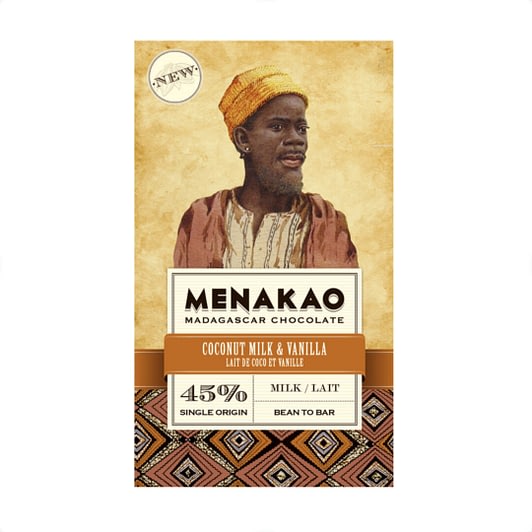
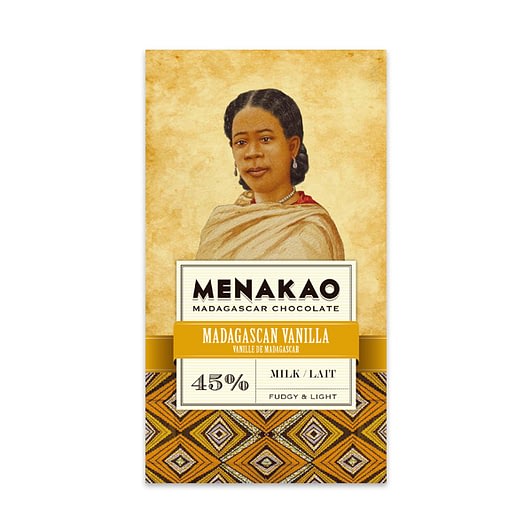
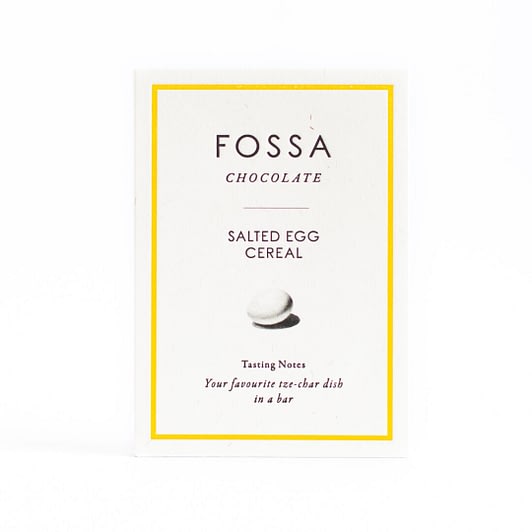
However, for people in Asia, the addition of vanilla flavouring brings out very different reactions. Across Asia, vanilla is cross-modally often not sweet but savoury, even added to curries. Indeed Fossa (a Singaporean chocolate maker) add vanillin to their salted egg cereal blond chocolate bar, which is inspired by their favourite spicy (not sweet) breakfast bowl of tze-char.
Synesthesia
For some people, there are words, numbers, sounds or tastes that immediately conjure up specific colours. This is now known as synesthesia, and it’s a subject attracting extensive research and has many complicated technical definitions. And it’s probably easier to cite Richard Feynman, a famed and noble prize-winning physicist:
“When I see equations, I see the letters in colours – I don’t know why. As I’m talking, I see vague pictures of Bessel functions from Jahnke and Emde’s book, with light-tan j’s, slightly violet-bluish n’s, and dark brown x’s flying around. And I wonder what the hell it must look like to the students“.
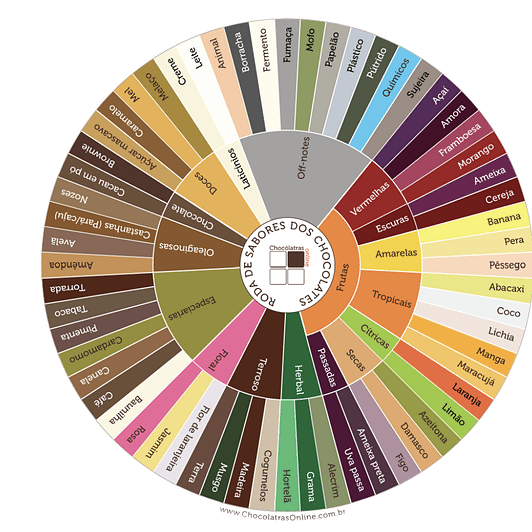
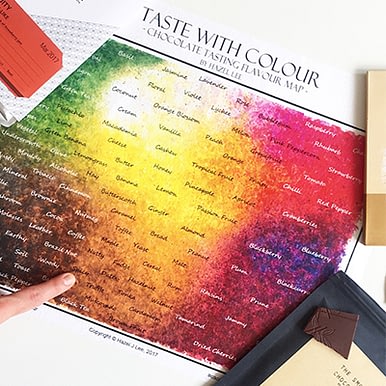
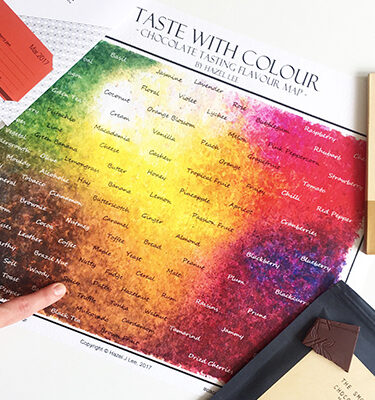
Even though very few people are ‘synesthetic’, using colours as a prompt to remind us of specific fruits, vegetables and foods can be very helpful in trying to figure out the flavours of a craft chocolate bar. For example, asking someone if it tastes like a “yellow lemon” or “green lime” often helps people far more than asking if it tastes “citrusy”. Similarly, asking if you are reminded of a red raspberry or a purple blueberry can help people remember the flavours they associate with these fruits. And given that most of us really struggle to articulate flavours, adding in these descriptors can be a huge help, as Hazel Lee’s colour map shows:
Conclusion
One final comment about colour: Don’t assume that the colour of a bar will tell you what type of bar you are purchasing. Here are two bars; one is a 45% milk and the other an 80% dark. Colour-wise, the Betulia 80% from Taucherli, is made up of a rare bean that is incredibly light, so it’s even lighter than the Menakao milk:
With chocolate, and savouring, it really does pay to think deeply about colour!
Thanks as ever for your support.
Keep savouring!
Spencer
Resources and further reading:
https://www.sciencedirect.com/science/article/pii/B9780123814647000041
http://imbs.uci.edu/~kjameson/ECST/Hardin_BerlinKayTheory.pdf