Meet the Grower
Gebana Togo
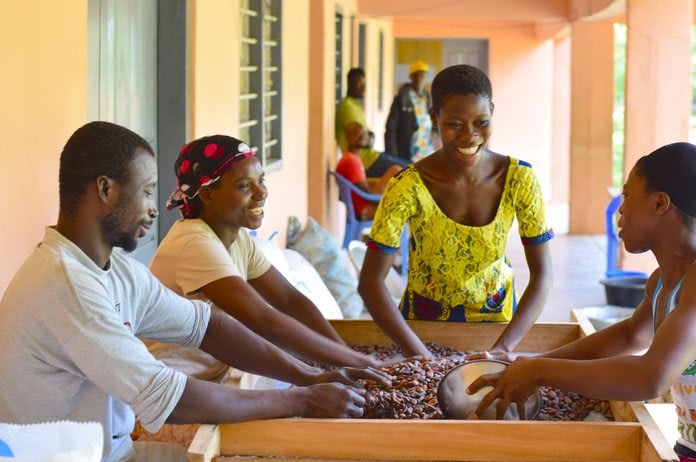
Location: Kpalimé, Togo
Varietal: Forastero, Criollo
Flavour notes: Coffee, delicate notes of plum
Description
When a group of Swiss women began to denounce the exploitation of workers on the banana plantations of Latin America in 1973, a movement began. Founded in 1998, the Swiss organisation, Gebana, was created with the aim to build sustainable food supply chains. Collaborating with a number of countries in the southern hemisphere, Gebana invested in Togo some years ago to support small-scale farmers who grow a variety of crops, including cacao.
The producers of Gebana Togo are organised into cooperatives – in total, the cooperatives Procab and IKPA have a grand total of over 1000 members, 700 of which produce certified organic cacao. The youngest cooperative, the Kekeli cooperative, was started in 2015 to focus on involving more women in cocoa cultivation. Now with upwards of 150 members, some farmers have their own land, whereas other rent land through a system named “dibi ma dibi”, which directly translates to “you eat, I eat” – the tenant leaves a third of the crop to the landowner in exchange for their land.
Gebana Togo buys cocoa locally and pays the farmers directly. By purchasing cocoa directly, Gebana Togo guarantees farmers the maximum possible added value.
Harvest times: September – February
Harvest volumes: Coming soon.
Number of farmers: 1750
Hectares farmed: Coming soon.
Farming notes: The rainy season begins in August, the month in which the formation of the cabosse begins and in which the planting of new fruit trees takes place.
Fermentation and drying notes: At Gebana Togo, the cocoa beans are fermented traditionally in banana leaves and afterwards dried in the sun. These processes are individually managed by the farmers , who are guided and supported to ensure only the finest quality beans are produced. Once dried, the beans collected in the villages and transported to the central warehouse in Kpalimé, where end-drying, grading and quality control take place before the beans get packed in woven-bags, ready for exportation.
Want to explore more growers, suppliers and producers of the world's best craft chocolate? Just start typing their name (or any letter) into the search box to discover them.
ABOCFA
Akesson’s
Alto Urumbamba
Asoarhuaco
ASODPAMP
CAC Pangoa
Cacao de Aroma
CECAQ 11
CEPOTX
COCABO
Cooperar
ESCO Kivu
FEDECOVERA
Fortaleza del Valle
Ingemann Fine Cocoa
Kokoa Kamili
La Campesina
Maya Mountain
Mountains of the Moon
Norandino
Rio Acará
Rio Juruá
Rio Toncantins
SUMAQAO
SUMAR
Vila Velha do Cassiporé
Virunga
Zorzal Cacao
