Why Judging Chocolate Needs the Human Touch
This last week, the ICA (International Chocolate Awards) released the results of their European, Middle...
Print / PDFContents
This last week, the ICA (International Chocolate Awards) released the results of their European, Middle...
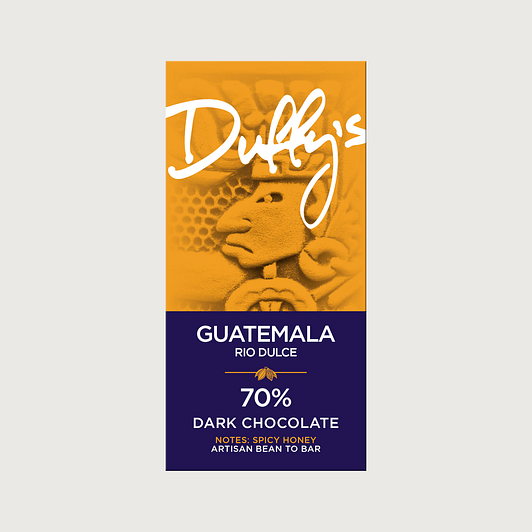
Print / PDFThis last week, the ICA (International Chocolate Awards) released the results of their European, Middle East and African Bean to Bar Chocolate Awards, and a huge congratulations to Duffy’s who won “Best Bar in Competition” for his Guatemala Rio Dulce 70%.
We’ve a bunch of other makers to congratulate too; Puchero, Fjåk, Solstice, Pump Street, Standout, Morin, Friis-Holm, Karuna, Chocolate Tree, Krak, Chocolat Madagascar, Ara, Lim, Mirzam, Utopick and Åkesson’s, to name just a few.
To celebrate, we’ve pulled together a suite of four bar boxes; a dark box, a milk box, an inclusion box, and also a (two bar) 100% box, where you can sample some of these winning bars and save 15-20% off retail prices.
We’d also like to thank Martin Christy and his teams of judges for their hard work, and to explain how difficult this art of tasting can be, and why (thankfully!) it can’t be automated. Plus, we’ve some suggestions on how to savour these award winning bars (and indeed any craft chocolate bar).
Taste: Art or Science
For most senses and experiences, we have standardised criteria and scientific measurements. Temperature has Celsius (or Fahrenheit or Kelvin). Time has minutes, hours, years, etc. Distance has miles (or kilometres). Weight has kilos (or pounds). Sound has decibels (and pitch, rhythm, frequency, tone, etc.). Colour has wavelengths to describe red, yellow, and even stuff we can’t see.
Food and drink are different. They are about flavour, taste and texture. And for flavour at least, measurements and judgements are a lot more subjective and ‘human’. And they are hard to disentangle.
Our understanding of flavour and aromas is way behind how we understand e.g., colours and sounds (i.e., images and music). The mechanics of our olfactory system by which we humans (and other animals) can detect flavour was only recently discovered (Linda Buck and Richard Axel won the Nobel Prize for their work here on the Olfactory System in 2004). By contrast, since Newton’s work over 300 years ago we’ve had a robust and simple framework to define colour. And we’ve pitch, rhythm, frequency, volume, etc. to understand sound. And whilst for taste (i.e. how salty, sweet, bitter or sour something is) we do have some measurements, and ditto for spiciness (Scovilles), we don’t have defined measures, or even an agreed vocabulary, to articulate aromas and agree what is ‘good’ or even ‘great’.
Consequently, awarding prizes and awards in food and drink is all done by hand (or rather mouth and nose). It relies on PEOPLE: Lots of people doing lots and lots of sniffing, tasting, spitting etc. The likes of Decanter, the IWC, IWSC etc. have teams of wine experts who taste tens of thousands of wines each wine vintage. And the International Chocolate Awards does the same for chocolate; tasting thousands of bars every year from all over the world.
No one in wine, chocolate or any other ‘fine flavour’ drink or food has found a way to automate the process of judging. At best a few tests have been developed to identify faults, and to test for tastes (i.e. saltiness, sweetness, etc.) spiciness and astringency. (Note: The basic tastes of sweetness, sourness, saltiness and bitterness are all well understood biochemically and therefore can be measured, and the same is true for astringency and spiciness (and other trigeminal sensations like mintiness)).
Scientists don’t fully understand how the olfactory system identifies, and prioritises, different molecules as aromas. We don’t have Newton’s light-refracting prism to help us describe and define aromas and flavours. And we don’t (yet?) have the same scientific understanding of the olfactory system as we have for how we see with the eye, retina, etc. or how we hear soundwaves via our ears.
To put it another way: Eat your heart out Google. Without the data, you can’t use AI to automate and predict.
For those of us who are fans of ‘real’ food (and drinks) this has an important silver lining: It’s really, really hard to recreate the flavours that occur in nature. Scientists have some tools; for example, mass gas spectrometers; to help approximate and artificially re-create aromas and flavours. But if you read how long and laborious it was to make artificial vanilla, you’ll see how far they are from cracking flavours (the work behind synthesizing artificial vanilla has been compared to “trying to figure out what was inside a mysterious piece of luggage by heaving it off a hotel balcony”). And even then, artificial and synthetic flavours are approximations which seek out the most important characteristics of the desired fruit or suns, rather than the whole experience. Nootkatone was identified in the 1960s as giving grapefruit part of their distinctive flavours and, when distilled, it made a great addition to create Fresca. But it’s not the real thing.
The ‘real thing’, whether it be fine wine, artisanal cheese, speciality coffee, small batch tea, etc., will have BALANCE, LENGTH, COMPLEXITY and INTENSITY. You want to savour; and you want to linger.
This is very different to the immediate ‘hit’ of processed foods where sugar, salt, fat and additives are designed to make you scoff, scoff and scoff (this is something AI can do distressingly effectively well as anyone whose tried a Pringle will have experienced!).
Mass produced chocolate is based on treating chocolate as a commodity ingredient and the assumption that taste can be manipulated in the factory with artificial additives. It’s about consistency, cost and consumption, and an immediate ‘bliss point and dopamine ‘hit’. Mass produced chocolate has nothing to do with the flavour, the skill of the craftsman or the beans (hence why the source of the beans is rarely mentioned at even the country level, let alone at the farm or co-op level and why the location of making is also never mentioned).
Craft chocolate; like a fine wine or a great speciality coffee; is the opposite: It’s all about finding the best farms, co-operatives and beans. And then about revealing the flavour of the bean (or grape) so you can appreciate not just the initial aromas, but the whole journey of different tastes, textures, flavours and mouthfeel. You want to linger. You want to savour that length, complexity, intensity, balance and mouthfeel.
How to Savour: And Delight in Being Human
Flavour has another intriguing, and uniquely human, attribute. We can detect aromas with our mouths.
Almost all animals (including humans) can detect aromas not just with our noses. But humans can also detect aromas via our mouths. Put another way; once a food (or drink) is in the mouth of a cat, dog, etc., they can only detect tastes; not flavour. So we shouldn’t be surprised that these animals ‘wolf’ down their food. But humans shouldn’t wolf down our food. We’re missing what makes enjoying food a uniquely human experience; appreciating the flavour released by the heat of our mouths and enzymes in our saliva. Indeed, some historians like Richard Wrangham argue that this is the basis of all human development as it explains why we learnt to cook food, and hence gather nutrients in our food far more effectively and efficiently than any other animal.
Whatever the case, to take advantage of retronasal (mouth based) and orthonasal (nose based) flavours (i.e. what we smell with our noses and then detect in our mouths), wine has developed all sorts of protocols for savouring wine; admiring the colour, swirling your wine in a glass and sniffing it before sipping it, then sipping it and holding it in your mouth before you gargle it, etc.
We believe that a similar approach is needed for chocolate, but with a few twists. As well as admiring the shine of the chocolate’s temper, you should also snap a bar to ensure that it’s ‘in temper’ and so it will melt in your mouth. And then we advise you to treat the savouring like surfing a wave, where you first prepare for the wave, then wait for it to break (and release the initial tastes and aromas), before riding the wave and enjoying all the other flavours, textures and waves that will roll across. For more details please come to one of our virtual tasting sessions. And whenever you savour any craft chocolate, please do consider the journey you will go on, and use use this wave for savouring developed by Professor Barry Smith (Professor of Philosophy at London University and founder of the Centre for the Study of the Senses), James Hoffmann (world barista champion), and Rebecca Palmer (wine buying director for Corney & Barrow).
And here are a few other pointers to make tasting more fun and rewarding:
- Try to have a few chocolates on the go at the same time (easier than with wine or coffee). It really highlights the differences, and these ICA boxes make ideal examples, as does a virtual tasting.
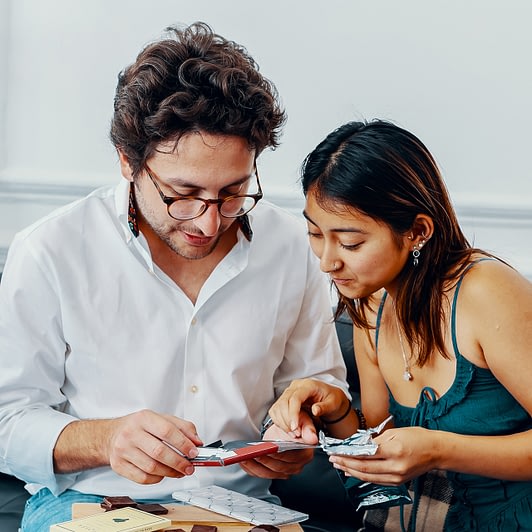
- Try to share and discuss with friends. It’s more fun. And articulating the notes you detect helps you discover and remember.
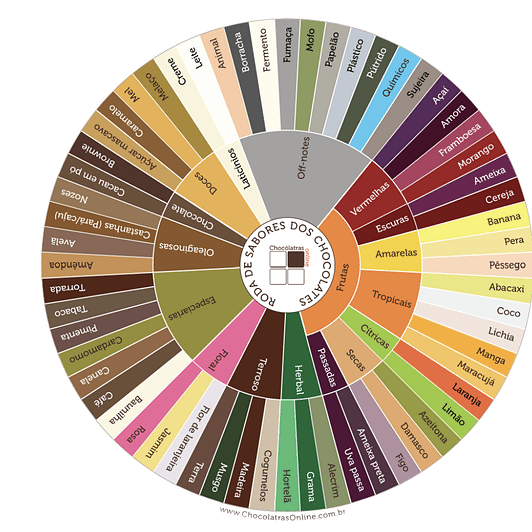
- Try to have some crib sheets; most of the time tastes, flavours and textures are “on the tip of our tongues” but hard for most to articulate. Hence why we always hand out our “chocolate tasting wave”.
- Give it time. Lots of time. Revisit and repeat. And don’t worry if you don’t detect the same aromas as others; the sensations you detect in your mouth from the same chocolate may differ from your friends because different enzymes in different salivas release different aromas and flavours.
Summary
The release of these awards by the ICA gives us all a great opportunity to sit back, reflect, and savour some really great chocolate bars. A huge thanks to them. And ENJOY!
Spencer