Celebrating Women in Chocolate
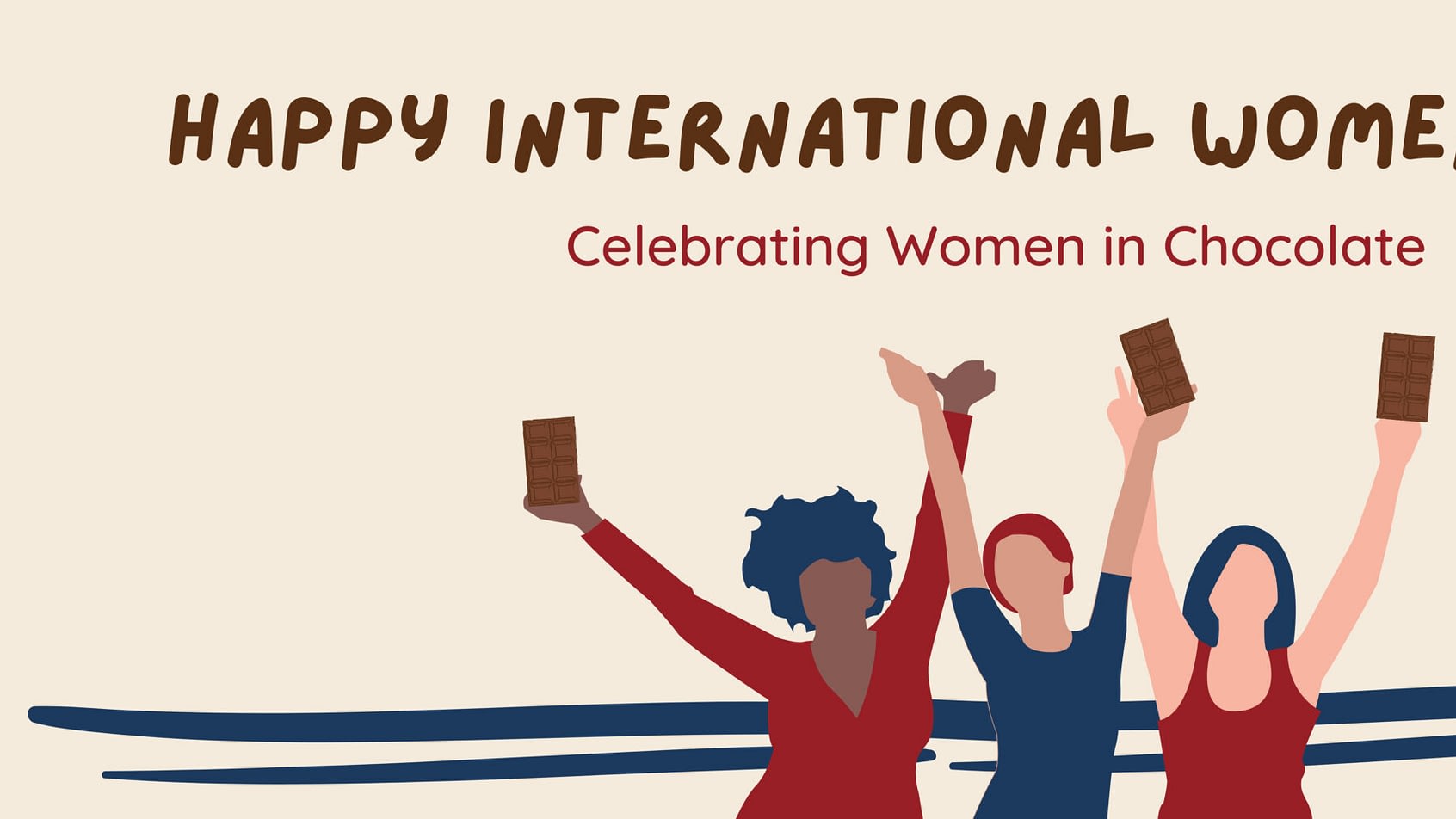
Craft chocolate is brilliant at spotlighting important social issues. As we approach International Women’s Day...
Print / PDFCraft chocolate is brilliant at spotlighting important social issues. As we approach International Women’s Day...
Print / PDFCraft chocolate is brilliant at spotlighting important social issues. As we approach International Women’s Day (coming up on 8th March), we want to highlight the extraordinary contributions women have made to craft chocolate.
- Over 50% of the founding team of our 150+ craft chocolate makers are women.
- Many of the key bean-sourcing and logistics companies are also founded by and run by women.
- Women also play a huge role in the education, research, writing, judging, and overall advocacy of craft chocolate.
… and these achievements gain added significance when compared to women’s very different position in ‘big chocolate’ and the desperate situation of literally millions of women cocoa farmers and their children.
So please celebrate International Women’s Day, any birthdays, celebrations, and perhaps Mother’s Day, with these boxes and stories inspired by women:
If you’re short on time, you can watch my video summary instead:
Women in ‘Big Chocolate’ and Commodity Cocoa
The position of women in ‘big chocolate’ is not encouraging. And the position of female cocoa farmers and workers in this industry is even more dire and desperate.
In Western chocolate-consuming countries, the last decade has seen a few notable breakthroughs for women at the very top of big chocolate. For example, in 2017 Hershey’s appointed Michele Buck as its first female CEO in its 125-year-old history – but that’s notable for it’s novelty.
And it’s hard to obtain solid statistics for most countries and companies. The UK is an exception because it forces companies to benchmark remuneration. Using HMRC’s Gender Pay Gap Report, it is possible to see that in 2021/22, women made up 12.2% of Cadbury’s highest-paid workers, up from 7.7% a year earlier but down from 8.3% in 2019/20. So, we might reach parity in another 10 years …maybe?
Overall, the state of women in big chocolate is – at best – opaque. There are lots of ‘working groups’, ‘plans’ and standard ‘pledges’ from big chocolate companies like Mars, Olam, Callebaut, Nestle, etc., who have goals for ‘gender equality’. For example, Callebaut (the primary supplier to Tony’s Chocolonely) has made pledges to make “more progress in gender balance at senior level … 40% women at director level … 30% women at director level in sales”. Let’s hope that these are met faster than big chocolate’s pledges on sugar, deforestation, child labour, etc. which are case studies in kicking the can down the road!
And on the farm, it’s even worse. The scandalously low wages paid to commodity cocoa farmers is well known; over 90% of West African cocoa farmers are paid less than the minimum income level of $2 per day recommended by the World Bank, making less than 80¢ per day. For women cocoa farmers, it’s even worse; below 30¢.
Fixing this inequity is also the key to fixing everything from deforestation to child slave labour. This effectively means paying more for cocoa, and paying more for cocoa means seeing it as more than just a ‘commodity’.
Craft chocolate is at the vanguard here; to make great craft chocolate you need great beans. And to secure great beans, you have to pay the farmers fairly with long-term contracts and commitment. Craft chocolate pays farmers a premium of 3-10 times more than commodity cocoa prices and offers them the security of long-term contracts.
Big chocolate sees cocoa as just another commodity and therefore, is stuck with sourcing chocolate as cheaply as it can. Trying to clean up supply chains by ‘inspecting’ them, checking that kids are in school, “highlighting the issues” etc. may make you feel better (and makes for great ad copy, as Tony’s shows). But to fix the problem, we need to stop treating cocoa as ‘just another commodity’. We need to pay farmers (men and women) fairly for growing great beans.
Bottom line: If you want to celebrate women on International Women’s Day, please support craft chocolate. At every stage; from making to growing, researching to marketing; craft chocolate is at the vanguard of advancing the position of women.
A Celebration of Women in Craft Chocolate
Making and Crafting
At Cocoa Runners, we are honoured to be working with over 150 different craft chocolate makers. Pre-covid, we tried to meet in person with each of these makers; either visiting them in person or meeting at fairs. Now that we can travel again, we are looking forward to travelling and getting to know our new makers, such as Ebru from ‘Butterfly‘ in Turkey, Peggy from ‘Choco Del Sol‘ in Germany, Julia (aka Mike) from ‘Mike and Becky‘ in Belgium, and Becca from ‘Lumineux’ in the US. We also build a ‘makers profile’ for all our makers; telling their story and that of their bars; so we have a good understanding of their operations and staffing.

We’re proud to say that over 50% of the craft chocolate makers we work with have had women founders (some are all-women teams). What’s more, women are involved in the actual chocolate crafting at similar levels.
Unsurprisingly, there are some geographic differences; in the UK, almost 80% of the founding teams were all women or a mix of women and men, and in the US, it’s almost two-thirds. It’s lower in mainland Europe (just below 50%), and around 40% in Asia, Africa, Australia, Latin America, and the Caribbean. But overall, it’s moving in the right direction.
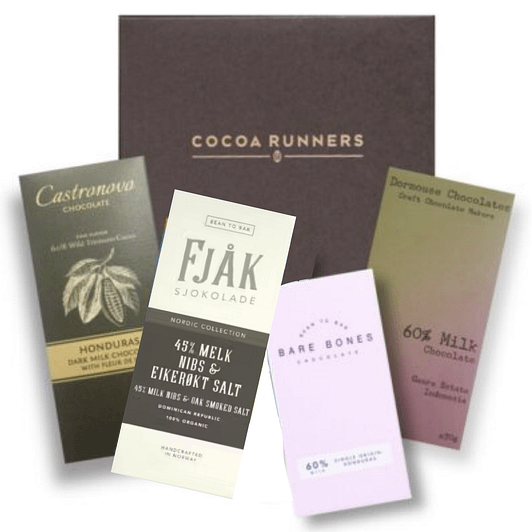
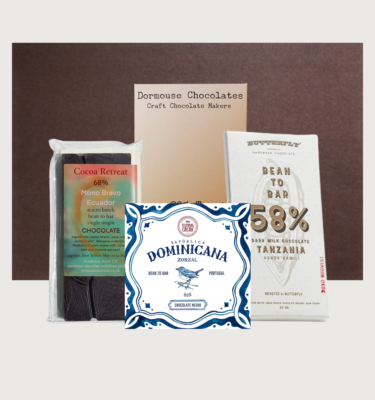
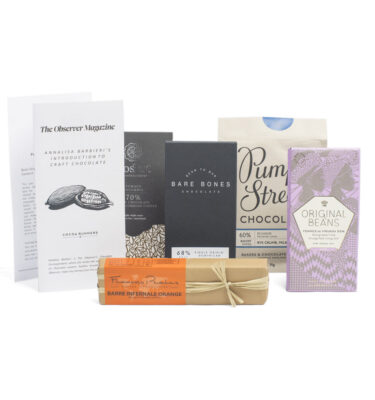
And it’s not just a token numbers game. Just sticking with the women-only founding and making teams, we are spoiled with an amazing choice of bars. Lisi, founder and chief chocolate maker of ‘Shatell‘, was made ‘Chocolate Maker of the Year’ in 2017. In the Americas, Jenny from ‘Conexión‘, Luisa Abram (‘Luisa Abram‘), Jael of ‘French Broad‘, Anna of ‘Ritual‘, Amy of ‘Fresco‘, DeAnn of ‘Solstice‘, and Ana of ‘Mucho‘ all craft award-winning bars. In Europe, Agur and Siv of ‘Fjåk‘ won “rising new star”. Tomoko-san and Sue of ‘Feitoria do Cacao‘ have also won medals galore. France and Spain have a raft of great new makers, very often led by women. Here in the UK, Isobel of ‘Dormouse‘, Ama of ‘Lucocoa‘, Lara from ‘Bare Bones‘, Iris from ‘Solkiki‘ and Deana from ‘Tosier‘ continue to win awards galore.
If you’re curious about these women’s creations, here are some bars and boxes:
Women on the Farm
Women cocoa farmer cooperatives are at the vanguard of addressing the inequities faced by women on cocoa farms. For example:
- ‘Femme Du Virunga‘: Founded in 2014 in the Virunga National Park (DRC) and has now grown to over 2000 women farmers; a much-needed initiative given the deadly trifecta of wars, destitution, and violence against women that has devastated Eastern Congo.
- ‘PISA’: Founded in 2006 in the Grand’Anse region of Haiti, and now has over 1500 farmers, the majority of whom are women.
- ‘Fortaleza del Valle‘: Founded in 2004 in Ecuador, and now has around 500 small-scale farmers, most of whom are women. As well as investing in its own quality control facilities, Fortaleza del Valle has also implemented a range of programmes to train up women farmers in leadership and financial management.
- ‘ASOMUPRO’: Founded in 2004 in the Huila region of Colombia, and now has around 100 women cocoa farmers in what used to be a male-dominated industry, made even more perilous by Colombia’s long-standing civil war.
Sourcing
In addition to crafting bars with these beans, women are also playing a key role in sourcing and distributing these beans to makers in Europe, Asia, and the US. Kate and Justine are spearheading this at ‘Cacao Latitudes‘. As is Emily from ‘Uncommon Cacao‘ in the US. Katrin, Alix and Jeannette, are doing the same with ‘Silva‘ here in Europe.
Scientific Pioneers
Much of the delight from chocolate is all about the wonderful complexities, length, and varieties of flavour that we can enjoy in craft chocolate. Much of our understanding of flavour can be traced back to the Nobel Prize-winning work of Linda Buck on the mechanics of our olfactory system and receptors. We have much yet to uncover in this space, and chocolate is a great tool for flavour experiments. If you want to read more about this, please try Ann-Sophie Barwich’s ‘Smellosophy’. And do come to one of our masterclasses to find out more!
Research
Women are leading much of the research into what is happening ‘on the ground’. Kristy Leissle continues to do great research here; our thanks for all her work on the Fine Chocolate Glossary (she helped us write the definition on “craft chocolate”). Similarly, Amanda Berlan does amazing work to pick apart big chocolate’s claims about its initiatives. We’re delighted that Kathryn Sampek is now back in the UK for her next research. And we look forward to welcoming Romi Burke back to the UK soon with more of her students. Finally, a huge shout out to Ayn Riggs for spearheading ‘Slave Free Chocolate‘, and huge kudos to her for taking a stand against Tony’s without fear of the blowback.
-
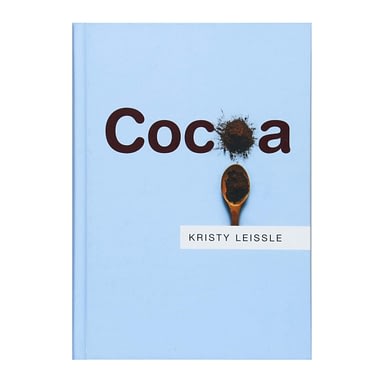
 Kristy Leissle – Cocoa£14.99

Authors and Books
Many of these researchers have produced insightful books. If you want to read just one recently published book, please try Kristy Leissle’s ‘Cocoa’. If you want a deep dive into the horrors that Ayn Riggs is fighting against in ‘Slave Free Chocolate’, please try Orla Ryan’s ‘Chocolate Nations: Living and Dying for Cocoa in West Africa’. If you want the definitive history, try Sophie Coe’s unbeatable ‘The True History of Chocolate’.
A number of other female authors use chocolate to describe other aspects of their interest in food and cooking; see Jenny Linford and Vanessa Kimble.
Another hat tip to two women, Kathryn Laverack and Cat Black, for their work in pairing craft chocolate to book clubs.
Bloggers and Journalists
Outside of formal tomes on chocolate, there are a number of journalists and bloggers writing about chocolate. Here are a few (by no means an exhaustive list, and apologies for anyone I’ve overlooked):
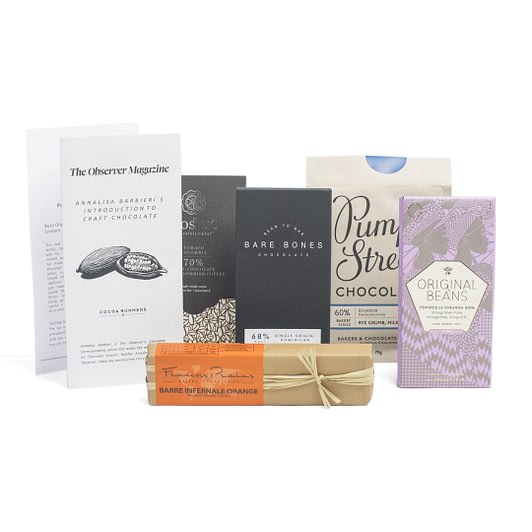
- Annalisa Barbieri: The Guardian and The Observer’s chocolate journalist.
- Sharon Terenzi: ‘The Chocolate Journalist‘.
- Megan Giller: of Chocolate Noise
- Estelle Tracy: Founder of the 37 Chocolates blog.
- Max Dandy: ‘Dame Cacao‘.
- Chloe Doutre-Roussel: Writer and consultant.
Education and Courses
Justine and Kate from Cacao Latitudes have launched some great new craft chocolate educational initiatives aimed at makers. They are also planning a range of workshops and courses for the general public too, modelled on the very successful SCA (coffee) and WSET (wine) courses. If you’d like to know more about these once they are formally launched, you can sign up early.
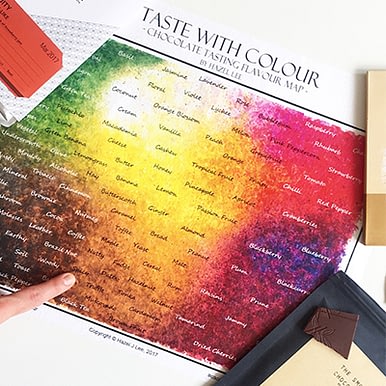
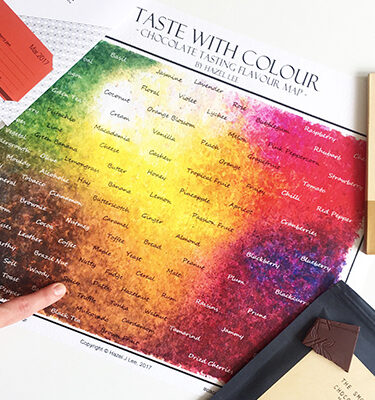
Jennifer Earl also runs many educational walking tours. Pam Williams of Ecole Chocolat continues with her international chocolate-making courses. Hazel Lee is famed for her ‘taste with colour’ speeches and materials.
A huge thanks to all the women leading the different faces of the craft chocolate revolution, from researching and understanding chocolate, to growing, crafting, making, writing about, judging, and promoting craft chocolate.
Also, a massive thanks to our warehouse and customer support team which is run by the wonderful team of Sarah, Becky, Lucie, Chloe, and Nicky.
In addition to tasting better and being better for you, the farmers, and the planet, here’s another important reason to delight in craft chocolate; it is embracing equity and equality RIGHT NOW, unlike big chocolate’s distant promises and pledges.
Thanks again for your support.
Keep savouring!
Spencer
p.s. We’re still very keen on hearing more about your cocoa pulp adventures!
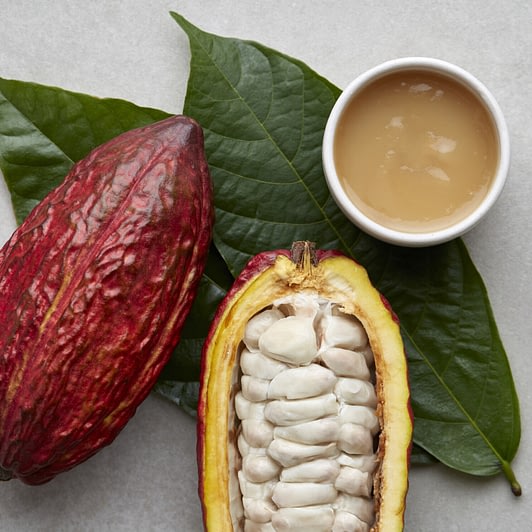
Make sure to order one, or more, of these Ecuadorian cocoa pulp pouches, and experiment with bakes, ice creams, drinks, and more.
Our favourite recipe ideas will get listed on our site, and the senders will get a prize!